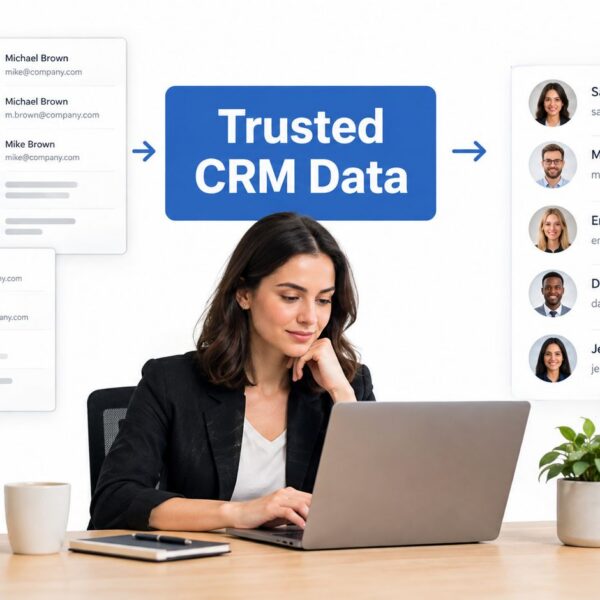

Inside sales has evolved far beyond phone-based selling. It is now a sophisticated, technology-driven strategy where sales professionals engage prospects remotely from a central office or home. This model leverages critical tools like CRMs, email, and video conferencing to manage a high volume of interactions, creating a predictable revenue stream without the significant overhead of traditional field sales.
Understanding Modern B2B Inside Sales

For Revenue Operations leaders, defining inside sales requires moving beyond the simple “remote selling” concept. A more accurate view is to see it as the central nervous system of your revenue engine. It processes lead data from your CRM, orchestrates outreach using platforms like Salesforce Sales Cloud or HubSpot Sales Hub, and guides prospects through a highly structured and measurable sales process.
This model is a cornerstone for B2B technology and service companies, particularly those managing complex sales cycles and high-value deals. It replaces the travel budgets and logistical challenges of field sales with a centralized, data-driven operation that can be scaled with precision.
The Strategic Shift to Remote Selling
The rise of inside sales is not just a trend; it represents a fundamental shift in B2B go-to-market strategy. This evolution accelerated as buyers became more comfortable with significant digital purchases and sales technology grew more powerful.
A well-executed inside sales function delivers distinct advantages:
- Increased Sales Velocity: Teams can connect with more prospects in less time, shortening the overall sales cycle.
- Lower Customer Acquisition Cost (CAC): Expenses tied to travel, meals, and other field-related activities are significantly reduced.
- Improved Data Accuracy: Every interaction is logged in the CRM, creating a single source of truth for reliable reporting and forecasting.
An inside sales operation transforms selling from an art performed in the field to a science managed from a central hub. It empowers RevOps leaders to build a predictable, repeatable, and scalable revenue machine grounded in data, not guesswork.
An Engine for Predictable Growth
Many high-performing inside sales teams utilize an inbound sales methodology, focusing on leads who have already demonstrated interest through content engagement. This tight alignment between marketing and sales is where RevOps delivers significant impact, ensuring every lead from platforms like Account Engagement (Pardot) or HubSpot is managed flawlessly.
This approach is especially prevalent in high-value, high-cost markets. In California, for example, inside sales has matured into a highly professional role within the B2B technology and SaaS sectors. The average inside sales salary there is around $50,796 per year, reflecting the state’s valuation of skilled, tech-savvy professionals responsible for driving substantial revenue. Further data on inside sales compensation trends confirms this profession’s growth. Ultimately, this strategic approach lays the groundwork for an operation that doesn’t just sell—it scales.
How Inside Sales Differs from Outside Sales

For a RevOps professional, the inside versus outside sales discussion is more than a question of location. It is a fundamental strategic decision that impacts the entire go-to-market engine, from cost structures and sales cycles to the technology stack you depend on.
Inside sales prioritizes volume and velocity, powered by a centralized tech stack. Outside sales, conversely, is built on high-touch, in-person relationships, typically reserved for complex, high-value deals where face-to-face interaction remains critical.
The Operational Divide
The primary difference lies in how each team engages prospects. Inside sales representatives operate within their CRM, whether it’s Salesforce or HubSpot, using a suite of digital tools to manage hundreds of accounts remotely. They can execute dozens of calls and emails in the time it takes an outside representative to travel to a single client meeting.
This remote-first model creates a fast-paced, data-rich environment that is ideal for RevOps. Every dial, email, and demo is logged, providing a clear view of performance. This allows you to identify patterns, refine processes, and build a predictable revenue machine. It’s a perfect fit for SaaS, B2B tech, and any business where a product demo is just as effective over a video call.
Outside sales operates differently. These professionals excel at building deep, personal rapport through on-site visits, where they can understand a client’s challenges firsthand. This approach is essential in industries like complex manufacturing or enterprise solutions, where multi-million dollar contracts justify the higher cost of face-to-face engagement.
Financial and Strategic Trade-Offs
The financial data tells a compelling story. Inside sales teams consistently achieve a lower Customer Acquisition Cost (CAC) by eliminating expenses for flights, hotels, and client entertainment. This cost efficiency allows for a higher volume of lead engagement and supports a sales motion that scales quickly and predictably.
The pace also differs. Inside sales teams typically exhibit a much higher sales velocity. They can advance prospects from awareness to close faster by managing more touchpoints in a shorter timeframe. To explore this further, you can analyze the nuances of building the right go-to-market strategy and how these models compare.
The question isn’t which model is superior, but which is the right tool for the job. The decision depends on your product’s complexity, average deal size, and target market. The most effective strategies often blend both, using an inside team for lead qualification and smaller deals, while deploying the outside team for high-value, strategic accounts.
Operational Breakdown: Inside Sales vs. Outside Sales
To determine which model—or blend of models—aligns with your revenue strategy, a side-by-side comparison of their core operational and financial attributes is essential. The table below outlines the key distinctions for building your team.
| Attribute | Inside Sales | Outside Sales |
|---|---|---|
| Primary Workplace | Central office or remote hub | Client sites, field offices |
| Sales Cycle Length | Typically shorter, higher velocity | Often longer, relationship-focused |
| Customer Acquisition Cost | Lower (minimal travel) | Higher (travel and expenses) |
| Tech Dependency | High (CRM, automation, dialers) | Moderate (CRM for reporting) |
| Key Activities | Phone calls, emails, video demos | In-person meetings, site visits |
| Scalability | High and relatively easy to scale | Slower and more costly to scale |
| Ideal Product Type | SaaS, B2B services, transactional | Complex enterprise solutions, manufacturing |
Ultimately, structuring your sales organization is a critical decision. The right choice creates a revenue engine that is not only effective but also efficient and perfectly aligned with your product and customers.
The Players on the Field: Key Roles in an Inside Sales Team

An effective inside sales team is not just a group of representatives; it’s a well-orchestrated machine with specialized roles, each owning a specific part of the sales process. Building a scalable revenue engine begins with understanding these distinct functions.
In modern B2B inside sales teams, two core roles manage the process from initial contact to a signed contract. This specialization is the model’s key advantage, allowing individuals to become experts at either opening doors or closing deals.
Sales Development Representatives: The Pipeline Builders
The Sales Development Representative (SDR), also known as a Business Development Representative (BDR), is the engine of new business generation. Their primary mission is to identify, engage, and qualify potential customers. They serve as the first human touchpoint, tasked with converting a cold lead into a warm, qualified prospect.
An SDR’s day involves research, personalized outreach, and connecting with leads via phone, email, and social media. Success is measured not by revenue but by their ability to generate high-quality meetings for the closers.
Their core responsibilities include:
- Lead Qualification: They use frameworks like BANT (Budget, Authority, Need, Timeline) to determine if a lead is a strong fit for the business.
- Outreach Activities: Performance is tracked by daily and weekly activity metrics, such as calls made, emails sent, and social media interactions.
- Meetings Set: This is their primary KPI. The ultimate goal is to book a qualified demo or appointment for an Account Executive.
Within a CRM like Salesforce or HubSpot, an SDR’s workflow is tracked meticulously. Dashboards provide visibility into activity levels, lead-to-meeting conversion rates, and the quality of opportunities they generate.
Account Executives: The Deal Closers
Once an SDR qualifies a lead, the opportunity is handed off to the Account Executive (AE). AEs are the closers who guide these warm opportunities to a successful close.
The AE’s role involves conducting product demos, navigating the complexities of buying committees, negotiating terms, and ultimately, winning the business. Their work is less about high-volume activity and more about the strategic depth of each conversation. They focus on building trust, demonstrating the solution’s value, and handling objections to secure new revenue.
The handoff from an SDR to an AE is one of the most critical junctures in the sales process. A robust RevOps framework ensures this transition is seamless. All context and data are captured in the CRM, so prospects avoid repetition and the AE enters the meeting fully prepared.
Here’s an example of how Salesforce Sales Cloud provides the visibility needed to manage these distinct roles and their pipelines.
This dashboard illustrates how a CRM acts as a single source of truth, allowing managers to track AE performance on metrics like closed-won deals and quota attainment. The key is to connect daily activities directly to revenue outcomes—the core principle of effective inside sales operations.
Ultimately, the synergy between SDRs and AEs, governed by clean processes within your CRM, distinguishes a disjointed sales effort from a high-functioning revenue machine.
Measuring Performance with the Right KPIs
While data is abundant, a high-performing inside sales team focuses on the metrics that truly matter. For RevOps professionals, the objective is to filter out noise—such as raw call volume without context—and concentrate on Key Performance Indicators (KPIs) that signal the health of the revenue engine. This requires a measurement framework that connects a representative’s daily activities to bottom-line impact.
When you measure the right KPIs, you can identify process bottlenecks, provide data-backed coaching, and forecast revenue with confidence. This is how you transform raw data from your Salesforce or HubSpot CRM into strategic decisions that drive predictable growth.
Activity Metrics: The Foundation of Performance
Activity metrics serve as an early warning system, tracking the daily effort of your team. While high activity volume alone does not guarantee success, a sudden drop in these numbers often indicates an underlying issue.
Consider these the fundamental building blocks of pipeline generation. They are easy to track and provide an immediate pulse check on your team’s engagement.
Key activity metrics to monitor:
- Dials and Connected Calls: Tracking both separates pure effort from effective outreach. A connected call signifies a conversation has occurred.
- Emails Sent: Monitor volume, but segmenting between personalized one-to-one emails and automated sequences provides deeper insight.
- Social Media Touchpoints: In modern B2B sales, this includes LinkedIn connection requests, InMails, and other relevant platform engagement.
- Demos or Meetings Booked: For an SDR, this is a primary KPI and the clearest indicator of successful initial engagement.
Efficiency Metrics: Optimizing Your Process
Your team is active, but are they productive? Efficiency metrics answer this question. They reveal how well effort translates into progress, helping you pinpoint where your sales process is optimized and where it needs improvement. For a RevOps leader, these numbers highlight process gaps and opportunities for automation.
Monitoring efficiency separates a team that is merely busy from one that is productive. It helps answer critical questions like, “Are we spending time on the right leads?” and “How quickly are we engaging high-priority prospects?”
Common efficiency metrics to monitor in your CRM:
- Lead Response Time: The time it takes for a representative to follow up with a new inbound lead. Speed is critical, as a fast response time dramatically increases qualification rates.
- Lead-to-Opportunity Conversion Rate: The percentage of leads that convert into qualified sales opportunities.
- Activity-to-Meeting Ratio: For every 100 calls or emails, how many meetings are booked? This metric reveals the effectiveness of your messaging and targeting.
Outcome Metrics: The Ultimate Measure of Success
Ultimately, all sales activities must lead to revenue. Outcome metrics are the final report card, measuring the business impact of your inside sales team. These are the numbers the C-suite tracks and they validate the effectiveness of your entire go-to-market strategy.
These KPIs are non-negotiable for understanding pipeline health, sales velocity, and individual performance against targets.
Top-tier outcome metrics include:
- Pipeline Generated: The total value of new, qualified opportunities created within a specific period.
- Quota Attainment: The percentage of your sales team hitting their sales targets.
- Win Rate: Of all opportunities that reached the final stage, the percentage that were successfully closed.
- Average Deal Size: The average value of a closed deal, crucial for accurate forecasting and capacity planning.
This focus on data-driven, remote selling is increasingly critical. In California, for example, the economy is shifting toward digital business models. State projections indicate that as consumer spending moves from goods to services, value creation in digital sectors—where inside sales is the dominant model—will continue to grow. You can read more on California’s economic trends to see how these shifts support a tech-first GTM strategy. By mastering these KPIs, your inside sales team is well-positioned for success.
Building Your High-Efficiency Inside Sales Tech Stack
Technology is the engine of a modern inside sales team, converting effort into predictable revenue. Building the right tech stack is not about acquiring disparate tools but creating a unified ecosystem where data flows seamlessly, representatives operate at peak efficiency, and decisions are data-driven.
This system provides the structure and automation required to scale outreach without losing personalization. Without a solid technology foundation, even top performers get bogged down in manual tasks and disconnected data.
The CRM as Your Central Nervous System
Your Customer Relationship Management (CRM) platform is the foundation of your tech stack. It serves as the single source of truth for every customer interaction, deal, and performance metric. For most B2B companies, this choice centers on two major platforms: Salesforce Sales Cloud or HubSpot Sales Hub.
Your CRM must be the central hub connecting all other sales tools. Before adding any new technology, the first question should be, “How well does it integrate with our CRM?” If you are at this decision point, our guide on how to choose a CRM provides a framework for making this critical selection.
A well-implemented CRM does more than store contact data. It provides the architectural backbone for your entire go-to-market strategy, from lead routing and territory management to forecasting and sales coaching.
When your CRM is configured correctly, data remains clean, handoffs between SDRs and AEs are frictionless, and leadership has the real-time dashboards needed to steer the business.
Layering on Intelligence and Efficiency
With your CRM in place, you can add layers of technology that elevate your inside sales team’s performance. These tools integrate directly with your central system, adding capabilities that accelerate the sales cycle and provide representatives with actionable insights.
Key layers to consider:
- Sales Engagement Platforms: Tools like Salesloft or Outreach are essential. They automate and sequence multi-touch outreach across email, phone, and social channels, ensuring representatives follow a proven playbook for every prospect.
- Data Enrichment and Intelligence: Accurate contact information is critical. Platforms like ZoomInfo, Lusha, or Clay.com provide reliable contact data and company firmographics, ensuring your team targets the right people at the right accounts.
- Marketing Automation Systems: In B2B, this requires a tight integration between your CRM and a platform like Account Engagement (Pardot) or HubSpot Marketing Hub. This connection enables sophisticated lead scoring, nurturing, and a seamless handoff from marketing to sales.
Creating a Unified Go-to-Market Engine
The goal is to create a tech stack where information flows effortlessly between platforms, providing a 360-degree view of the customer journey for all GTM teams. This integrated approach is no longer optional; it is essential for a high-performance inside sales model, especially in today’s cautious hiring climate.
Labor market data reveals a strong focus on maximizing seller productivity. Approximately 81% of sales teams now use AI and analytics to run leaner inside sales operations, which can deliver a 65% lower cost per lead. Reports like the U.S. Bureau of Labor Statistics’ JOLTS summary confirm this trend, showing a clear market shift toward RevOps-enabled teams over large, expensive field organizations. A well-architected tech stack is a competitive necessity.
Connecting Inside Sales to Your Revenue Operations Strategy
An inside sales team, no matter how skilled, cannot reach its full potential without a robust Revenue Operations (RevOps) framework. Without this strategic backbone, even top performers operate in silos, leading to friction, data chaos, and stalled growth. RevOps provides the blueprint that transforms individual sellers into a predictable, scalable revenue engine.
RevOps connects the daily activities of your inside sales team to broader business objectives. It oversees the entire customer lifecycle, ensuring every step is optimized for efficiency. This operational discipline allows your inside sales team to focus on selling instead of administrative tasks or managing inconsistent data.
Creating a Unified Go-to-Market Framework
A strong RevOps function establishes the critical rules of engagement that align departments across the go-to-market motion. It builds a system where everyone operates from the same playbook, with technology configured to support best practices.
This alignment is achieved through key initiatives:
- Defining Service Level Agreements (SLAs): RevOps establishes clear, time-bound agreements between marketing and sales. For example, an SLA might require marketing to deliver a specific number of Marketing Qualified Leads (MQLs) monthly, while inside sales must follow up on each new lead within 15 minutes.
- Standardizing Lead Management: From configuring lead scoring in Account Engagement (Pardot) or HubSpot to automating lead routing in Salesforce, RevOps builds the logic to deliver the right lead to the right representative at the right time.
- Ensuring Data Hygiene: Clean, reliable data is non-negotiable. RevOps implements processes to maintain data integrity across the tech stack, which is essential for accurate reporting and trustworthy forecasting.
Transforming Sales into a Predictable Revenue Engine
Ultimately, the objective is to shift from merely having a sales team to building a revenue machine. This is where a strategic partnership with RevOps provides its greatest value. By unifying processes, technology, and people under a single strategy, RevOps transforms your inside sales function into a source of predictable growth.
A well-executed RevOps strategy ensures your technology stack is an integrated ecosystem driving business goals, not just a collection of tools. It aligns your CRM, marketing automation, and sales engagement platforms to create a seamless customer experience and provide a single source of truth for decision-making.
This holistic approach is fundamental for effective scaling. To understand this concept better, you can learn more about what revenue operations is and how it aligns the entire go-to-market motion. This strategic alignment elevates inside sales from a cost center to a powerful, predictable revenue generator.
Common Questions About Inside Sales
Even with a well-defined strategy, building an inside sales team presents practical challenges. Here are answers to common questions that sales and RevOps leaders face when defining team structure, compensation, and technology.
How Should We Structure Compensation?
An effective inside sales compensation plan motivates the team to focus on activities that directly drive revenue. For most B2B companies, a hybrid model—a competitive base salary combined with performance-based commissions—is optimal.
- For SDRs: Their role is to build the pipeline. Tie their variable compensation to qualified meetings set or opportunities created. This incentivizes them to focus on quality leads with a high probability of closing.
- For AEs: As closers, their compensation should reflect their impact on revenue. A commission structure based on closed-won deals or quota attainment is the industry standard because it aligns their goals with business outcomes.
This structure provides the stability of a base salary while heavily rewarding top performers, ensuring personal incentives are aligned with company objectives.
A word of caution: while team-based bonuses can encourage collaboration, individual incentives are the primary drivers of personal accountability and high performance.
What Is the Ideal SDR to AE Ratio?
There is no universal magic number; the optimal ratio of Sales Development Representatives to Account Executives depends on your business model. Consider factors like sales cycle length, average deal size, and market maturity. A common starting point for B2B tech and SaaS companies is a 1:2 or 1:3 ratio, meaning one SDR supports two or three AEs.
- A 1:2 ratio is often suitable for companies with complex, long sales cycles, ensuring AEs receive a steady flow of well-researched, high-quality opportunities.
- A 1:3 or 1:4 ratio can be effective in a faster-paced environment where AEs manage a higher volume of less complex deals.
The goal is to keep your AEs’ calendars filled with promising meetings without overwhelming them. Monitor their pipeline and capacity in your CRM and adjust the ratio as your team and market evolve.
When Should We Move from Founder-Led Sales to an Inside Sales Team?
Transitioning from founder-led sales is a significant milestone. The time is right when the founder is spending more time closing deals than running the business and, most importantly, you have established a repeatable sales process. If you can document the specific steps that convert a prospect into a customer, you are ready. This documentation provides your first hires with a proven playbook, setting them up for success from day one.
At MarTech Do, we help B2B companies build the RevOps foundation that enables inside sales teams to thrive. If you’re ready to align your technology and processes to create a powerful revenue engine, let’s connect. Learn more about our RevOps services.