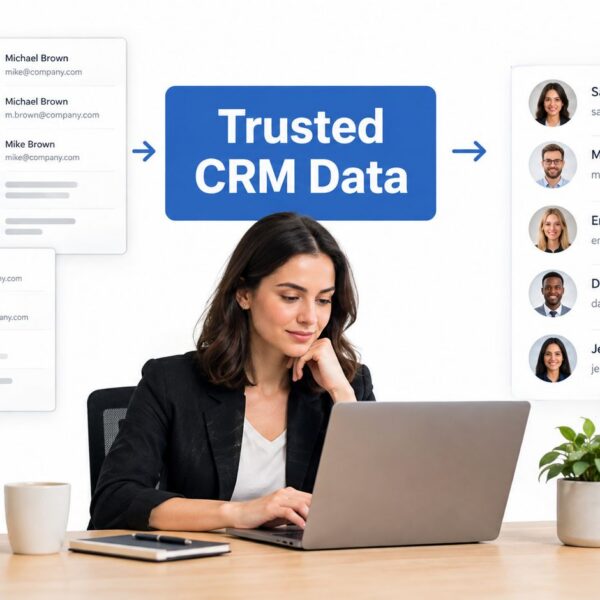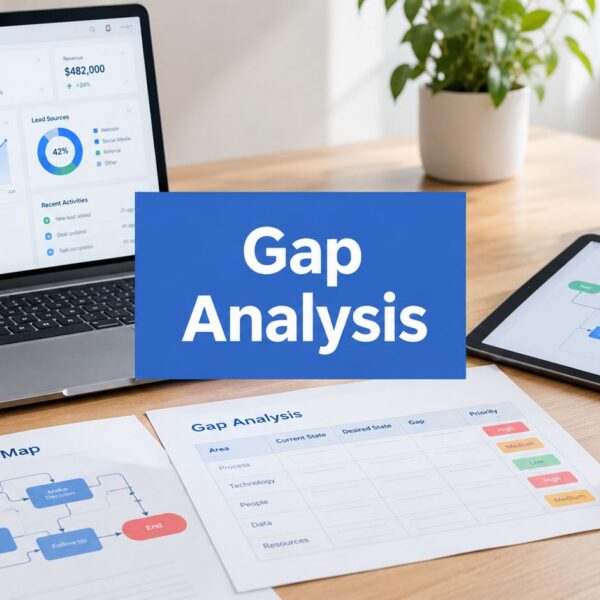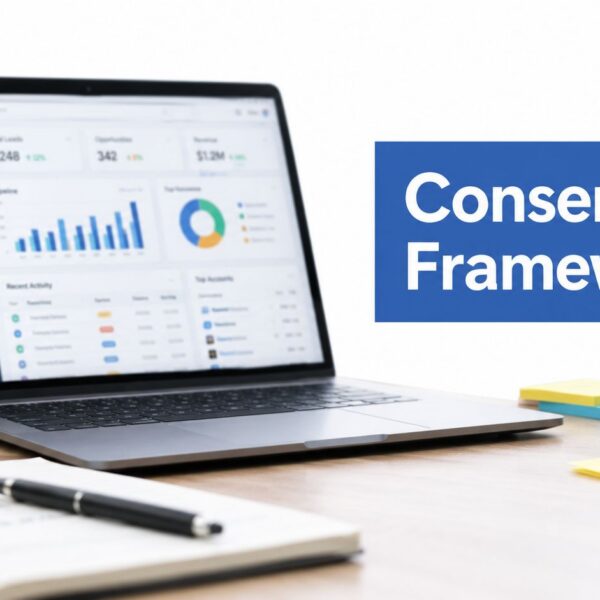

Salesforce is supposed to give B2B teams control. In practice, many companies inherit the opposite. Sales cannot trust forecast categories. Marketing sees campaign responses but not clean attribution. Service teams work in a separate logic model. HubSpot and Salesforce pass data back and forth with just enough inconsistency to create weekly arguments.
The pattern is familiar. A field gets added because one team asked for it. A Flow gets built because a process broke. Another report appears to patch a visibility gap. After a while, the CRM reflects accumulated decisions, not a deliberate revenue design.
That is where a salesforce business analyst becomes valuable. Not as a note-taker. Not as a generic requirements person. The role matters because someone has to connect GTM process design, system behaviour, data quality, reporting logic, and user adoption into one operating model.
The Linchpin Your Revenue Engine is Missing
A common B2B scenario looks like this. Marketing launches campaigns from Account Engagement or HubSpot. Leads sync into Salesforce with inconsistent lifecycle logic. Sales complains that lead routing is uneven, account ownership rules make no sense, and pipeline stages do not match how deals move. Leadership asks for a forecast they can trust, but every dashboard tells a slightly different story.
That is not only a tooling issue. It is a translation issue.

A salesforce business analyst sits in the middle of that confusion and turns it into an operating system the business can use. They understand sales process, marketing automation, service workflows, permissions, reporting, and the practical limits of the platform. They ask a harder question than most project teams ask. Not “what do you want built?” but “what business decision are you trying to improve?”
That distinction changes projects.
A weak CRM project starts with feature requests. A strong one starts with operational friction. If forecasts are unreliable, the issue may be stage definitions, required field logic, data sync timing, or rep behaviour. If attribution is disputed, the issue may be campaign member governance, contact role usage, or inconsistent source mapping between systems.
According to the 2025-26 Salesforce Ben Salary Survey of Salesforce Business Analysts, the role is not niche or theoretical. The survey covered 2,316 respondents across 76 countries and more than 17 industries. It found a median annual salary of $121,288 USD, with 7.8% of respondents identifying as Business Analysts and 92.8% employed full time. It also showed that 60.5% work for Salesforce customer organisations and 20% work for systems integrators or consulting firms.
Those numbers matter because they show this is an established function inside revenue teams, not an optional extra. The same survey also shows a strong concentration at intermediate and senior levels, which fits how the work functions. Its value lies in shaping decisions, rather than just documenting them.
If your CRM feels expensive but underpowered, the gap may not be another admin or another dashboard. It may be the absence of someone who can align people, process, and platform. Teams building a stronger revenue operations team structure usually discover that point quickly.
A salesforce business analyst earns trust by reducing ambiguity. The role becomes strategic when teams stop debating symptoms and start fixing root causes.
Core Responsibilities of a Modern Salesforce BA
The day-to-day work of a salesforce business analyst is broader than many hiring managers expect. Good BAs do not just gather requirements and pass them to admins or developers. They diagnose the current state, challenge assumptions, design better operating logic, and stay close enough to delivery to prevent drift.
Start with system truth, not stakeholder memory
The strongest BA work begins with a configuration audit. That sounds tactical, but it is one of the most strategic activities in a Salesforce environment.
A best-practice framework described in Salesforce Ben’s guidance on Salesforce business analyst audits highlights reviewing Profiles, Permission Sets, Permission Set Groups, Page Layouts, Automations such as Flow, Sharing Settings, and Object-level defaults. That same framework notes that this audit-first method frequently reveals that 30-40% of requested enhancements already exist but are undiscovered or misconfigured.
That is a practical reality in RevOps work. Users often describe how they think Salesforce works. The BA needs to establish how it works.
High-value audit outputs usually include:
- Access mapping for user groups across Sales Cloud, Service Cloud, Marketing Cloud, or Experience Cloud
- Automation review to identify duplicate logic, bottlenecks, or obsolete process paths
- Permission analysis to uncover why reps cannot see the records or forecast data they need
- Layout and object review to check whether the interface supports the actual workflow
A BA who skips this step will design against assumptions. That creates rework fast.
Translate business pain into buildable requirements
Requirements gathering is still central, but modern BA work is less about collecting wish lists and more about framing decisions.
A strong BA will separate:
| Input type | What it sounds like | What the BA converts it into |
|---|---|---|
| User request | “We need another field” | A specific reporting or process requirement |
| Leadership concern | “Forecasts are unreliable” | Stage criteria, field governance, and dashboard logic |
| Sales complaint | “Lead quality is poor” | Routing rules, scoring inputs, SLA design, and handoff conditions |
| Marketing frustration | “Attribution is messy” | Campaign structure, source model, sync rules, and reporting definitions |
Process mapping matters here. The BA documents current-state flows first. Then they define future-state flows that are simpler, enforceable, and visible in Salesforce.
For B2B teams, that often means mapping processes such as:
- Lead to MQL handoff across HubSpot or MCAE into Salesforce
- SDR to AE conversion flow with ownership, qualification, and lifecycle controls
- Opportunity progression with cleaner stage definitions and exit criteria
- Closed-loop reporting from campaign response to pipeline and revenue
Keep delivery aligned with operational reality
A salesforce business analyst should stay involved after requirements are approved. Otherwise the build can drift away from the business problem.
Core delivery responsibilities often include:
- Solution design review so flows, objects, and reports support the intended process
- User Acceptance Testing coordination with realistic scenarios and role-specific test cases
- Change management support so users understand why the new process exists
- Adoption follow-up to identify where process design still conflicts with behaviour
If UAT only proves that a button works, it is not enough. Good UAT proves that the process works for the people accountable for revenue.
In Revenue Cloud, Sales Cloud, and Account Engagement projects, this matters more than teams expect. A technically correct build can still fail if the approval path is too slow, if lead routing exceptions are not handled, or if dashboard definitions do not match management language.
The modern BA sits close to all of that. They do not own every build task, but they own clarity. That is often what prevents a “finished” implementation from becoming another round of CRM frustration.
The Skillset That Separates a Good BA from a Great One
Not every salesforce business analyst creates the same level of impact. Some can run workshops and write neat documentation. Far fewer can move from stakeholder language to data logic to platform decisions without losing the business outcome.
That gap usually comes down to skill mix.
Technical skills
Platform familiarity is the baseline. A BA working in B2B RevOps should understand how Salesforce objects relate, how Flow affects process execution, how lead conversion changes reporting, and how campaign data moves into attribution views. If the stack includes HubSpot, Account Engagement, Revenue Cloud, or enrichment tools, they also need to understand where sync rules and field ownership create downstream problems.
SQL is one of the clearest dividing lines between a generalist BA and a data-fluent one. According to Franklin University’s overview of Salesforce Business Analyst skills, SQL proficiency appears in 17% of job postings for Salesforce Business Analysts, representing 34,894 postings out of 211,466. The same source lists it as the fifth most sought specialised skill, behind Project Management at 29%, Business Process at 22%, Data Analysis at 22%, and Business Requirements at 18%.
That matters because modern RevOps work depends on validating data outside the CRM interface.
A BA with SQL skill can:
- Validate migration logic before records land in production
- Audit data quality after an implementation or sync change
- Pull custom extracts when standard reporting is too limited
- Check reporting assumptions against the underlying data structure
Without that capability, every non-trivial data question gets escalated. That slows projects and weakens the BA’s ability to challenge bad assumptions.
Other technical strengths that matter:
- Data model awareness across leads, contacts, accounts, opportunities, campaigns, and custom objects
- Reporting fluency in Salesforce dashboards, Tableau, or Power BI environments
- Automation judgment to know when Flow solves the issue and when process redesign the better answer
- Integration literacy around sync behaviour, API-fed fields, and ownership of source-of-truth systems
Soft skills
The best BAs are rarely the loudest people in the room. They are the ones who can get marketing, sales, RevOps, and leadership to agree on language.
That requires several soft skills working together.
Stakeholder control
A BA has to manage competing priorities without turning every meeting into a compromise that pleases no one. Sales may want fewer required fields. Marketing may want more campaign metadata. Finance may want stricter opportunity controls. The BA has to sort preference from necessity.
Process thinking
Many CRM issues are not system bugs. They are process contradictions. Great BAs recognise when the request should be rejected because the business process is still undefined or internally inconsistent.
Clear communication
Documentation matters, but so does concise explanation. If a BA cannot explain a trade-off clearly, adoption suffers later. Teams follow processes they understand.
The strongest BAs do not hide behind requirements documents. They make choices legible to executives, admins, and end users alike.
Commercial awareness
A BA in a B2B environment should understand why forecast quality, lifecycle governance, lead routing, and attribution matter commercially. Otherwise they risk optimising the system while missing the revenue consequence.
A good BA keeps projects organised. A great BA helps the company make better GTM decisions because the CRM now reflects how revenue works.
Salesforce BA vs Salesforce Admin vs Business Analyst
Many companies hire the wrong role because the titles sound interchangeable. They are not.
A Salesforce Admin keeps the platform functioning. A traditional business analyst improves business processes more broadly. A salesforce business analyst sits between those two positions and translates business needs into platform-specific design.

The clearest distinction
If your team says, “We need someone to fix permissions, clean up reports, manage users, and maintain fields,” you are usually describing an admin.
If your team says, “We need someone to redesign the sales process, improve service handoffs, and evaluate operating gaps across departments,” you are usually describing a business analyst.
If your team says, “We need someone who can redesign the process and turn that design into workable Salesforce logic without losing the business outcome,” you are describing a salesforce business analyst.
Side-by-side comparison
| Role | Primary focus | Typical work | Best fit |
|---|---|---|---|
| Salesforce Admin | Platform operations | User setup, permissions, reports, configuration, support tickets | Stable environments needing day-to-day platform ownership |
| Traditional Business Analyst | Cross-functional process improvement | Workshops, process mapping, requirements, business case work | Broader transformation not centred on Salesforce |
| Salesforce Business Analyst | Business process plus Salesforce solution alignment | Audit, requirements, process design, solution framing, UAT, adoption support | Revenue teams changing process and platform at the same time |
Where confusion causes problems
The most common mis-hire is expecting an admin to perform BA work without BA authority. The admin receives broad complaints such as “fix lead quality” or “improve forecasting” and is asked to solve them through configuration alone. That usually produces tactical changes without solving the operating model.
The second common mistake is hiring a generic BA who can map process well but lacks enough Salesforce fluency to understand object design, Flow implications, or reporting constraints. Requirements look polished, but the build team still has to reinterpret everything.
A salesforce business analyst is most useful when you need all of the following at once:
- Process redesign
- Platform-aware solutioning
- Data and reporting alignment
- Cross-team buy-in
The role is less about title purity and more about the type of problem you need solved. If revenue friction lives inside Salesforce and spills into sales, marketing, and service workflows, this is the role built for that situation.
How to Measure the ROI of Your Salesforce Business Analyst
A quarter misses forecast, sales disputes stage definitions, marketing questions attribution, and finance stops trusting the pipeline report. In that situation, the ROI of a Salesforce Business Analyst is not theoretical. It shows up in decision quality, reporting confidence, and how fast the team can correct process failures before they affect revenue.

Executives should evaluate this role by business outcomes tied to Salesforce changes. Ticket count, workshop volume, and documentation output do not tell you whether the BA improved the revenue engine.
A practical scorecard usually includes:
- Forecast reliability, so leaders can plan headcount, spend, and board communication with fewer adjustments
- User adoption, measured through stage hygiene, required field completion, and process compliance
- Data accuracy, especially across lead source, lifecycle stage, close date, amount, and owner fields
- Lead routing performance, including assignment speed, exceptions, and handoff quality
- Reporting trust, based on whether finance, sales, and marketing use the same numbers without reconciliation work
- Time to operational change, from issue identification to a deployed and adopted fix
These metrics matter most in B2B companies where Salesforce is the operating layer for sales, marketing, and customer handoffs. One broken rule in qualification, routing, or attribution can distort pipeline reviews for an entire quarter.
Forecasting is one of the clearest places to measure BA value because it combines process design, field governance, automation, and executive reporting. Salesforce explains in its article on what business analysis is that business analysts improve outcomes by identifying business needs, documenting requirements, and aligning solutions to those needs. That is the right frame for ROI. The BA creates value when forecast logic reflects how deals progress, not when the team only adds a new dashboard.
In practice, forecast ROI comes from a chain of decisions that has to hold together:
- Stage criteria reflect real buying progress rather than rep preference.
- Required fields support forecast confidence without creating unnecessary admin work.
- Flow logic enforces handoffs, approvals, and exceptions in the right places.
- Campaign and event attribution connect pipeline back to demand generation activity.
- Enrichment and data hygiene reduce blind spots before forecast calls happen.
If one link breaks, the number becomes harder to trust.
That is the strategic value of a strong Salesforce BA. They connect configuration choices to commercial decisions. An internal hire can do that when the company has enough change volume and cross-functional complexity to justify a dedicated role. An agency partner like MarTech Do can often deliver the same discipline faster when the business needs an audit, redesign, or targeted RevOps support without adding full-time headcount.
I usually advise clients to quantify BA impact in four buckets: avoided rework, faster decision cycles, better reporting confidence, and measurable process improvements in pipeline management. If finance wants a simple model, use this ROI Excel formula framework to compare the cost of the role against time saved, forecast improvement, and reduced operational waste.
A simple test helps. If leadership still spends every forecast meeting debating data quality instead of making decisions, there is still unrealized ROI in the Salesforce Business Analyst role.
A Job Description Template to Hire Your First SFBA
Hiring this role gets easier when the job description reflects the actual work. Too many companies post for a “Salesforce BA” and then list either admin tasks or vague business analysis language.
Use the template below as a starting point and tailor it to your stack.
Job description template
Role title
Salesforce Business Analyst
Role mission
Own the translation between business requirements and Salesforce-based solutions across sales, marketing, service, and revenue operations. Improve process clarity, data quality, reporting trust, and user adoption.
Key responsibilities
- Audit the current environment across objects, fields, permissions, page layouts, automation, reports, and dashboards
- Gather and refine requirements from sales, marketing, service, RevOps, and leadership stakeholders
- Map current and future processes for lead management, opportunity progression, forecasting, handoffs, and attribution
- Partner with admins and developers to shape platform-native solutions
- Support UAT and rollout with test cases, issue tracking, documentation, and training inputs
- Monitor adoption and process performance after release and recommend improvements
Required qualifications
- Hands-on experience with Salesforce in a B2B environment
- Working knowledge of Sales Cloud and reporting architecture
- Ability to document business requirements and process flows clearly
- Comfort working with data validation, reporting logic, and field governance
- Familiarity with marketing automation platforms such as Account Engagement or HubSpot
- Experience coordinating stakeholders across commercial teams
Preferred qualifications
- Salesforce Business Analyst certification
- Salesforce Administrator certification
- Exposure to Revenue Cloud, Service Cloud, or integration-heavy environments
- SQL capability for data validation and analysis
- Experience with dashboarding tools and attribution reporting
What to screen for in interviews
Look for candidates who can speak concretely about trade-offs.
Good prompts include:
| Ask this | Listen for this |
|---|---|
| Describe a CRM problem you solved | Clear diagnosis, not just a build task |
| How do you distinguish a true system gap from a training or adoption issue | Audit mindset, process evidence, data checks |
| How do you validate that a requirement is real | Audit mindset, process evidence, data checks |
| What makes reporting trustworthy | Definitions, field governance, and behaviour alignment |
If your broader hiring plan includes adjacent RevOps roles, this revenue operations job description guide helps distinguish where BA responsibilities should end and where admin, ops, or leadership ownership should begin.
How a RevOps Agency Can Augment Your Team
A common B2B scenario looks like this. Sales blames lead quality, marketing blames handoff rules, finance does not trust forecast categories, and the Salesforce admin is buried in tickets. The company does not need generic extra hands. It needs someone who can trace the revenue process across systems, identify where logic breaks, and turn that into a workable plan.
That is often the point where an external RevOps partner earns its place.

When outside support is the better choice
Outside support makes sense when the problem is high stakes, time-bound, or broader than one person can reasonably cover.
Typical cases include:
- Pre-implementation audits where leadership needs a clear view of current process, field usage, reporting logic, and integration risk before making platform decisions
- Cross-platform redesigns involving Salesforce, HubSpot, Account Engagement, enrichment tools, routing logic, and event data
- Fractional senior coverage when the business needs BA judgement at a high level but cannot justify full-time headcount yet
- Recovery work after a CRM rollout that met the technical brief but failed in adoption, reporting, or handoff execution
A key advantage is speed plus pattern recognition. An agency team has usually seen multiple versions of the same problem: duplicate lifecycle stages, broken campaign attribution, conflicting opportunity definitions, poor sync design, or automation that looked clean in a sandbox and failed under live team behaviour. Internal teams rarely get that repetition.
Where specialised capability matters now
The harder hiring challenge is no longer basic requirement gathering. It is finding someone who can connect process design, integration logic, low-code automation, reporting definitions, and newer AI-supported workflows without creating a mess six months later.
As discussed in GetGenerative’s Salesforce business analyst skill set discussion, BA expectations are expanding into integration analysis, automation design, and AI-adjacent work. The strategic takeaway is that modern BA work now shapes how quickly a B2B company can fix routing, improve data quality, support attribution, and make better configuration decisions across the revenue stack.
That is one reason agencies can be a strong fit. The knowledge does not sit with one hire. It sits across a small team. One consultant may map process and stakeholder requirements well. Another may handle Flow, validation logic, or lead routing. Another may focus on data architecture, sync behaviour, or reporting design. For companies deciding between building in-house and bringing in an expert partner such as MarTech Do, that model can reduce risk during periods of change.
It is not always the right answer. If the company needs long-term embedded ownership, daily stakeholder management, and constant backlog refinement, an internal Salesforce Business Analyst is usually the better investment. If the immediate need is diagnosis, redesign, or specialist execution across systems, agency support often gets to a better outcome faster.
Frequently Asked Questions About the Salesforce BA Role
What are the top interview questions to ask a salesforce business analyst candidate
Start with questions that force real examples, not theory.
Ask:
- Tell me about a Salesforce process you redesigned and why the old version failed
- How do you distinguish a true system gap from a training or adoption issue
- What do you review before writing requirements in an existing org
The strongest candidates will talk about audits, process evidence, stakeholder conflict, and data validation. Weak candidates usually jump straight to features.
What career path comes after a salesforce business analyst role
A salesforce business analyst can grow into several directions depending on strengths. Common paths include product ownership, solution consulting, RevOps leadership, project delivery, or solution architecture. The role is a strong foundation because it builds judgement across process, systems, and stakeholder management.
Can an existing Salesforce Admin transition into a BA role
Yes, often successfully. Admins already understand the platform, which is a major advantage. The transition usually requires growth in workshop facilitation, process mapping, requirement framing, and commercial reasoning.
Admins who make the leap well stop thinking only in terms of configuration. They start thinking in terms of operating model design.
Do smaller B2B companies need a dedicated salesforce business analyst
Sometimes yes, sometimes not. The deciding factor is complexity, not company size. If your stack includes Salesforce, marketing automation, integrations, custom routing, forecasting requirements, and multi-team reporting needs, BA work already exists. The only question is whether one person owns it deliberately or whether it stays fragmented across the team.
If your Salesforce setup feels harder to trust than it should, MarTech Do helps B2B teams audit systems, fix RevOps gaps, and turn CRM architecture into a practical growth engine across Salesforce, HubSpot, integrations, and GTM reporting.