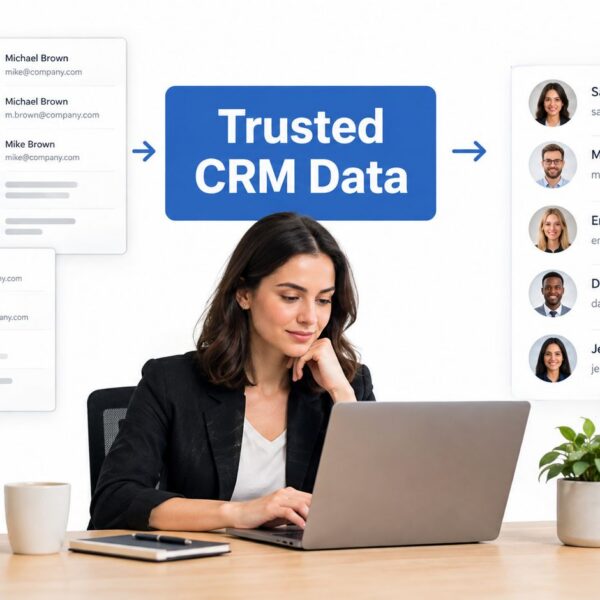
In the world of B2B revenue operations, your Salesforce, HubSpot, or Pardot (MCAE) instance is the engine driving growth. But what happens when that engine is fueled by messy, unreliable data? The results are predictable and costly: inconsistent lead routing, inaccurate forecasting, and broken customer experiences become the norm, stalling momentum and frustrating your high-performing sales and marketing teams. The solution isn’t simply adding another MarTech tool to your stack; it’s implementing a strategic framework to manage your most valuable asset.
This article moves beyond generic advice to provide a definitive guide on the essential data governance best practices that directly impact your bottom line. We will break down eight critical, field-tested strategies that B2B RevOps, Marketing Ops, and Sales Ops leaders can implement immediately. These actionable steps are designed to transform your data from a chaotic liability into a powerful strategic advantage.
By following these principles, you will build a foundation that ensures your CRM and marketing automation platforms deliver the ROI you expect. You’ll gain clarity and control, enabling more effective go-to-market strategies and scalable growth. Let’s dive into the specific workflows and policies required to establish a rock-solid data governance program that empowers your entire revenue organization.
1. Establish Clear Data Ownership and Stewardship
Effective data governance begins with a fundamental question: who is responsible for the data? Without a clear answer, data quality degrades, security risks multiply, and strategic initiatives stall. Establishing defined data ownership and stewardship roles is one of the most critical data governance best practices because it creates an explicit framework of accountability. This approach assigns responsibility for specific data assets, ensuring they are managed as valuable business resources.

Data owners are typically senior business leaders who have ultimate accountability for a data domain, such as “customer data” or “product data.” They set policies and define access rules. Data stewards, on the other hand, are the tactical, hands-on experts responsible for the day-to-day management of that data. They handle tasks like data quality monitoring, metadata management, and ensuring compliance with the owner’s policies. For a RevOps team, a steward might be the Marketing Ops Manager responsible for lead data in Pardot or the Sales Ops Analyst who owns opportunity data in Salesforce.
Real-World Examples of Data Ownership Models
Many leading companies have successfully implemented this model. For instance, Mastercard adopted a federated data ownership structure, appointing business domain owners who collaborate with technical stewards to manage data across the enterprise. Similarly, Siemens built a robust network of data stewards embedded within different business units, governed by clear, centralized protocols that ensure consistency while empowering local expertise. These examples prove that a well-defined ownership model prevents data from becoming an orphaned asset and instead turns it into a strategic advantage.
How to Implement Data Ownership and Stewardship
To put this into practice, start by identifying your most critical data assets, particularly those with high business value or significant compliance risk, like customer data in your Salesforce CRM or marketing automation platform.
- Define and Document Roles: Create clear job descriptions for data owners and stewards. Specify their responsibilities, decision-making authority, and the metrics used to measure their success.
- Align with Business Goals: Create incentives that directly link effective data stewardship with positive business outcomes, such as improved lead quality for the sales team or higher campaign ROI for marketing.
- Establish Communication Cadences: Schedule regular meetings between data owners and their stewards to review data quality reports, address issues, and align on strategic priorities. This ensures the business vision and tactical execution remain in sync.
- Empower Stewards with Tools: Provide your data stewards with the necessary tools for data profiling, cleansing, and metadata management within systems like Salesforce or HubSpot to help them perform their duties efficiently.
2. Implement Comprehensive Data Quality Management
Poor data quality is the silent killer of marketing campaigns, sales forecasts, and strategic decisions. Implementing a comprehensive data quality management program is a non-negotiable data governance best practice because it moves organizations from reactive data cleanup to proactive data integrity. This involves establishing systematic processes to measure, monitor, and improve data quality across its entire lifecycle, ensuring that data is accurate, complete, consistent, and timely.

This approach treats data quality as a continuous discipline, not a one-time project. It focuses on embedding quality checks and validation rules directly into the systems where data is created and used, such as your CRM and marketing automation platforms. The goal is to prevent bad data from entering your ecosystem in the first place, saving significant time and resources down the line.
Real-World Examples of Data Quality Management
Leading companies demonstrate the immense value of this practice. For instance, Netflix uses sophisticated, automated data quality checks that validate data in real-time across its powerful recommendation engines, ensuring personalized content delivery is always based on reliable information. Similarly, Philips Healthcare created detailed data quality scorecards that are reviewed in executive dashboards monthly, tying data integrity directly to business performance and strategic oversight. These examples highlight how a structured quality framework transforms data from a liability into a high-performing asset.
How to Implement Data Quality Management
To build your own data quality program, focus on integrating checks and feedback loops directly into your RevOps workflows. This is crucial for maintaining a clean database in systems like Salesforce or HubSpot.
- Define Quality Rules at the Source: Implement validation rules, picklists, and required fields directly within your CRM and marketing automation platforms. For example, standardize “State” and “Country” fields to prevent variations that disrupt lead routing and segmentation.
- Establish Business-Friendly Metrics: Create dashboards that track key quality indicators like contact record completeness, email bounce rates, and duplicate record percentages. This makes data quality tangible for marketing and sales leaders.
- Implement Checks in the Data Pipeline: Don’t just check data at the source. Add validation steps during key processes like list imports or system integrations to catch errors before they propagate across your MarTech stack.
- Create Data Quality SLAs: Establish Service Level Agreements for data quality with business teams. Define acceptable thresholds for data accuracy and timeliness, and outline the process for remediation when those thresholds are not met.
3. Create and Maintain a Centralized Data Catalog
Once you know who owns the data, the next critical question is: what data do we have, and where is it? A centralized data catalog acts as a searchable inventory for all organizational data assets, providing context, lineage, and metadata. Implementing this is a cornerstone of modern data governance best practices because it transforms data from a hidden, siloed resource into a discoverable, understandable, and trusted enterprise asset. It serves as the single source of truth for what data means, where it comes from, and how it can be used.
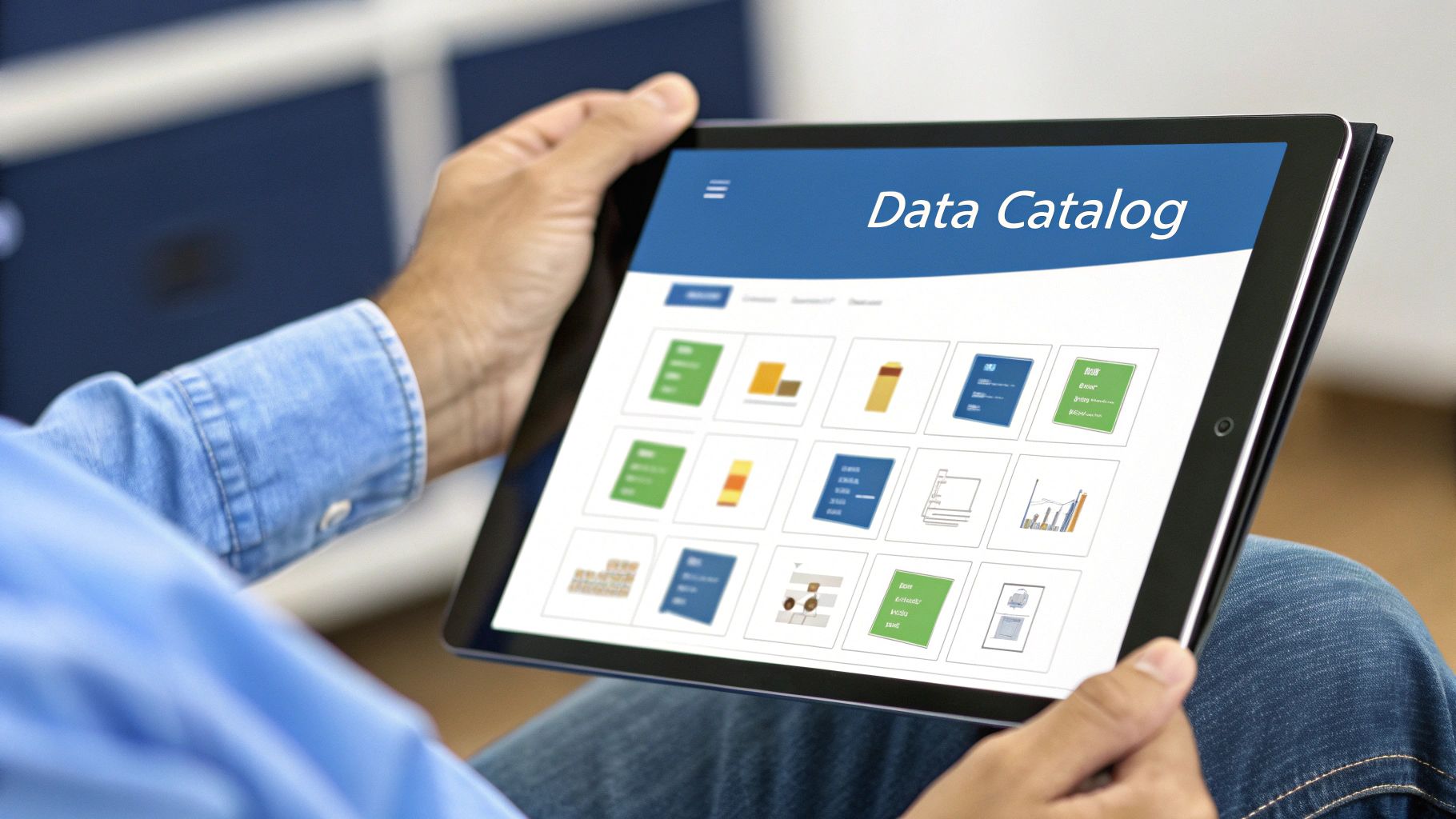
This catalog empowers both technical and business users, like marketing and sales operations teams, to find the right data quickly. Instead of wasting hours tracking down the source of a specific report metric or a field definition in your CRM, they can simply search the catalog. This accelerates analytics, improves decision-making, and builds a culture of data literacy.
Real-World Examples of Data Catalogs
Leading technology and data-driven companies have pioneered the use of data catalogs to manage complexity. Airbnb’s “Dataportal” is a well-known example that allows employees to discover and understand thousands of data tables, complete with lineage and ownership details. Similarly, LinkedIn developed its own internal catalog to help data scientists and analysts find trustworthy data assets. Financial institutions have also seen huge benefits; ING Bank successfully reduced the time its teams spent finding relevant data by over 60% after implementing a centralized catalog.
How to Implement a Data Catalog
Building a data catalog doesn’t have to be an all-or-nothing project. You can start small and deliver value incrementally, especially by focusing on data within your marketing automation and CRM platforms.
- Prioritize High-Value Datasets: Begin by cataloging your most critical data assets. Focus on frequently requested data, such as lead sources in Salesforce, customer segments in HubSpot, or campaign engagement metrics in Pardot.
- Automate Metadata Collection: Use tools to automatically scan your systems and collect metadata. This reduces manual effort and keeps the catalog up-to-date.
- Incentivize Contribution: Encourage data stewards and business users to enrich catalog entries with business definitions, usage notes, and quality ratings. Tie these contributions to performance metrics to foster adoption.
- Integrate with Existing Workflows: Embed the data catalog search function directly into the tools your teams already use, such as BI platforms or data query interfaces. This makes data discovery a seamless part of their daily work.
4. Establish Data Classification and Security Policies
Not all data is created equal, and treating it as such is a significant security risk. Establishing clear data classification and security policies is a core pillar of modern data governance best practices. This involves creating a systematic framework to categorize data based on its sensitivity, criticality, and regulatory requirements like GDPR or CCPA. Once classified, you can apply appropriate security controls, access restrictions, and handling procedures to protect your most valuable assets.

This practice moves organizations from a one-size-fits-all security model to a nuanced, risk-based approach. For instance, public-facing marketing content requires far less stringent controls than personally identifiable information (PII) stored in your Salesforce or HubSpot CRM. By classifying data, you ensure that security resources are focused where they are needed most, protecting sensitive customer and financial information while enabling appropriate access for legitimate business activities.
Real-World Examples of Data Classification Frameworks
Global leaders have proven the value of systematic data classification. For example, JPMorgan Chase implemented automated data classification that tags financial data based on specific regulatory requirements, streamlining compliance and reducing risk. Similarly, Microsoft uses its own Information Protection framework to automatically apply retention and security policies to data across Office 365, from emails to internal documents. Shipping giant Maersk developed a global data classification framework that standardized security policies across 130 countries, creating a unified approach to risk management.
How to Implement Data Classification and Security Policies
For RevOps, marketing, and sales operations teams, this process begins with understanding the data within your MarTech stack. You can start by identifying where sensitive information like customer contact details, deal values, and engagement history resides.
- Start with a Simple Scheme: Begin with a straightforward classification scheme, such as “Public,” “Internal,” and “Confidential/Restricted.” You can add more granular levels as your governance program matures.
- Align Classification with Security: For each classification level, define clear security rules. For example, “Confidential” data in your CRM might require multi-factor authentication and be inaccessible to junior team members.
- Automate Where Possible: Use automated tools to discover and classify sensitive data within your systems. This reduces manual effort and ensures consistent application of your policies across platforms like Salesforce and Pardot.
- Train Your Team: Provide clear documentation, examples, and training for each classification level. Ensure every user understands their responsibility in handling data according to its classification.
- Implement Least-Privilege Access: Grant users access only to the data they absolutely need to perform their jobs. Regularly review and audit these permissions to prevent unnecessary data exposure.
5. Develop Data Retention and Lifecycle Management Policies
Not all data remains valuable forever. Hoarding outdated, irrelevant, or trivial information creates significant liabilities, including increased storage costs, security vulnerabilities, and compliance risks. Developing clear data retention and lifecycle management policies is a cornerstone of modern data governance best practices because it establishes a systematic process for managing data from creation to deletion. This proactive approach ensures you balance business needs with legal obligations and risk mitigation.
This practice involves defining rules for how long different types of data should be kept and the procedures for archiving or securely deleting it. Rooted in principles like the GDPR’s emphasis on data minimization, it prevents the uncontrolled growth of data stores. For marketing and sales teams, this means systematically purging stale lead data from a CRM like Salesforce or deleting engagement metrics from inactive contacts in HubSpot, keeping systems lean, efficient, and compliant.
Real-World Examples of Data Lifecycle Management
Leading global companies demonstrate the value of structured data retention. For example, Google automatically deletes user activity data after 18 or 36 months by default, simplifying privacy compliance. Similarly, General Electric implemented an automated data archival program that reduced its storage costs by 40% while ensuring it met regulatory requirements. These examples show that a formal data lifecycle strategy isn’t just a compliance checkbox; it’s a direct driver of operational efficiency and risk reduction.
How to Implement Data Retention Policies
Implementing these policies requires a cross-functional effort, particularly with legal and IT teams, to ensure rules are both practical and compliant.
- Involve Legal and Compliance Teams: Collaborate with legal experts to define retention periods based on regulations like GDPR, CCPA, and industry-specific mandates. Their input is non-negotiable for creating defensible policies.
- Start with High-Risk Data: Prioritize creating policies for sensitive data categories first, such as Personally Identifiable Information (PII) in your marketing automation platform or financial data in your CRM.
- Implement Automated Processes: Leverage built-in features in platforms like HubSpot or Salesforce, or use third-party tools, to automate the archiving and deletion of data. This reduces manual errors and ensures consistent enforcement.
- Schedule Regular Policy Reviews: Regulations and business needs change. Establish a cadence, such as annually, to review and update your retention policies to ensure they remain current and effective.
6. Implement Data Lineage and Impact Analysis
To truly govern data, you must understand its journey. Where did it come from? What transformations has it undergone? Where is it being used? Implementing data lineage and impact analysis provides the detailed “map” of your data’s flow from its origin in source systems like your CRM or marketing automation platform, through various integrations and transformations, to its final consumption points in reports and dashboards. This practice is one of the most powerful data governance best practices for creating transparency in a complex MarTech stack.
Data lineage provides a complete audit trail, enabling teams to trace data quality issues back to their root cause with precision. Impact analysis uses this lineage map to predict the downstream effects of a proposed change, such as altering a field in Salesforce. This visibility prevents system failures, ensures regulatory compliance, and builds trust in your data across marketing, sales, and operations. Without it, you are essentially flying blind when making changes to critical data pipelines.
Real-World Examples of Data Lineage
Leading data-driven companies rely heavily on lineage to maintain control and drive value. For example, Netflix uses sophisticated data lineage to track the flow of viewer data through its complex recommendation algorithms, ensuring model accuracy and troubleshooting performance. Similarly, Spotify tracks the lineage of music metadata to guarantee precise royalty calculations and correct artist attribution, a mission-critical process for its business. These examples show that lineage isn’t just an IT concern; it’s a core enabler of key business functions.
How to Implement Data Lineage and Impact Analysis
Getting started with data lineage doesn’t require mapping your entire data ecosystem at once. Focus on the data flows that power your most critical business processes, such as the lead-to-revenue lifecycle. A clear lineage map is especially vital during system upgrades or consolidations. To ensure a smooth transition, explore our data migration best practices guide for more detailed strategies.
- Start with Critical Processes: Identify and map the data flows that support your highest-value operations, like lead scoring in Pardot, MQL handoffs from HubSpot to Salesforce, or revenue attribution reporting.
- Combine Automated and Manual Documentation: Use automated data discovery tools to generate an initial lineage map, then have data stewards enrich and validate this documentation with business context.
- Integrate Lineage into Existing Tools: Make lineage information accessible directly within the platforms your teams use daily. Solutions can integrate with BI tools and data catalogs to provide this context.
- Use Lineage for Optimization: Go beyond troubleshooting and use your lineage map to identify bottlenecks, redundant data transformations, and opportunities to streamline your data pipelines for better performance.
7. Establish a Data Governance Organization and Operating Model
A data governance program without a defined organizational structure is like a company without a leadership team. It lacks the authority, processes, and decision-making framework to function effectively. Establishing a clear data governance organization and operating model is a crucial best practice because it formalizes how data-related decisions are made, who makes them, and how policies are enforced across the business. This structure provides the engine for executing your entire governance strategy.
This model involves creating dedicated bodies, such as governance councils or committees, composed of stakeholders from various business and technical units. It defines the roles, responsibilities, meeting cadences, and escalation paths needed to manage data as a strategic enterprise asset. This ensures that governance isn’t just a set of rules but a living, operational part of the organization’s culture.
Real-World Examples of Governance Models
Leading global companies have demonstrated the power of a well-defined operating model. For instance, General Motors (GM) created a federated data governance model that combines strong corporate standards with business-unit-level implementation. This allows for enterprise-wide consistency while giving individual departments the flexibility to manage their specific data domains. Similarly, Unilever implemented a global data governance framework but allows for regional adaptation, ensuring that global policies can meet local market and regulatory requirements.
How to Implement a Data Governance Organization
Building an effective governance structure requires executive buy-in and a clear mandate. It must be designed to fit your company’s unique culture and operational complexity, much like designing an effective revenue operations team structure.
- Secure Executive Sponsorship: Start by gaining a clear and public mandate from senior leadership. This endorsement provides the authority needed to drive cross-functional alignment and enforce decisions.
- Balance Centralized and Decentralized Elements: Establish a central governance council to set enterprise-wide standards and policies. Empower decentralized working groups or domain-specific stewards to manage the day-to-day execution within their business areas, like marketing or sales.
- Form Cross-Functional Governance Bodies: Ensure your governance council includes representatives from both business (e.g., marketing, sales, finance) and technical (e.g., IT, data engineering) teams. This diversity ensures decisions are both strategically sound and technically feasible.
- Define Clear Processes: Document and communicate the procedures for proposing new data policies, resolving data quality issues, and escalating conflicts. Establish a regular meeting cadence for all governance bodies to maintain momentum.
8. Monitor and Measure Data Governance Effectiveness
You cannot improve what you do not measure. Implementing a robust data governance framework is a significant undertaking, but its true value is only realized when its effectiveness is continuously monitored and measured. This is one of the most essential data governance best practices because it transforms governance from an abstract concept into a tangible, value-driving business function. By tracking key performance indicators (KPIs), you can demonstrate ROI, identify areas for improvement, and ensure your efforts directly support business objectives.
Effective measurement involves establishing metrics that connect governance activities to business outcomes. For instance, instead of just tracking the “number of data quality rules,” you measure the “reduction in lead rejection rates” or “improvement in campaign segmentation accuracy” resulting from those rules. This approach shifts the conversation from technical compliance to strategic impact.
Real-World Examples of Governance Measurement
Leading organizations use measurement to prove and improve their data governance programs. For instance, American Express tracks data governance maturity scores across its business units and conducts quarterly executive reviews to drive accountability and continuous improvement. Similarly, Procter & Gamble directly measures the business impact of data quality enhancements on supply chain efficiency, linking governance efforts to millions of dollars in cost savings. These examples show that systematic monitoring makes governance a strategic asset, not just an operational cost.
How to Implement Governance Monitoring and Measurement
To build a successful measurement program, start by linking metrics to specific pain points and strategic goals within your marketing, sales, or operations teams. This ensures immediate buy-in and relevance.
- Start with Key Business-Linked Metrics: Instead of creating a complex dashboard, begin with 3-5 critical KPIs. For marketing, this could be “percent reduction in email bounce rates” or “increase in MQL-to-SQL conversion rate” due to better lead data.
- Balance Leading and Lagging Indicators: Track leading indicators like “data steward training completion rate” and lagging outcomes like “customer data accuracy percentage.” This provides a holistic view of both effort and impact.
- Automate Data Collection: Manually compiling metrics is unsustainable. Use tools within your CRM or business intelligence platforms to automate the collection and visualization of governance KPIs, freeing up your team to focus on analysis and action.
- Communicate in Business Terms: Present results to stakeholders using business language. Instead of saying “metadata completeness is at 85%,” report that “85% of our key marketing assets are now fully searchable and reusable, accelerating campaign creation.” This approach is similar to how you would demonstrate marketing ROI with clear, outcome-based metrics.
8 Key Data Governance Practices Comparison
| Initiative | Implementation Complexity | Resource Requirements | Expected Outcomes | Ideal Use Cases | Key Advantages |
|---|---|---|---|---|---|
| Establish Clear Data Ownership and Stewardship | High – requires organizational change | Moderate – roles, training, communication | Clear accountability, improved data quality, faster issue resolution | Organizations needing accountability and compliance | Eliminates responsibility confusion; aligns business & IT |
| Implement Comprehensive Data Quality Management | High – needs tools and processes | High – automated tools, ongoing maintenance | Improved data accuracy, reduced errors, regulatory compliance | Data-driven decision-making, analytics platforms | Increases trust in data; reduces operational costs |
| Create and Maintain a Centralized Data Catalog | Moderate to high – technical setup and ongoing curation | Moderate – metadata automation, user engagement | Faster data discovery, improved data literacy, audit readiness | Organizations with large, diverse data assets | Reduces search time; supports self-service analytics |
| Establish Data Classification and Security Policies | Moderate to high – security and policy integration | Moderate – automated classification, access control | Reduced breach risks, compliance with regulations, data protection | Regulated industries and sensitive data environments | Optimizes security spend; defines handling guidelines |
| Develop Data Retention and Lifecycle Management Policies | Moderate – policy definition and automation | Moderate – legal support, archival tech | Reduced storage costs, compliance, minimized legal risks | Businesses balancing storage costs and legal retention needs | Supports privacy laws; provides audit trails |
| Implement Data Lineage and Impact Analysis | High – technical complexity and integration | High – tooling, maintenance, multi-system integration | Better change impact analysis, faster root cause resolution | Complex data ecosystems, regulatory reporting | Improves transparency; reduces risk of unintended changes |
| Establish Data Governance Organization and Operating Model | High – organizational structuring and cultural change | Moderate to high – governance bodies, processes | Clear decision-making, consistent policies, scalable practices | Enterprises needing formal, scalable data governance | Provides authority for data decisions; enables cross-functional collaboration |
| Monitor and Measure Data Governance Effectiveness | Moderate – metric development and monitoring | Moderate – tools, reporting, assessments | Demonstrated ROI, continuous improvement, prioritization | Organizations measuring and improving governance maturity | Enables data-driven governance improvements; supports executive reporting |
Activating Your Data Governance Strategy for Measurable Growth
Embarking on a data governance journey is not about completing a one-time checklist; it is a fundamental shift toward operational excellence and a sustained commitment to data-driven decision-making. The eight data governance best practices outlined in this article provide a comprehensive blueprint for transforming your raw data into a strategic asset. By moving beyond theory and into active implementation, you build a resilient foundation for your entire go-to-market strategy, directly impacting your bottom line.
From Framework to Foundation: Key Takeaways
Recapping our core principles, a successful data governance program hinges on a few non-negotiable pillars. You must establish clear data ownership and stewardship to ensure accountability permeates every department. Without a dedicated owner, even the most well-defined data quality rules will falter. This is directly supported by implementing comprehensive data quality management, which moves beyond simple data cleaning to create proactive, automated workflows within your CRM and marketing automation platforms.
Simultaneously, a centralized data catalog and robust data classification policies act as your organization’s internal GPS, allowing teams to find, understand, and safely use the information they need. These practices eliminate ambiguity and significantly reduce the risk of compliance missteps. Paired with clear data retention and lifecycle policies, you ensure your systems, whether Salesforce or HubSpot, remain lean, efficient, and free of outdated, irrelevant information that can skew analytics and increase storage costs.
The Strategic Value of Data Governance
Mastering these concepts is no longer a luxury reserved for large enterprises; it’s a competitive necessity for any B2B organization aiming for scalable growth. The ultimate goal is to create a single source of truth that empowers your revenue operations, marketing, and sales teams. When everyone operates from the same validated, trusted dataset, the benefits cascade across the business:
- Increased Marketing ROI: Campaigns are targeted with precision, segmentation is more accurate, and personalization becomes truly effective, leading to higher engagement and conversion rates.
- Accelerated Sales Cycles: Sales teams waste less time verifying lead data or dealing with duplicate records. They can focus on building relationships and closing deals, armed with reliable customer insights.
- Enhanced Decision-Making: Leadership can trust the dashboards and reports generated from your CRM. Strategic planning, forecasting, and resource allocation are based on verifiable facts, not guesswork.
- Improved Customer Experience: A unified view of the customer journey allows for seamless, context-aware interactions at every touchpoint, building loyalty and reducing churn.
Your Actionable Next Steps
The journey to data maturity can seem daunting, but the cost of inaction is far greater. Inaccurate reporting, wasted marketing spend, frustrated sales teams, and missed revenue opportunities are the direct results of poor data governance. Don’t let the complexity prevent you from starting.
Begin by focusing on the area of greatest immediate impact. Is your lead routing process plagued by poor data quality? Start with implementing data quality rules and stewardship for lead-related objects in your CRM. Are your teams struggling to understand what data is available? Prioritize the creation of a data catalog for your most critical marketing and sales datasets.
This iterative approach, focusing on continuous improvement rather than a single, massive overhaul, is one of the most effective data governance best practices. By demonstrating quick wins, you can build momentum and secure the organizational buy-in needed to expand your program. The key is to start now, measure your progress, and relentlessly refine your processes. Treating data as a strategic asset is the defining characteristic of a modern, high-growth organization.
Ready to move from theory to implementation? The expert team at MarTech Do specializes in conducting comprehensive system audits and implementing tailored RevOps solutions that turn data governance into a powerful engine for revenue growth. Let us show you how our hands-on experience with platforms like Salesforce and HubSpot can help you build a data-driven organization that wins.