In today’s B2B landscape, marketing automation is the engine of your revenue operations. For leaders in marketing, sales, and RevOps, the gap between mediocre results and accelerated growth is defined by strategy. Generic workflows and disconnected data create friction, stall pipelines, and frustrate both your team and your customers. True ROI isn’t achieved by simply activating software, but by implementing a sophisticated, data-driven framework.
This guide moves beyond basics to deliver a definitive roundup of marketing automation best practices tailored for B2B organizations using platforms like Salesforce, HubSpot, and Pardot (Marketing Cloud Account Engagement). We will provide actionable, experience-grounded insights to help you align technology with your go-to-market strategy, streamline complex operations, and transform your automation platform into a predictable, revenue-generating asset. These eight proven practices are the pillars of any high-performing RevOps framework, designed to drive efficiency and measurable growth.
We will dive deep into specific implementation details for critical areas, including:
- Lead Scoring and Segmentation: Moving beyond simple demographics to build dynamic, behavior-based models.
- Personalized Drip Campaigns: Crafting messages that resonate at every stage of the buyer’s journey.
- Data Integration and Management: Ensuring a clean, unified data ecosystem for reliable automation.
- Performance Analytics and ROI: Tying every automated action back to concrete business outcomes.
Each best practice is broken down into a step-by-step guide, helping you move from theory to execution and master the systems that fuel your business.
1. Implement a Dynamic Lead Scoring and Segmentation Model
Effective marketing automation is not about mass communication; it’s about delivering the right message to the right lead at the right time. Lead scoring and segmentation are the foundational practices that enable this precision. Lead scoring systematically assigns numerical values to prospects based on explicit data (firmographics, demographics) and implicit data (website behavior, content engagement), allowing your sales team to prioritize their efforts on the most qualified, sales-ready leads.

Segmentation works in tandem with scoring by grouping leads into distinct cohorts based on shared characteristics. This allows you to deploy highly relevant, personalized nurture campaigns that speak directly to specific pain points and use cases. This combination transforms your automation platform from a simple email tool into a sophisticated revenue engine.
Why It’s a Best Practice
Without a robust scoring and segmentation model, sales teams waste valuable time on unqualified leads, while marketing struggles to prove its contribution to pipeline. By implementing this system, you create a clear, data-driven handoff process between marketing and sales, ensuring that only true Marketing Qualified Leads (MQLs) enter the sales cycle. This alignment directly improves conversion rates, shortens sales cycles, and maximizes operational efficiency.
How to Implement It
Getting started with lead scoring and segmentation is a strategic process that requires tight collaboration between marketing and sales operations.
- Define Your Ideal Customer Profile (ICP): Identify the key firmographic and demographic traits of your best customers. Assign higher point values for leads that match this profile (e.g., +20 for “Director” title, +15 for “SaaS” industry).
- Map High-Value Behaviors: Pinpoint actions that indicate strong buying intent. A prospect requesting a demo is far more valuable than one who only downloaded a top-of-funnel eBook. Assign points accordingly (e.g., +25 for “Demo Request,” +5 for “Blog Subscription”).
- Establish Scoring Thresholds: Work with sales leadership to define the point total that qualifies a lead as an MQL. This is the trigger for handoff from marketing automation to the CRM for sales assignment.
- Implement Negative Scoring: Deduct points for disqualifying actions or attributes, such as visits to your careers page (-10) or leads from a student email address (-50), to maintain data quality.
- Segment Your Database: Group contacts based on criteria like industry, company size, or engagement level to deploy targeted content. For instance, platforms like Pardot (MCAE) excel at automating the delivery of tailored case studies to different industry verticals based on profile data.
For a deeper dive into structuring your model, you can explore more advanced lead scoring best practices to further refine your strategy. Regularly review your model against closed-won data to ensure it accurately predicts lead quality.
2. Deploy Personalized, Trigger-Based Nurture Campaigns
Moving beyond generic email blasts, personalized nurture campaigns are automated sequences designed to engage leads with highly relevant content. These campaigns send a series of communications to prospects or customers based on specific triggers, behaviors, or time intervals. The core principle is delivering content tailored to an individual’s interests, their stage in the buyer’s journey, and past brand interactions, effectively guiding them toward a desired action.
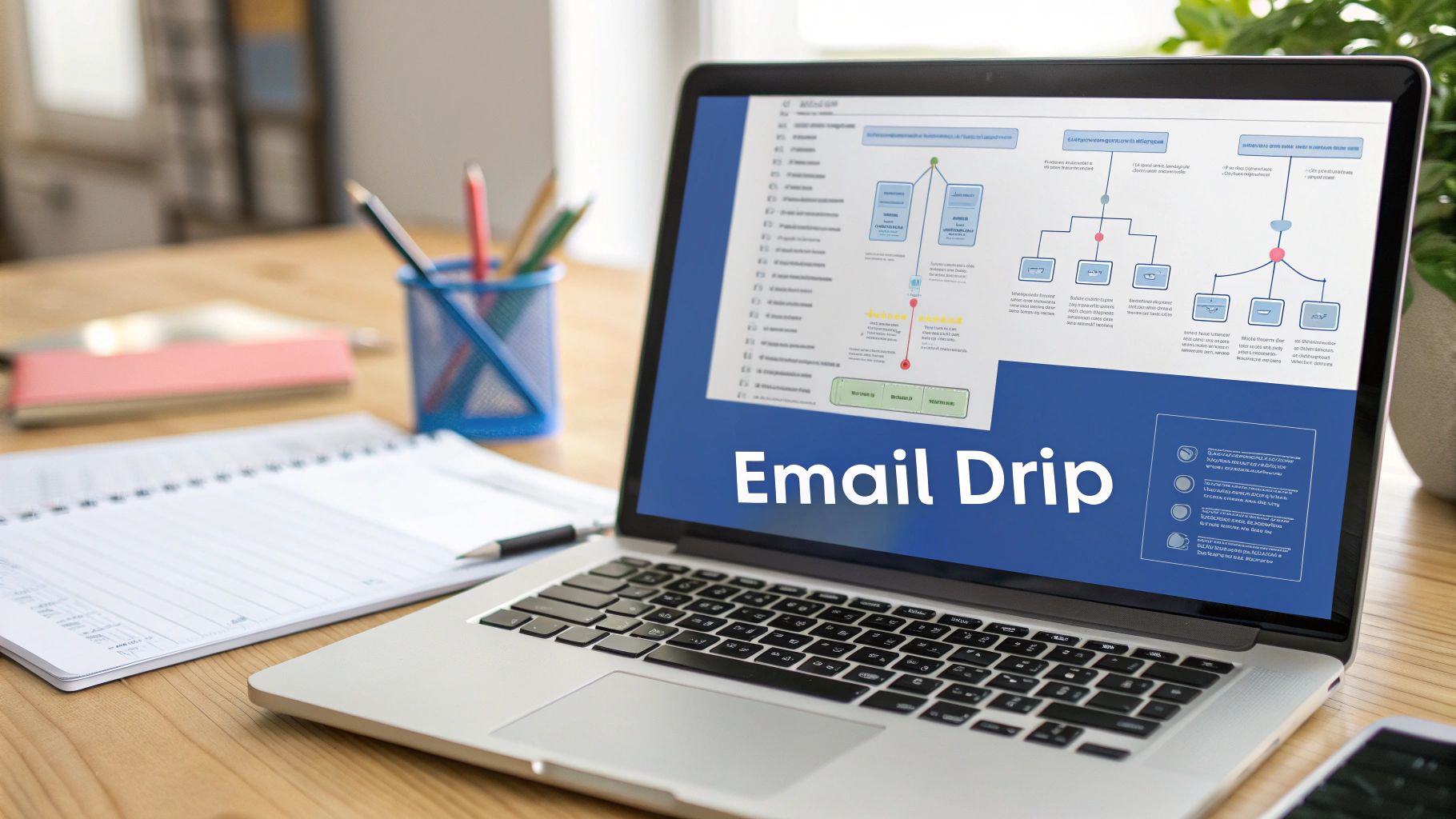
Unlike a one-size-fits-all newsletter, a nurture campaign adapts to the user. A new subscriber might receive a welcome series, while a prospect who downloaded a whitepaper gets a sequence with related case studies and a webinar invitation. This targeted approach transforms email from a broadcast channel into a personalized conversation, building trust and maintaining engagement throughout the customer lifecycle.
Why It’s a Best Practice
Personalized nurture campaigns are a cornerstone of modern marketing automation because they systematically move leads through the funnel without manual intervention. This practice ensures consistent brand communication and keeps your business top-of-mind. By delivering the right message at the right time, you significantly increase engagement, build stronger customer relationships, and improve conversion rates. Platforms like HubSpot and Pardot (MCAE) are built to execute these complex, behavior-driven workflows, making them essential for scaling lead nurturing efforts.
How to Implement It
Building effective nurture campaigns requires a strategic blueprint that aligns content with the user journey. The goal is to make each touchpoint feel like a timely and helpful next step.
- Map Sequences to the Buyer Journey: Define distinct paths for different audience segments. A top-of-funnel (TOFU) lead needs educational content, while a bottom-of-funnel (BOFU) lead requires product comparisons or demo invitations.
- Implement Behavioral Triggers: Move beyond simple time-based sends. Trigger campaigns based on actions like visiting a pricing page, abandoning a cart, or attending a webinar. A high-intent signal, like viewing the pricing page three times in a week, should trigger an immediate, relevant follow-up.
- Use Progressive Profiling: Don’t ask for all information at once. Use forms in your campaign assets to gradually collect more data over time, enriching your contact profiles and enabling deeper personalization.
- Include Clear, Relevant CTAs: Each email should have a single, clear call-to-action (CTA) that logically follows the content. The CTA for an early-stage email might be “Read Our Guide,” while a later email might say “Book a Consultation.”
- Monitor and Optimize: Closely track engagement metrics like open rates, click-through rates, and conversion rates for each email in the sequence. If a specific email causes a high drop-off rate, test new subject lines, content, or CTAs to improve performance.
3. Map and Automate the Multi-Channel Customer Journey
Marketing automation excels when it aligns with the actual path your customers take across all channels. Multi-channel customer journey mapping is the practice of visually outlining every touchpoint and interaction a prospect has with your brand, from their first social media impression to their post-purchase support ticket. It provides a holistic view of the entire customer experience, revealing critical moments of truth and operational gaps.
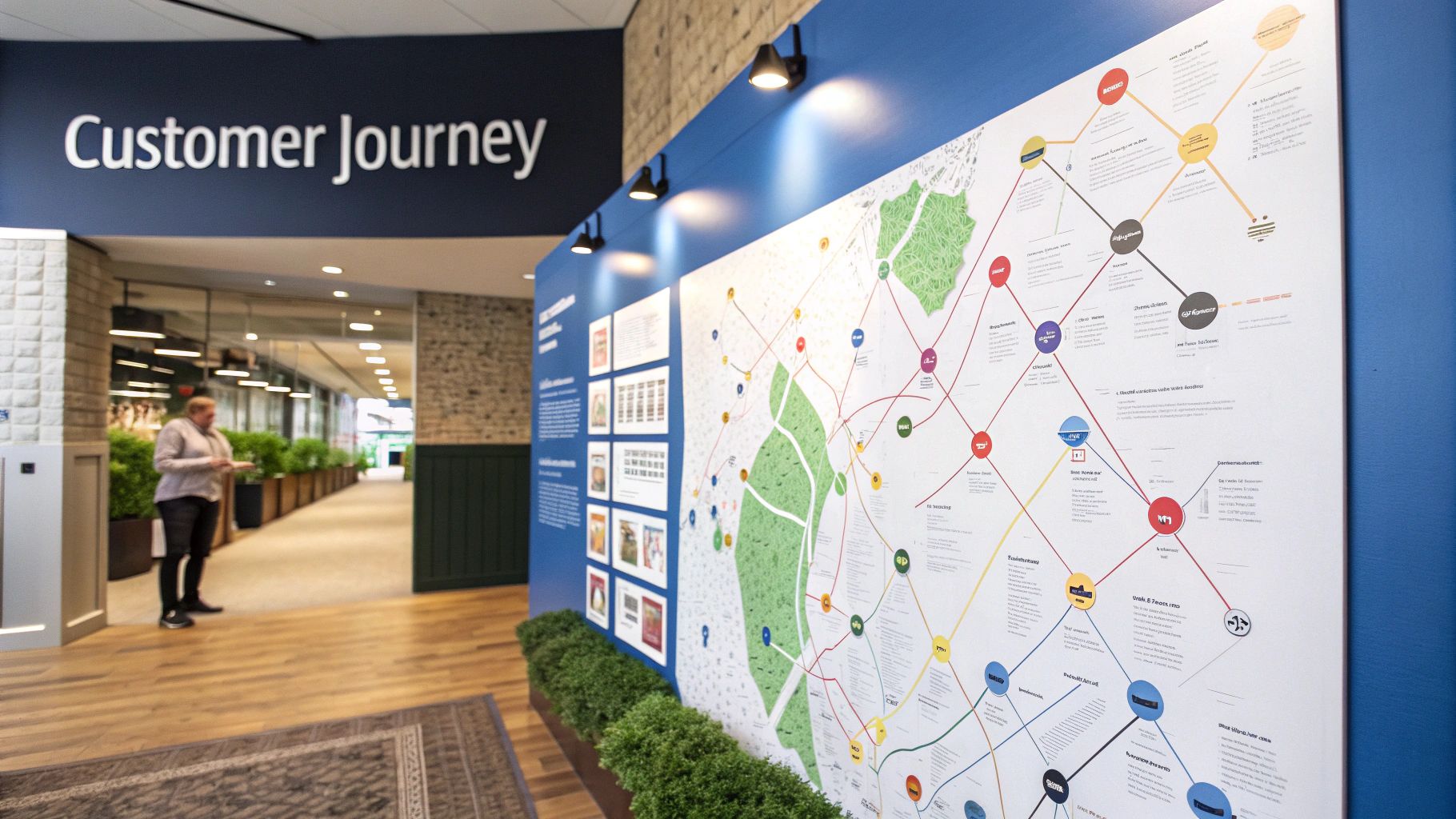
This process allows you to identify friction points and opportunities to deliver a more cohesive, personalized experience. For instance, a B2B SaaS company can map how a prospect interacts with a LinkedIn ad, a webinar, a sales demo, and an onboarding email sequence to ensure a seamless transition between marketing and sales. This strategic mapping is a cornerstone of modern marketing automation best practices, transforming disparate actions into a unified, customer-centric strategy.
Why It’s a Best Practice
Without a clear journey map, automation efforts can feel disjointed. You might send a promotion that conflicts with a recent customer service issue or deliver content that’s irrelevant to the customer’s current stage. Journey mapping solves this by forcing a customer-first perspective. It ensures messaging is consistent and contextually relevant, whether the interaction happens via email, a sales call, or a website visit. This alignment improves customer satisfaction, builds brand loyalty, and uncovers opportunities to automate high-impact moments.
How to Implement It
Building an effective customer journey map is a cross-functional effort that relies on data, not assumptions.
- Select a Primary Persona: Don’t try to map everyone at once. Start with a single, high-value customer persona to keep the process focused and manageable.
- Gather Customer Data: Use a mix of quantitative data (CRM analytics, website behavior) and qualitative insights (customer interviews, support tickets, sales team feedback) to build a complete picture.
- Outline Key Stages and Touchpoints: Identify the primary phases of the customer lifecycle (e.g., Awareness, Consideration, Decision, Advocacy) and list every interaction point within each stage across all channels.
- Incorporate Emotional States: Go beyond just actions. Map the customer’s feelings, motivations, and pain points at each touchpoint to understand the why behind their behavior. Where do they experience friction? What creates a positive experience?
- Identify Automation Opportunities: With the full journey visualized, pinpoint areas where automation can eliminate friction or deliver value. This could be triggering a helpful onboarding series after a purchase or sending a follow-up resource after a webinar attendance.
Platforms like Salesforce Customer 360 are built around this methodology, enabling businesses to connect data from every department to get a unified view of the customer. Regularly revisit and update your maps as customer behaviors and your business evolve.
4. Leverage Behavioral Trigger Automation for Real-Time Engagement
While lead scoring helps you identify who to talk to, behavioral trigger automation dictates when and with what to engage them. This practice involves setting up automated responses based on specific, real-time actions exhibited by prospects and customers. It moves beyond static campaign schedules, allowing you to deliver hyper-relevant messages at the precise moment of intent.

Whether a user visits your pricing page three times in a week, downloads a case study, or approaches a usage limit in your software, behavioral triggers can launch a corresponding workflow. This real-time reactivity makes your communication feel less like marketing and more like a helpful, timely conversation, a key element in modern marketing automation best practices.
Why It’s a Best Practice
Prospects are most receptive when they are actively engaged with your brand. Behavioral triggers capitalize on these fleeting moments of high interest, delivering the right message when it’s most likely to influence a decision. This approach dramatically increases engagement rates, accelerates pipeline velocity, and improves customer retention by proactively addressing user needs. Without it, you risk missing critical engagement windows, allowing motivated prospects to go cold or existing customers to churn.
How to Implement It
Implementing effective behavioral triggers requires a deep understanding of your customer journey and the key actions that signal intent.
- Map Key Conversion and Churn Signals: Identify the specific user actions that precede a purchase, upgrade, or cancellation. A B2B SaaS company, for example, might identify “viewed pricing page > 2 times in 7 days” as a high-intent conversion signal.
- Define Trigger Logic and Timing: Determine the exact conditions that will initiate an automation. This includes the action itself, the frequency, and the time delay. For example, trigger a sales outreach task only after a user downloads a bottom-of-funnel case study and visits the pricing page.
- Develop Contextual Content: Create the specific message, offer, or content piece that corresponds with each trigger. If a user is nearing their data limit, an automated email offering a storage upgrade is perfectly timed and relevant.
- Set Frequency Caps: To avoid overwhelming contacts, implement rules that limit how often a user can receive automated communications within a specific timeframe. This prevents a single, highly active user from being inundated with messages.
- Monitor and Optimize Performance: Continuously analyze the performance of your triggers. Track open rates, click-through rates, and conversion rates to identify which automations are driving results and which need refinement. Platforms like Pardot or HubSpot provide robust reporting to measure the ROI of each triggered workflow.
5. Prioritize Data Integration and Hygiene
Your marketing automation platform is only as powerful as the data that fuels it. Data integration is the process of consolidating customer information from disparate sources—your CRM, website, ERP, and third-party tools—into a single, unified view. This creates a reliable foundation for all marketing and sales activities, from personalization to reporting.
Maintaining clean data is the ongoing discipline that preserves this foundation. It involves regularly cleansing, deduplicating, standardizing, and validating your contact records to ensure they are accurate and complete. Without this crucial practice, even the most sophisticated automation workflows will fail, targeting the wrong people with irrelevant messages and producing unreliable analytics.
Why It’s a Best Practice
Inaccurate, siloed, or outdated data is the silent killer of marketing ROI. It leads to poor segmentation, failed personalization, high email bounce rates, and a fundamental distrust in reporting. By prioritizing data integration and hygiene, you create a single source of truth that empowers every revenue function. This is one of the most critical marketing automation best practices because it directly impacts lead quality, campaign effectiveness, and the ability to make data-driven decisions.
How to Implement It
Building a clean, integrated data ecosystem requires a clear strategy and consistent execution. This process is foundational for platforms like Salesforce and its Marketing Cloud Account Engagement (Pardot), which rely on accurate data for effective automation.
- Map Your Data Sources: Identify all systems that collect customer data (e.g., Salesforce CRM, website forms, event platforms, support tools). Prioritize integrating the most critical sources first, like your CRM.
- Establish Data Governance Policies: Create clear rules for data entry, formatting, and management. For instance, define a standardized format for job titles and state names to prevent variations that fragment your database. Train all team members on these standards.
- Implement Data Cleansing Processes: Schedule regular data audits, at least quarterly. Use built-in tools or third-party solutions to deduplicate records, correct typos, and remove invalid contacts.
- Use Progressive Profiling: Instead of asking for all information at once, use smart forms to incrementally collect data over time. This reduces friction for the user while enriching your contact profiles with valuable information.
- Enforce Rules at the Point of Collection: Implement validation rules on your forms to ensure data is entered correctly from the start. For example, require a valid business email address or use picklists instead of open text fields where possible to ensure standardization.
6. Commit to A/B Testing and Continuous Optimization
Setting up automation workflows is just the beginning. To achieve peak performance, you must adopt a mindset of continuous improvement, driven by A/B testing. This practice involves systematically testing different versions of your marketing assets—emails, landing pages, CTAs—to identify which variation performs best against a specific goal. This data-driven approach replaces assumptions with evidence, ensuring your strategy evolves and improves over time.
A/B testing, also known as split testing, allows you to compare a control version (A) against a variation (B) to see which one better achieves a specific goal, such as higher open rates, click-throughs, or conversions. By isolating and testing individual elements, you can methodically optimize every touchpoint in your customer journey, leading to significant cumulative gains.
Why It’s a Best Practice
Without A/B testing, your marketing automation efforts are based on guesswork. You might be leaving significant revenue on the table by using a suboptimal headline or call-to-action button. Continuous optimization creates a feedback loop where every campaign generates insights that inform the next, compounding your results. This is one of the most critical marketing automation best practices for maximizing ROI, as even small improvements in conversion rates can have a major impact on pipeline and revenue.
How to Implement It
Integrating a testing framework into your marketing operations requires a structured and consistent approach.
- Formulate a Clear Hypothesis: Start with a specific, testable question. For example, “Changing our CTA button color from blue to orange will increase form submissions by 10% because it stands out more on the page.”
- Isolate One Variable: To get clean, actionable data, only test one element at a time. This could be the email subject line, the hero image on a landing page, or the wording of your primary CTA.
- Ensure Statistical Significance: Run your test long enough to gather a sufficient sample size. Don’t declare a winner based on a handful of conversions; use a statistical significance calculator to validate your results.
- Document and Analyze Learnings: Whether a test wins, loses, or is inconclusive, document the outcome. These insights build a repository of knowledge about what resonates with your audience, which can be applied to future campaigns.
- Create a Testing Roadmap: Plan your tests in advance with a testing calendar. Prioritize tests on high-traffic pages or critical conversion points in your funnel to maximize impact. For instance, testing the form on your “Request a Demo” page is likely more valuable than testing a blog post CTA.
7. Align Automation with Customer Lifecycle Stages
Effective marketing automation aligns communication with the customer’s journey, not just the company’s sales pitch. Lifecycle stage automation achieves this by creating workflows tailored to each phase of the customer relationship, from a new subscriber to a brand evangelist. This strategic approach ensures prospects and customers receive appropriate messaging, content, and offers based on where they are, guiding them seamlessly through the funnel.
Instead of a one-size-fits-all nurture track, this practice segments audiences by their relationship stage. For instance, HubSpot defines distinct stages like Subscriber, Lead, MQL, and Customer, each triggering different automated actions. This ensures a new lead receives educational content, while a long-time customer is invited to a loyalty program, creating a cohesive and context-aware experience.
Why It’s a Best Practice
Without lifecycle stage automation, you risk alienating prospects with premature sales pitches or neglecting customers post-purchase. This methodology provides a clear framework for nurturing relationships at scale, ensuring no lead or customer falls through the cracks. It bridges the gap between marketing, sales, and customer success by creating a unified view of the customer journey, directly impacting retention and lifetime value. It is one of the foundational marketing automation best practices for sustainable growth.
How to Implement It
Implementing lifecycle stage marketing requires a clear definition of your customer journey and close alignment between teams.
- Define and Document Each Stage: Collaboratively map out the stages of your customer journey. Clearly define the specific criteria (e.g., specific form submission, deal stage change in CRM) that trigger a contact’s move from one stage to the next.
- Create Stage-Specific Content: Develop content assets that address the unique questions, goals, and pain points of contacts at each stage. A “subscriber” might need a top-of-funnel eBook, while an “opportunity” requires a detailed case study or ROI calculator.
- Build Trigger-Based Workflows: Use your marketing automation platform to build workflows that automatically enroll contacts into stage-specific nurture sequences. For example, a contact becomes a “Customer” when their deal is marked “Closed-Won” in Salesforce, triggering an onboarding sequence.
- Align with Sales and Success: Ensure your lifecycle stages map directly to your sales process (Lead, MQL, SQL, Opportunity) and customer success goals. This alignment creates smooth handoffs and a consistent customer experience.
- Monitor and Optimize Progression: Track the conversion rates between each stage to identify bottlenecks. If leads are stalling in the MQL stage, your nurture content or lead scoring may need refinement.
This approach is crucial during the post-sale period. Exploring robust customer onboarding best practices can provide a powerful framework for your “Customer” and “Evangelist” lifecycle stages.
8. Establish Robust Performance Analytics and ROI Measurement
Marketing automation is an investment, and like any business investment, its value must be proven. Performance analytics and ROI measurement are the practices that connect your automation efforts directly to business outcomes. This involves systematically tracking key metrics, analyzing campaign performance, and using attribution models to demonstrate the financial impact of your marketing activities, justifying spend and guiding future strategy.
This data-driven approach moves the conversation from marketing metrics like open rates to business metrics like pipeline generated and customer acquisition cost. It provides clear accountability and empowers marketing to function as a revenue center, speaking the language of the C-suite.
Why It’s a Best Practice
Without robust analytics and ROI measurement, marketing automation risks being seen as a cost center rather than a strategic driver of growth. Proving ROI is critical for securing budget, gaining executive buy-in, and earning a seat at the revenue table. This practice transforms marketing from a “black box” of activity into a transparent, predictable engine for business growth, aligning marketing operations directly with C-suite objectives. It ensures that every workflow and campaign is optimized for maximum financial impact.
How to Implement It
Building a culture of measurement requires a strategic approach that connects marketing actions to business results.
- Establish Baseline Metrics: Before launching new automation workflows, document your current performance. This baseline is crucial for accurately measuring lift and demonstrating the impact of your initiatives.
- Focus on Business Outcomes: While email clicks are important, prioritize metrics that sales and leadership care about, such as Marketing Influenced Pipeline, Customer Lifetime Value (CLV), and Sales Cycle Length.
- Start with a Simple Attribution Model: Don’t get paralyzed by complexity. Begin with a first-touch or last-touch attribution model to understand initial and final conversion drivers. You can graduate to more complex models like linear or U-shaped as your analytics maturity grows.
- Implement Regular Reporting Cadences: Create stakeholder-specific dashboards. Your marketing team needs granular campaign data, while your executive team needs a high-level view of ROI and pipeline contribution.
- Use Cohort Analysis: Analyze groups of customers who started at the same time to understand the long-term impact of your nurture campaigns on retention and lifetime value.
- Combine Quantitative and Qualitative Data: Supplement your CRM data with qualitative feedback from sales and customers. Ask sales which campaigns are delivering the best leads to add context to your numbers.
For those looking to build a strong foundation, you can learn more about how to measure marketing ROI to refine your measurement strategy. Consistent analysis ensures your marketing automation best practices are not just implemented, but are also actively contributing to revenue.
Marketing Automation Best Practices Comparison
| Item | Implementation Complexity | Resource Requirements | Expected Outcomes | Ideal Use Cases | Key Advantages |
|---|---|---|---|---|---|
| Lead Scoring and Segmentation | High – complex setup and analysis | Significant data collection and CRM integration | Improves sales efficiency; increases conversion rates by 30-50% | Prioritizing leads; personalized messaging at scale | Aligns marketing and sales; clear ROI measurement |
| Personalized Email Drip Campaigns | Medium to High – content and automation setup | Extensive content creation and automation tools | Generates 320% more revenue; improves engagement rates by 14-18% | Nurturing leads via automated sequences | Saves time; scales personalization; detailed analytics |
| Multi-Channel Customer Journey Mapping | High – involves multiple data sources and platforms | Significant integration and data analysis | Provides holistic customer view; increases conversions by 15-20% | Optimizing customer experience across channels | Identifies gaps; improves satisfaction; strategic budgeting |
| Behavioral Trigger Automation | Medium to High – real-time tracking and integration | Sophisticated tracking systems and automation | Increases engagement 50-100%; improves conversions | Real-time personalized messaging based on behavior | Timely communication; scalable one-to-one marketing |
| Data Integration and Clean Data Management | High – complex system integration and maintenance | Dedicated resources for data governance and cleansing | Accurate personalization and segmentation; reliable analytics | Managing unified customer data across platforms | Improves data quality; supports compliance; reduces wasted spend |
| A/B Testing and Continuous Optimization | Medium – requires testing frameworks and traffic | Analytical tools and sufficient sample sizes | Increases conversions by 10-25%; data-driven decisions | Optimizing marketing elements iteratively | Reduces guesswork; compounding improvements over time |
| Lifecycle Stage Marketing Automation | High – complex workflows and content creation | Extensive content and workflow design | Increases customer lifetime value by 30-50%; reduces churn | Automating marketing based on customer lifecycle stages | Relevant messaging; better resource allocation; stronger relationships |
| Performance Analytics and ROI Measurement | High – requires advanced analytics and modeling | Skilled data analysts and reporting tools | Clear ROI justification; data-driven budget allocation | Measuring and optimizing marketing impact | Aligns marketing with revenue goals; builds executive credibility |
Turning Best Practices into Business Outcomes
Navigating the landscape of marketing automation can feel like assembling a complex machine without a blueprint. However, a strategic, methodical approach transforms this complexity into a powerful engine for revenue growth. The journey from a basic email-sending tool to a sophisticated RevOps command center is built on a foundation of proven marketing automation best practices. It’s not about mastering a single tactic, but about orchestrating a symphony of interconnected strategies.
The principles we’ve explored—from meticulous lead scoring and dynamic segmentation to personalized, multi-channel journey mapping—are the essential components. They ensure you’re not just sending messages, but delivering the right content to the right person at the precise moment of need. This level of precision is only possible when underpinned by clean, integrated data and a commitment to continuous, data-driven optimization through rigorous A/B testing.
From Tactics to a Cohesive Revenue Engine
The true power of these best practices is realized when they are integrated into a holistic system. Imagine a framework where behavioral triggers seamlessly advance a prospect through lifecycle stages, and where every automated interaction is informed by a clean, 360-degree view of the customer within your CRM, whether it’s Salesforce, HubSpot, or Pardot (MCAE). This is where marketing automation transcends its traditional boundaries and becomes the central nervous system of your entire go-to-market strategy.
The most critical takeaway is this: technology is an enabler, not the solution. A state-of-the-art platform without a sound strategy is like a sports car without a driver. The value lies in how you implement these practices to create a seamless, cohesive, and measurable customer experience. It’s about building a system where marketing and sales operations are perfectly aligned, driven by shared data and a unified goal of revenue optimization.
Your Actionable Path Forward
Mastering these concepts is not a one-time project; it’s an ongoing commitment to operational excellence. To translate this knowledge into tangible results, your immediate focus should be on a systematic audit and prioritized implementation.
Here are your next steps:
- Conduct a Data Health Audit: Start with your foundational element. Evaluate the quality and integration of your data across your MarTech stack. Is your CRM data clean, standardized, and flowing correctly into your automation platform?
- Review Your Lifecycle Stages: Map your current automation workflows against your defined customer lifecycle stages. Identify gaps where leads stagnate or receive generic messaging that doesn’t align with their buying journey.
- Prioritize One Key Workflow: Don’t try to overhaul everything at once. Select one high-impact area, such as your lead nurturing for MQLs or your customer onboarding sequence, and apply these marketing automation best practices to optimize it from end to end.
- Establish Your ROI Benchmarks: Ensure your analytics and reporting are configured to track the right metrics. Move beyond open and click-through rates to measure pipeline influence, conversion velocity, and customer lifetime value.
Adopting this structured approach ensures you build momentum and demonstrate value quickly. By focusing on these high-leverage activities, you begin the process of transforming your marketing automation platform from a cost center into a predictable, scalable revenue driver. This strategic implementation is what separates organizations that merely use automation from those that truly master it, achieving a powerful competitive advantage in the B2B marketplace.
Is your team struggling to connect the dots between your MarTech stack and tangible revenue outcomes? The expert RevOps consultants at MarTech Do specialize in auditing, implementing, and optimizing Salesforce, HubSpot, and Pardot systems to turn these marketing automation best practices into your reality. Visit MarTech Do to see how we can help you build a high-performing revenue engine.