
Finding the right marketing automation tool is a critical step in scaling B2B operations and driving revenue. The challenge isn’t a lack of options, but navigating a crowded market to identify the platform that aligns with your specific GTM strategy, technical stack, and budget. An incorrect choice leads to wasted resources on unused features or, worse, a system that creates more manual work than it eliminates. This is where a strategic, RevOps-focused approach becomes essential for making an informed decision.
This guide provides a detailed breakdown of the leading marketing automation platforms, designed for marketing operations, sales operations, and RevOps decision-makers. We move beyond surface-level feature lists to offer a practical analysis of each tool’s strengths and limitations. You will find a professional assessment of each platform, covering key areas like CRM integration capabilities, workflow builder sophistication, and reporting accuracy.
Inside, you will discover:
- A direct comparison of top-tier platforms like HubSpot, ActiveCampaign, and Brevo.
- Actionable pros and cons grounded in real-world implementation experience.
- Specific B2B use-case scenarios to help you visualize each tool in your own operations.
- Clear screenshots and direct links to explore each solution further.
Our goal is to equip you with the insights needed to select the right engine for your growth, ensuring your technology investment accelerates performance rather than hindering it.
1. HubSpot Marketing Hub
HubSpot Marketing Hub is an all-in-one platform that combines powerful marketing automation with a native CRM, making it one of the most comprehensive marketing automation tools for small business leaders aiming to manage the entire customer lifecycle. Its primary advantage is the seamless integration between its marketing, sales, and service hubs, providing a single source of truth for all customer interactions. This eliminates the data silos common with disconnected systems, a core tenet of effective marketing operations.
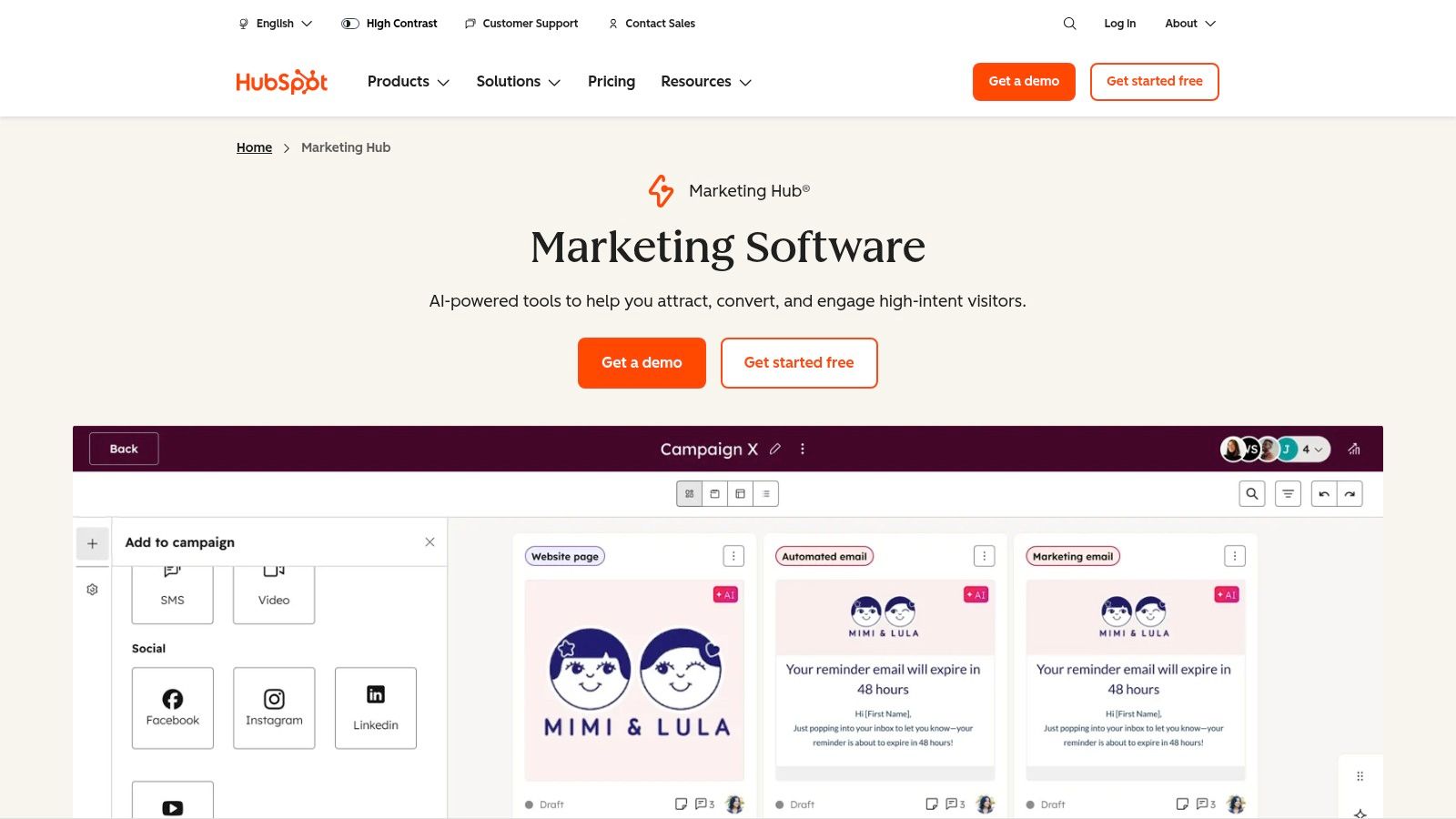
The platform scales exceptionally well, offering a robust free tier for startups and powerful, feature-rich paid plans for growing businesses. A key differentiator is its user-friendly visual workflow builder, which allows marketing operations teams to create sophisticated lead nurturing sequences without deep technical expertise. By applying sound marketing automation best practices, B2B companies can leverage HubSpot to score leads, segment audiences, and trigger personalized communications that drive pipeline velocity.
Key Details & Considerations
- Best For: B2B companies seeking an integrated CRM and marketing automation solution that can scale from startup to enterprise.
- Pros: Generous free plan, intuitive interface, extensive educational resources, and a massive integration ecosystem that connects with tools like Salesforce.
- Cons: Paid plans can become expensive as your contact list grows, and mandatory onboarding fees for Pro/Enterprise tiers add to the initial investment.
- Website: hubspot.com/products/marketing
2. Mailchimp
Mailchimp is a widely-used platform that has become synonymous with email marketing, but its capabilities extend into a full suite of automation features. As one of the most accessible marketing automation tools for small business, it excels at providing an intuitive entry point for companies new to automation. Its core strength lies in its user-friendly email designer and pre-built customer journey templates, which allow businesses to quickly implement welcome series, abandoned cart reminders, and re-engagement campaigns.
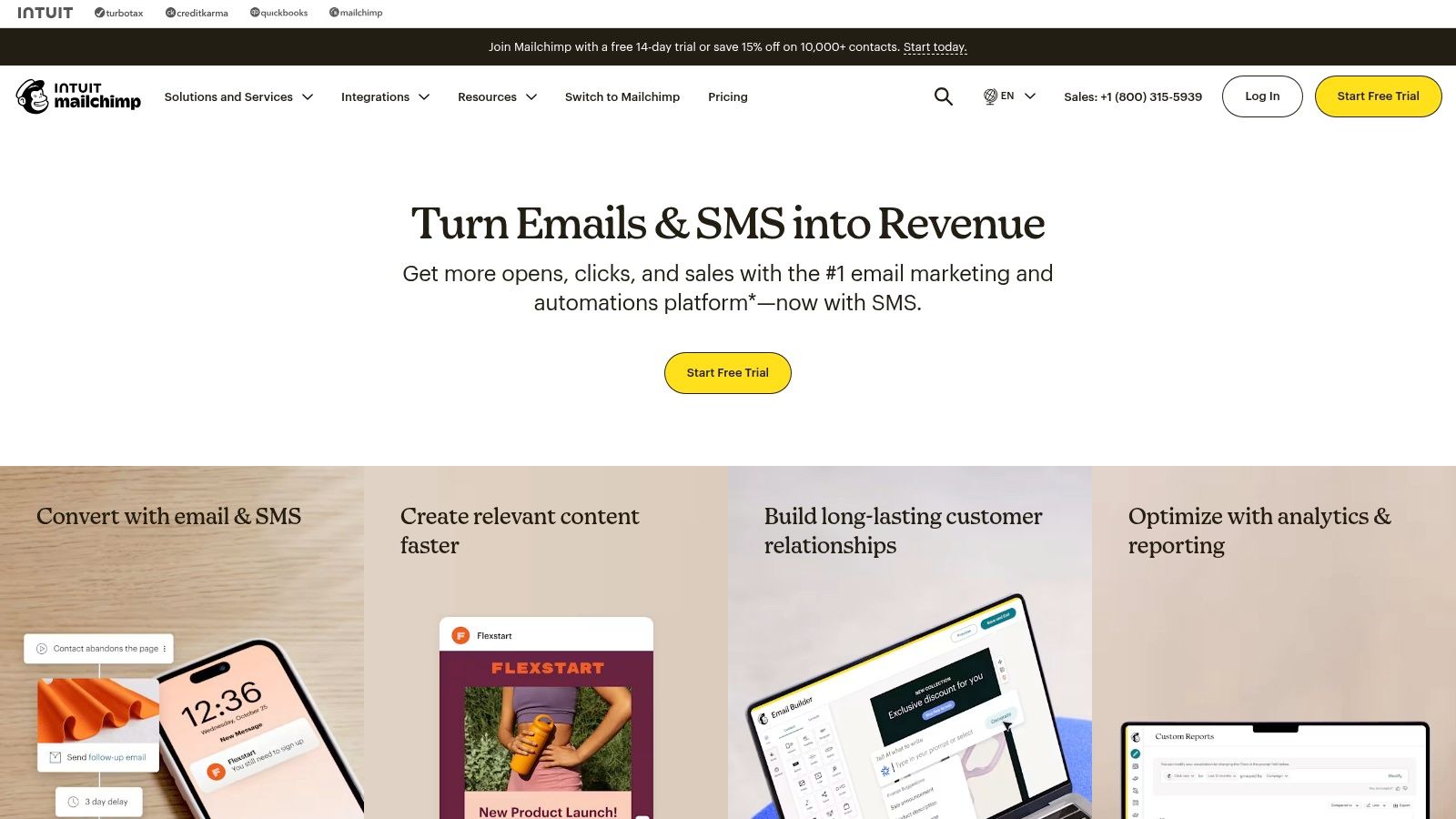
The platform is designed for straightforward implementation, making it easy to manage audiences, segment contacts based on behavior, and launch targeted campaigns. While its B2B capabilities are less sophisticated than platforms like HubSpot or Pardot, Mailchimp has expanded to include landing pages and social media posting. This makes it a solid, centralized hub for businesses focusing on direct communication channels. Its clear pricing tiers provide flexibility for businesses with fluctuating marketing needs.
Key Details & Considerations
- Best For: Small businesses and startups needing a user-friendly email and automation platform to get started quickly.
- Pros: Easy to start with broad integrations, clear upgrade paths with multiple pricing tiers, and a pay-as-you-go option is available for infrequent senders.
- Cons: The free tier has tight contact and sending limits, and its automation logic lacks the complexity required for advanced B2B sales cycles.
- Website: https://mailchimp.com
3. ActiveCampaign
ActiveCampaign is an email and omnichannel marketing automation platform renowned for its powerful visual workflows and integrated CRM. It stands out as one of the best marketing automation tools for small business users who require sophisticated customer journey management without the enterprise-level price tag. Its core strength lies in its flexibility, allowing marketing operations teams to create highly granular automation sequences based on customer behavior, engagement, and custom data points.
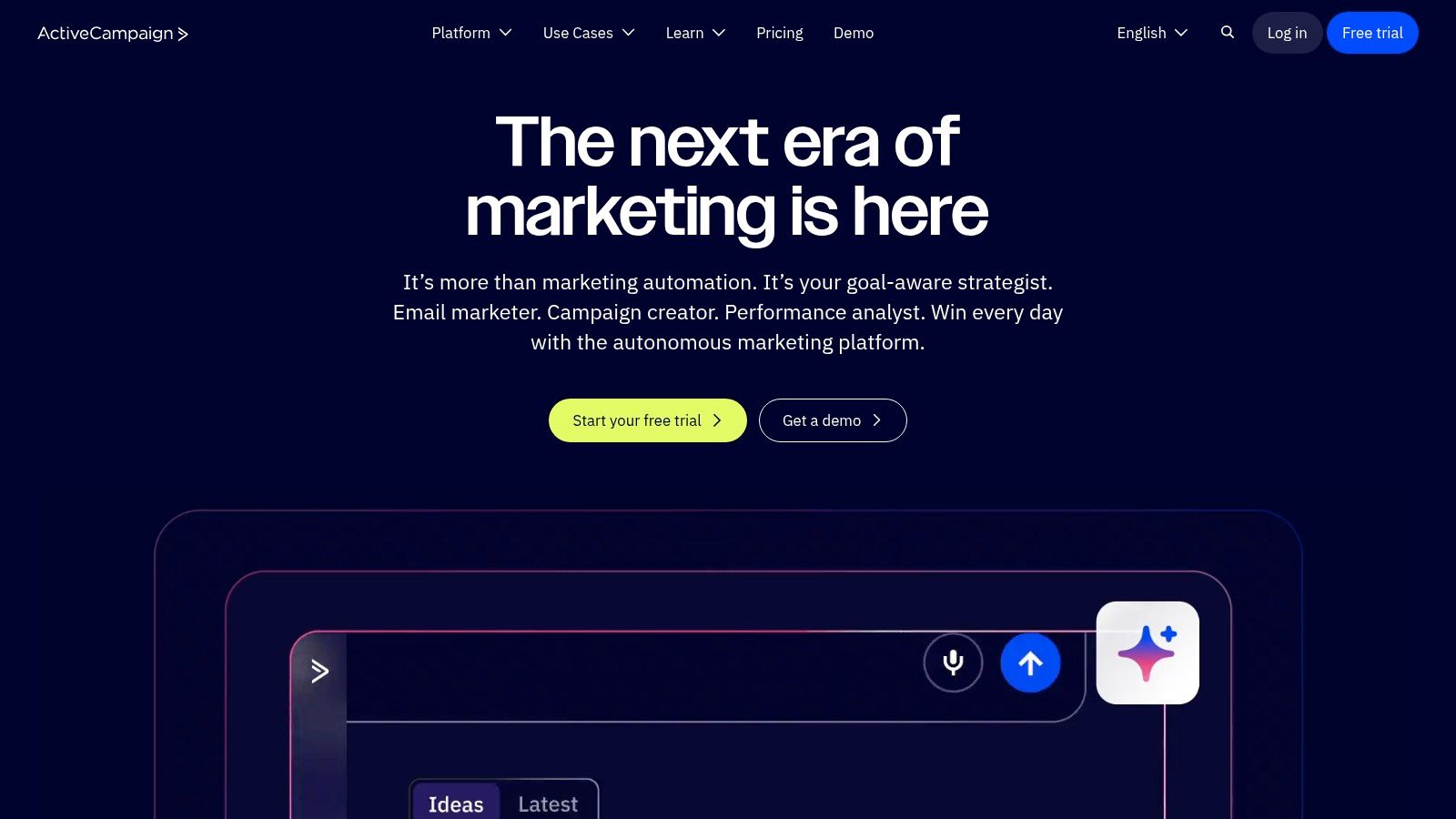
The platform combines marketing automation with sales automation through a built-in CRM that includes deal pipelines and lead scoring. This allows marketing and sales teams to work from a unified system, aligning on lead progression from initial engagement through to conversion. With deep integrations for ecommerce platforms like Shopify and site tracking capabilities, ActiveCampaign provides a holistic view of the customer lifecycle, making it ideal for B2B companies focused on personalization and conversion optimization.
Key Details & Considerations
- Best For: SMBs that need advanced automation and segmentation capabilities to manage complex B2B customer journeys.
- Pros: Extremely flexible automations catering to advanced use cases, no setup fee and a 14-day free trial offered, strong email deliverability reputation.
- Cons: Pricing increases with contact count and advanced features, and the platform requires a learning curve to master fully.
- Website: https://www.activecampaign.com
4. Klaviyo
Klaviyo is a best-in-class email and SMS marketing automation platform designed specifically for ecommerce businesses, particularly those built on Shopify, WooCommerce, and BigCommerce. Its primary advantage lies in its deep, native integrations that pull in rich customer and transactional data, allowing for highly personalized and revenue-focused automation. For B2B companies with an ecommerce component, Klaviyo stands out as one of the most powerful marketing automation tools for small business growth by directly tying marketing actions to sales outcomes.
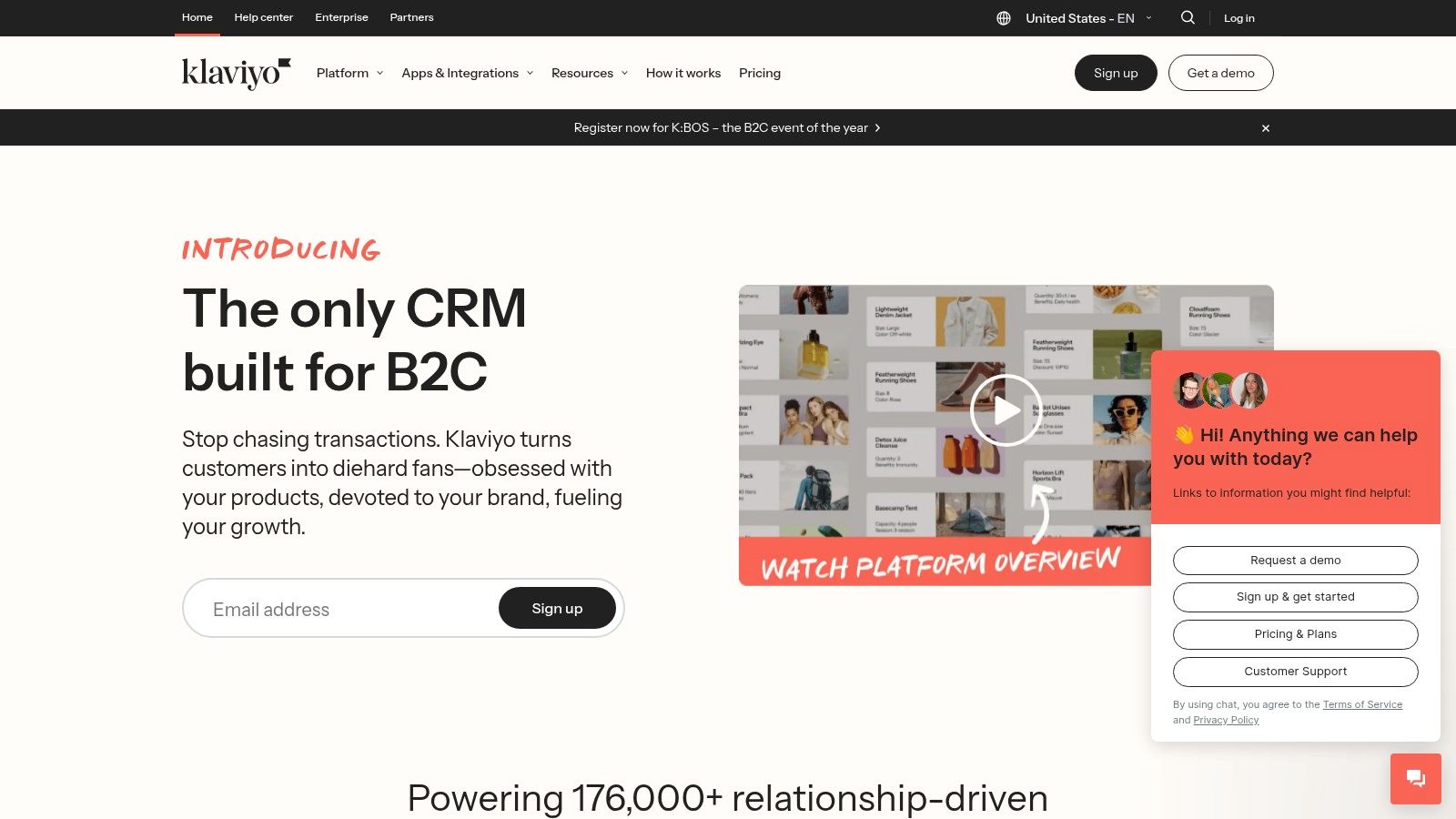
The platform excels at granular audience segmentation based on event triggers like “viewed product” or “added to cart,” enabling sophisticated automation flows such as abandoned cart reminders and browse abandonment sequences. A key differentiator is its unified reporting that combines email and SMS performance with clear revenue attribution, helping teams understand the direct ROI of their campaigns. Klaviyo’s large library of prebuilt, ecommerce-specific automated flows allows businesses to implement proven strategies quickly without starting from scratch.
Key Details & Considerations
- Best For: Ecommerce SMBs, especially on Shopify or WooCommerce, that need advanced segmentation and revenue attribution.
- Pros: Excellent for revenue-focused marketing, strong data model with clear financial metrics, and a large library of ecommerce-specific automations.
- Cons: Pricing scales as the number of active profiles grows, and its B2B features are less developed compared to platforms like HubSpot.
- Website: https://www.klaviyo.com
5. Constant Contact
Constant Contact is a well-established email marketing platform that has evolved to include a suite of marketing automation tools for small business, particularly those in local services, retail, and nonprofits. Its primary strength lies in its simplicity and guided user experience, making it accessible for business owners who are not marketing experts. The platform combines core email functionality with social media posting, event management, and SMS marketing add-ons, providing a broad, if not deeply specialized, toolkit.
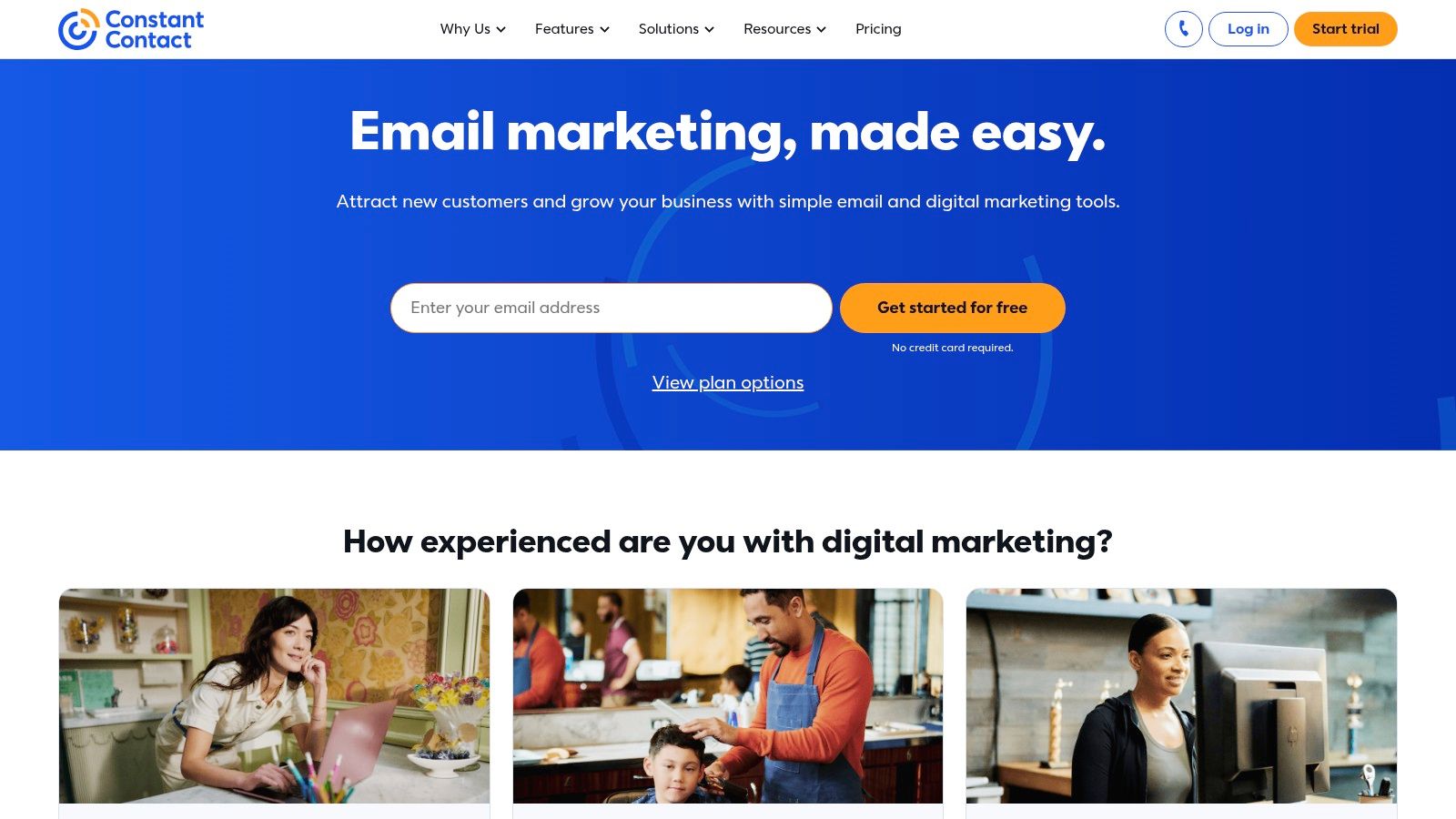
The platform focuses on foundational automation, such as welcome series, birthday emails, and its useful “resend to non-openers” feature. A key differentiator is its integration of event management tools, allowing users to create landing pages, sell tickets, and manage registrations directly within their marketing ecosystem. While its automation capabilities are not as complex as dedicated RevOps platforms, its all-in-one approach to essential marketing tasks makes it a practical choice for getting started.
Key Details & Considerations
- Best For: Local businesses, event organizers, and nonprofits needing an easy-to-use platform with strong email marketing and integrated event tools.
- Pros: Straightforward setup with live onboarding help, broad features including events and social, and reliable customer support resources.
- Cons: Automation depth is limited for complex B2B sales funnels, and email send limits are capped by a contact multiplier on each plan tier.
- Website: https://www.constantcontact.com
6. Brevo (formerly Sendinblue)
Brevo, formerly Sendinblue, stands out as a versatile platform offering a comprehensive suite of tools beyond basic email. It consolidates email, SMS, WhatsApp, live chat, and a native CRM into a single dashboard, making it one of the most cost-effective marketing automation tools for small business leaders who need multichannel communication capabilities. Its primary advantage is the generous pricing model, which allows unlimited contacts and focuses on send volume instead.
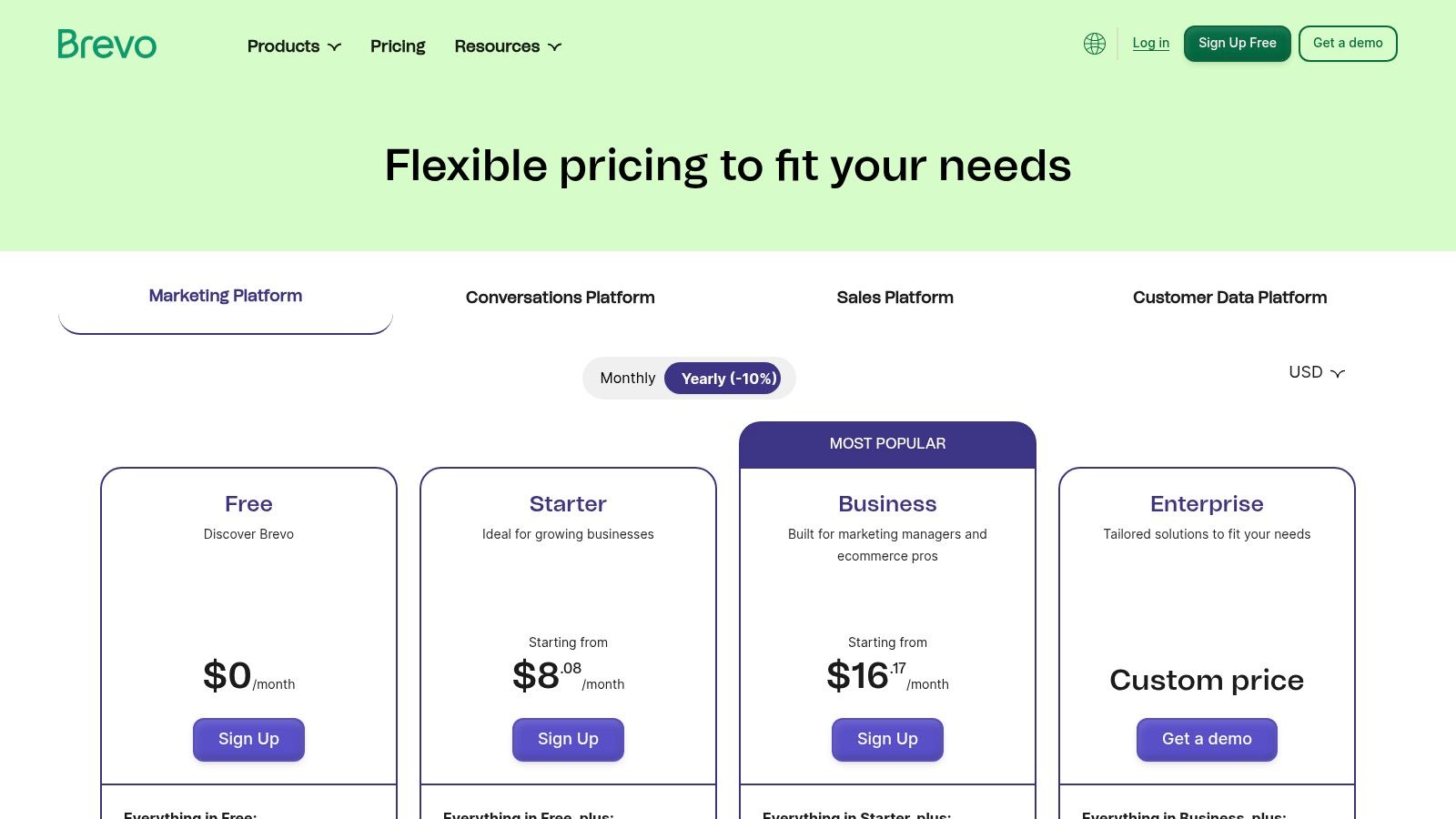
The platform is particularly strong for businesses that rely on both marketing campaigns and transactional messaging, offering a robust SMTP/API for system-triggered emails like order confirmations. While its automation builder is more straightforward than some high-end competitors, it provides essential functionality for lead nurturing and segmentation. For practical ideas on implementation, you can explore various marketing automation workflow examples that can be adapted for Brevo’s system to streamline customer journeys effectively.
Key Details & Considerations
- Best For: Cost-conscious small businesses needing an all-in-one solution for email, SMS, and transactional messaging.
- Pros: Generous free plan with unlimited contacts, integrated multichannel marketing tools (SMS, WhatsApp), and flexible pay-as-you-go credit options.
- Cons: The user interface and reporting dashboards are less polished than premium alternatives, and advanced features like phone support are restricted to higher-tier plans.
- Website: www.brevo.com/pricing
7. GetResponse
GetResponse positions itself as a versatile marketing software platform, expanding beyond traditional email marketing to offer a more holistic suite of tools. For small businesses, it consolidates webinars, landing pages, and conversion funnels into one system, reducing the need for multiple subscriptions. This makes it one of the more comprehensive marketing automation tools for small business operators who manage multiple facets of their digital presence.
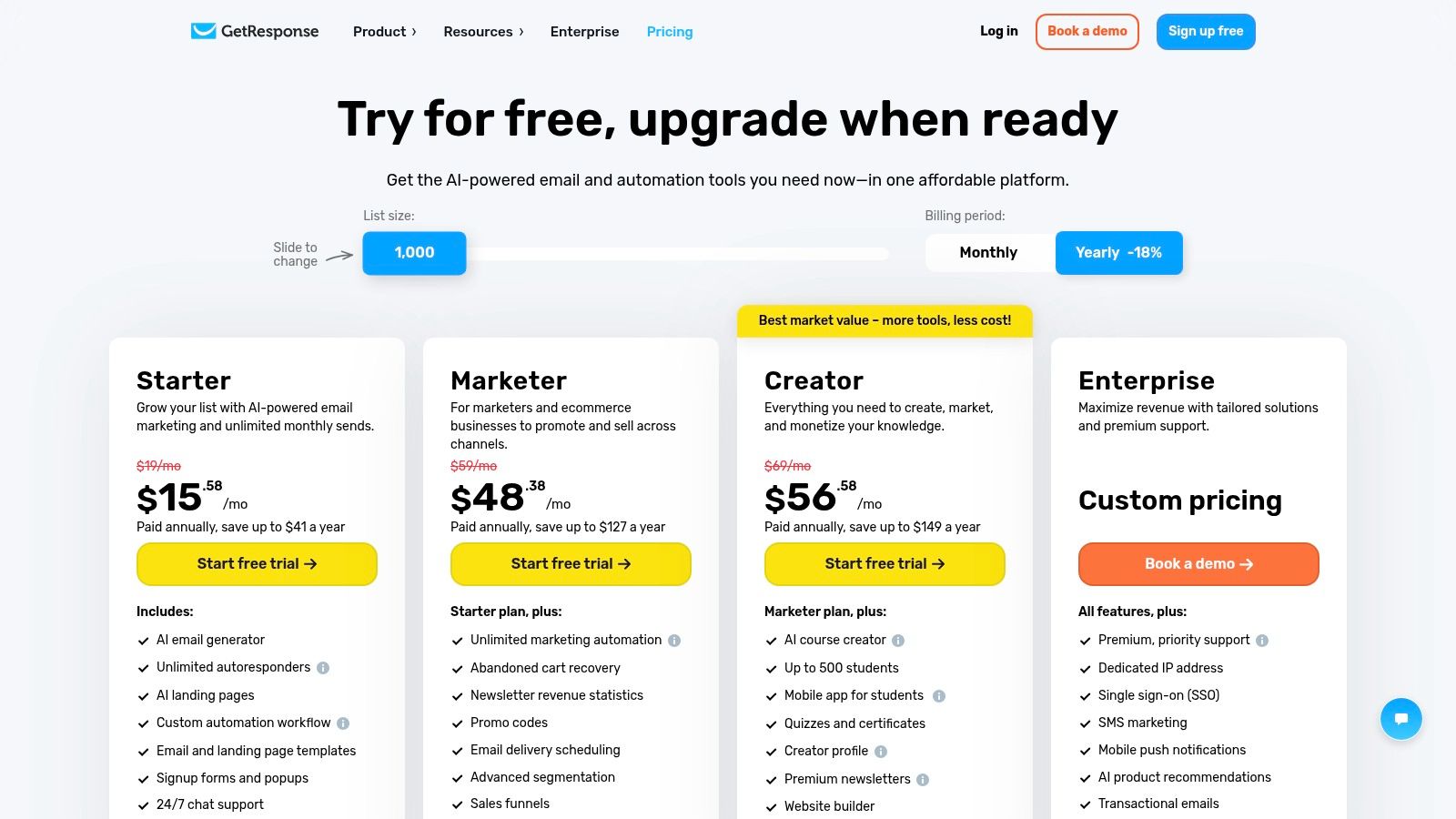
The platform’s standout feature is its integrated webinar functionality, a rarity in this price bracket that typically requires a separate, costly tool. Its visual automation builder allows for the creation of sophisticated, logic-based workflows for lead nurturing and customer segmentation. A significant advantage for high-volume senders is that paid plans offer unlimited email sends, providing predictable monthly costs even as communication frequency increases.
Key Details & Considerations
- Best For: B2B companies and entrepreneurs who need an all-in-one platform that includes webinar hosting and sales funnel builders.
- Pros: Unlimited email sends on paid plans, integrated webinar marketing capabilities, and discounts for non-profits and long-term commitments.
- Cons: The naming conventions for features and tier limitations can be confusing, and some add-ons are managed differently in North America.
- Website: www.getresponse.com/pricing
8. Keap (formerly Infusionsoft)
Keap, formerly Infusionsoft, is an all-in-one CRM and marketing automation platform designed specifically for service-based small businesses. Its primary advantage is consolidating core business functions like sales, marketing, and payments into a single system, effectively reducing tool sprawl. This integrated approach makes it one of the most practical marketing automation tools for small business owners who need to manage the entire client journey, from lead capture to final payment, without juggling multiple subscriptions.
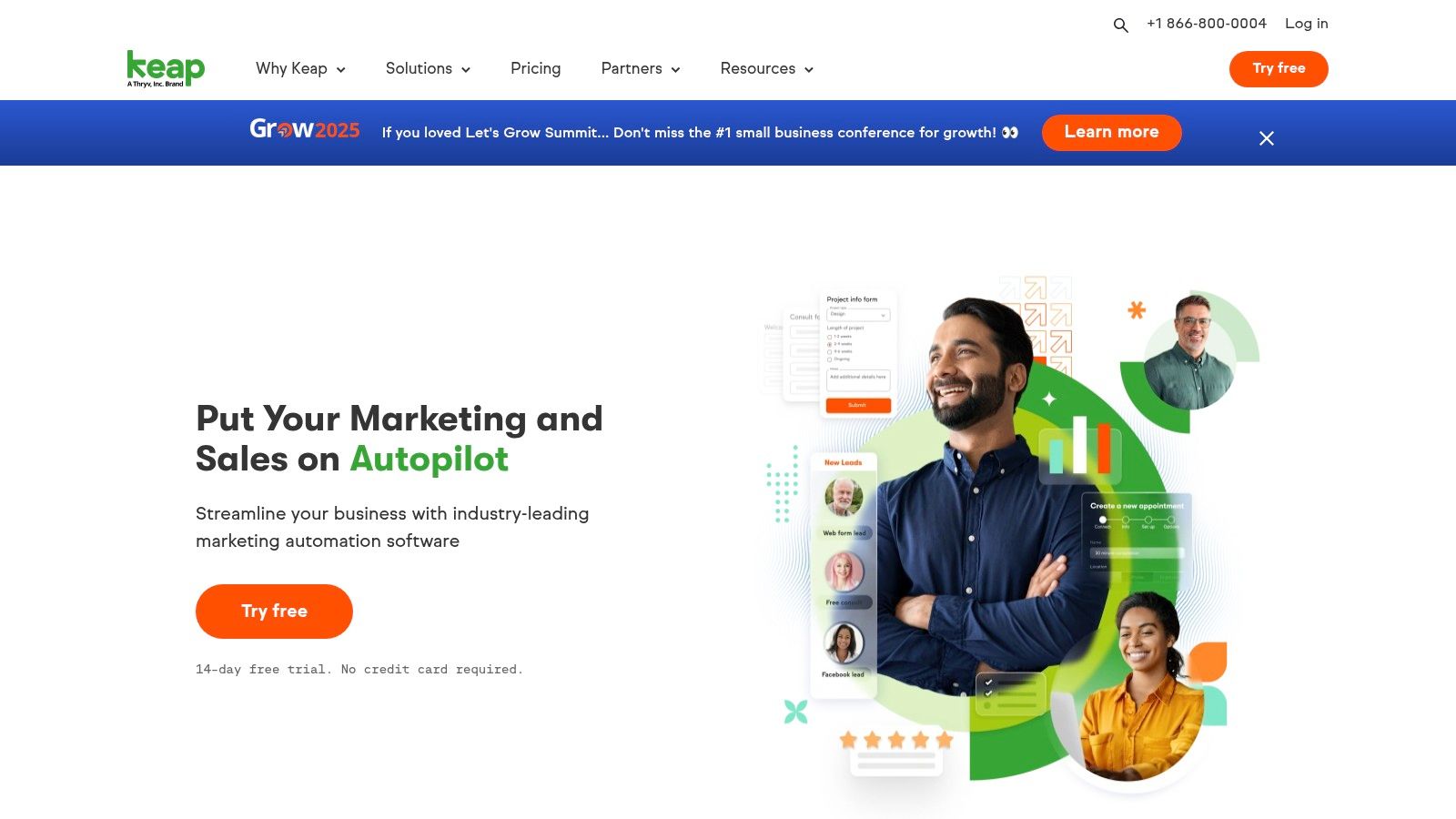
The platform excels with its visual “Easy Automations” and “Advanced Automations” builder, which allows users to create sequences triggered by client actions, such as form submissions or paid invoices. A key differentiator is its native payment processing (Keap Pay), invoicing, and appointment scheduling tools, which are deeply connected to the CRM. This tight CRM and marketing automation integration allows for sophisticated workflows, like automatically starting a new client onboarding sequence the moment an invoice is paid, which significantly streamlines operations.
Key Details & Considerations
- Best For: Service-based B2B companies (e.g., consultants, agencies, coaches) wanting to combine CRM, sales, marketing, and payment processing in one platform.
- Pros: Combines multiple business tools into one, reducing complexity and cost. Strong automation capabilities tied directly to financial transactions and client milestones. A 14-day free trial is available to test the platform.
- Cons: Starting price point is higher than standalone email marketing tools. Advanced services like professional data migration can add to the initial investment.
- Website: keap.com
9. Omnisend
Omnisend is an ecommerce-focused platform that excels at delivering unified omnichannel campaigns, making it one of the most effective marketing automation tools for small business owners in the retail space. It centralizes email, SMS, and web push notifications into a single, cohesive workflow, allowing online stores on Shopify, BigCommerce, or WooCommerce to drive sales and customer loyalty. Its primary advantage is its deep integration with ecommerce platforms, enabling powerful segmentation based on shopping behavior.
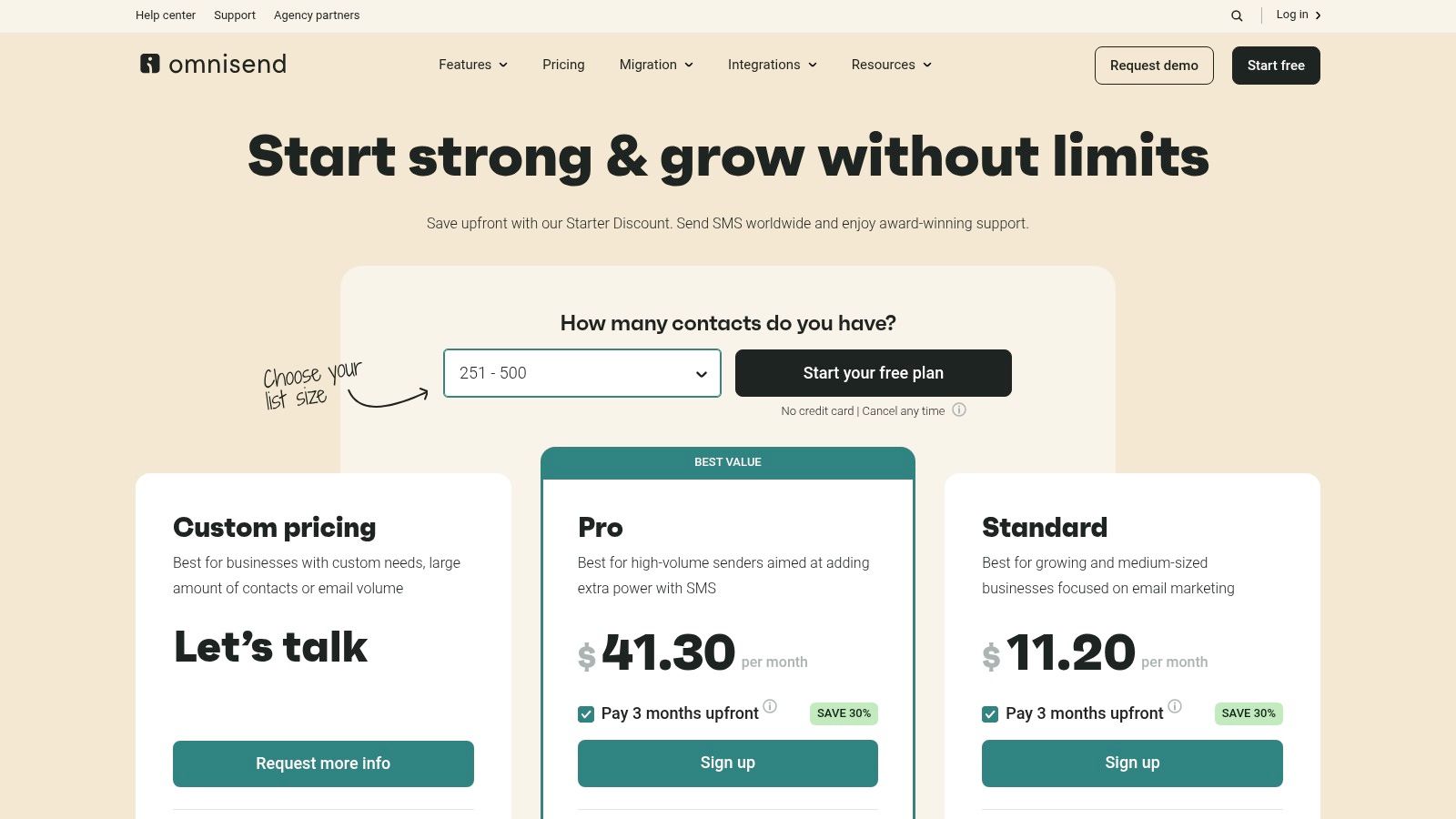
The platform stands out with its library of pre-built automation workflows specifically designed for ecommerce, such as cart abandonment, welcome series, and browse abandonment sequences. These templates are revenue-optimized and can be launched quickly, a significant benefit for small teams needing immediate impact. With 24/7 live chat support on all plans and features like a product recommendation engine, Omnisend equips merchants with the tools to implement sophisticated, personalized marketing strategies that directly boost revenue.
Key Details & Considerations
- Best For: Ecommerce businesses seeking an easy-to-use, omnichannel marketing automation tool with robust email and SMS capabilities.
- Pros: Excellent pre-built ecommerce workflows, strong integration with major platforms like Shopify, and bundled SMS credits on paid plans.
- Cons: Primarily tailored for ecommerce, which may limit its utility for B2B or service-based businesses; pricing can escalate as your contact list grows.
- Website: omnisend.com/pricing
10. Drip
Drip is a specialized ecommerce marketing automation platform designed specifically for direct-to-consumer (DTC) brands. Its core strength lies in its deep, native integrations with platforms like Shopify and WooCommerce, allowing small businesses to leverage rich customer data directly from their storefronts. This focus on commerce makes it one of the most effective marketing automation tools for small business owners who need to connect marketing efforts directly to revenue.
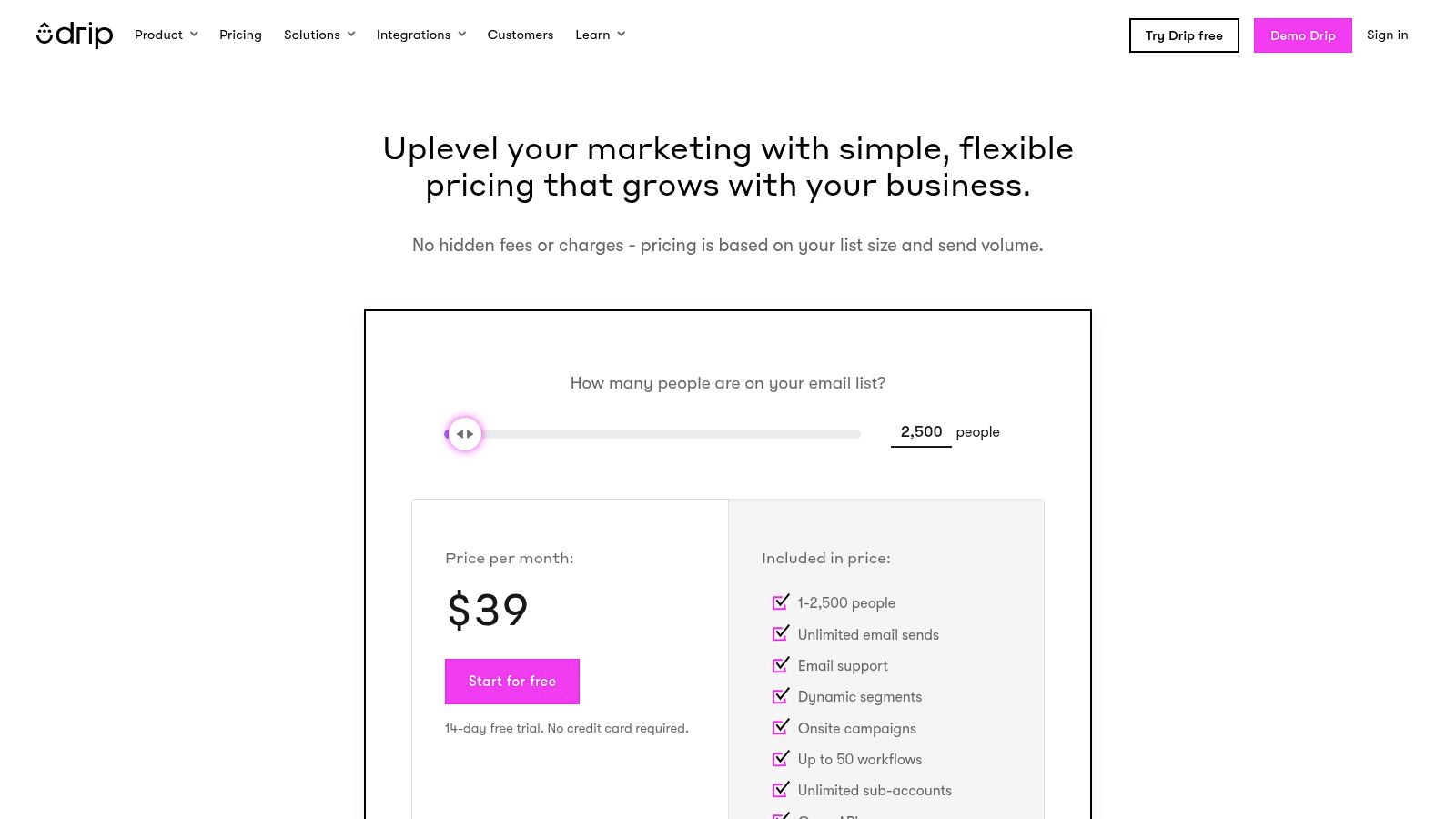
The platform stands out with its visual workflow builder that uses ecommerce-specific triggers, such as “viewed a product” or “first purchase,” to create highly relevant customer journeys. Detailed revenue dashboards provide clear attribution, showing exactly how much income each email, SMS, and automation sequence generates. This revenue-centric approach helps businesses optimize their strategies based on tangible financial results rather than just engagement metrics. Unlimited email sends on paid plans also provide predictable costs for growing brands.
Key Details & Considerations
- Best For: Ecommerce businesses, particularly those on Shopify or WooCommerce, that want to automate personalized marketing based on shopping behavior.
- Pros: Designed specifically for ecommerce growth marketing, straightforward setup with a free trial, and accurate revenue attribution and onsite personalization features.
- Cons: Pricing scales up with the number of contacts, and its feature set is less suited for traditional B2B lead management.
- Website: https://www.drip.com/pricing
11. G2 – Marketing Automation Software Category
While not a tool itself, G2’s Marketing Automation Software category is an indispensable resource for B2B companies navigating the selection process. It functions as a trusted software marketplace, aggregating verified user reviews, detailed comparisons, and real-time rankings. This makes it a practical starting point for shortlisting marketing automation tools for small business teams who need to validate options with peer-driven data before committing to a purchase.
The platform’s strength lies in its comprehensive comparison grids and filtering capabilities. RevOps and marketing operations leaders can narrow down options by company size, required integrations (e.g., Salesforce), and user satisfaction ratings, allowing for a highly targeted search. Instead of relying solely on vendor marketing copy, you can analyze authentic user sentiment and see how different platforms perform in real-world scenarios, which is critical for making an informed investment.
Key Details & Considerations
- Best For: B2B teams in the research and validation phase of selecting a new marketing automation platform.
- Pros: A high volume of verified, user-generated reviews; excellent for comparing features side-by-side; provides valuable data on user satisfaction and market trends.
- Cons: Vendor-sponsored listings can sometimes appear promotional, and final pricing and feature sets must be confirmed directly with each vendor.
- Website: https://www.g2.com/categories/marketing-automation
12. Shopify Automations and App Ecosystem
For e-commerce entrepreneurs, Shopify offers a powerful native automation suite that acts as a foundational layer of marketing automation tools for small business operations. Its primary strength lies in its deep, seamless integration with store data, allowing merchants to trigger personalized communications based on real-time customer behavior. This native functionality eliminates the need for complex initial integrations, providing a streamlined starting point for automating the customer journey.
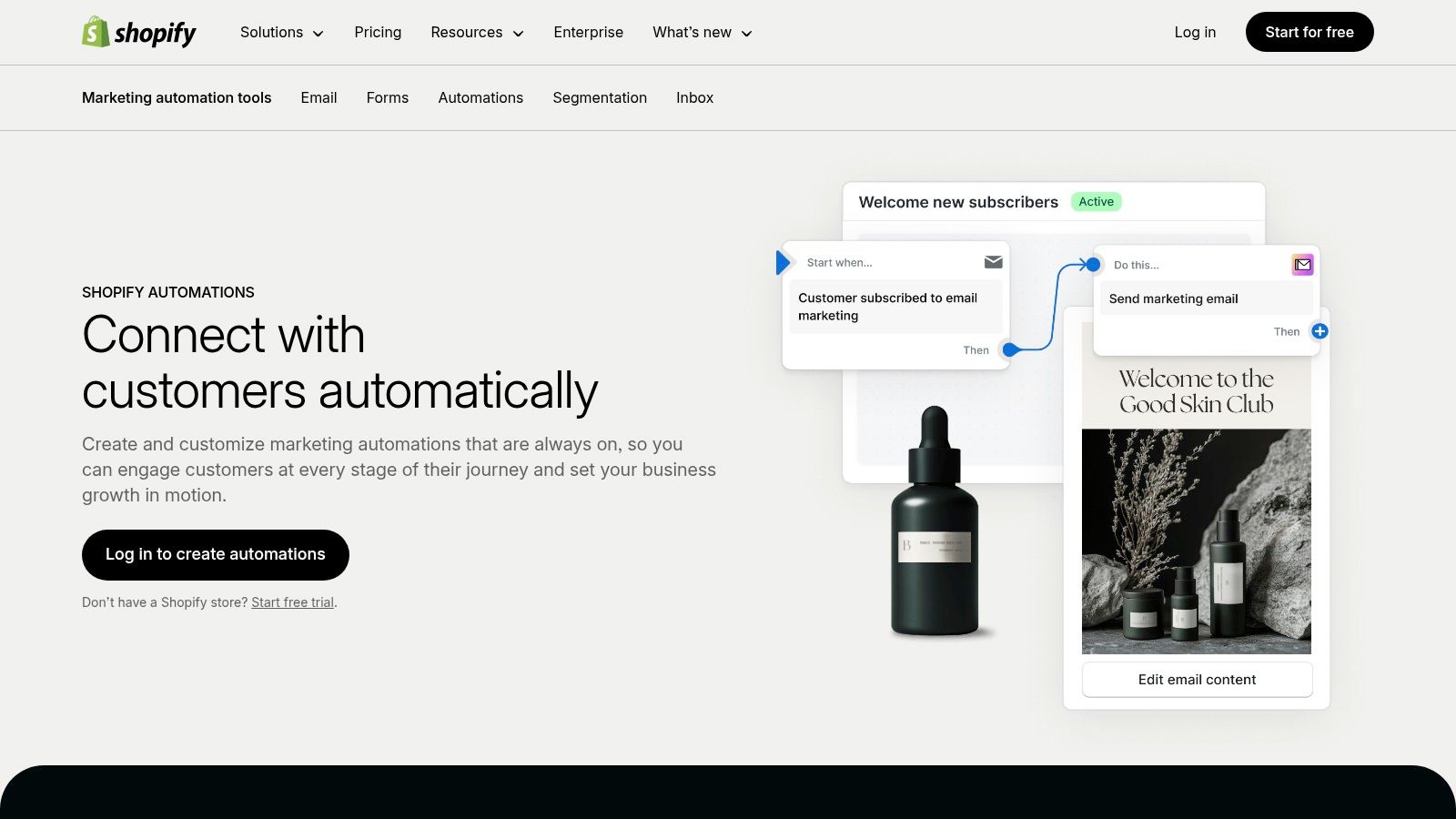
The platform includes essential pre-built workflows like abandoned cart recovery, welcome series, and customer win-back campaigns, all managed through a simple trigger-condition-action builder. The true scalability of Shopify’s automation capabilities comes from its extensive app marketplace. Merchants can easily connect specialized tools like Klaviyo or Omnisend to build sophisticated, omnichannel sequences that incorporate email, SMS, and push notifications, transforming the basic setup into a comprehensive marketing engine tailored to their specific RevOps strategy.
Key Details & Considerations
- Best For: E-commerce businesses using the Shopify platform who need a deeply integrated, scalable marketing automation solution.
- Pros: No-code native automation is included in most Shopify plans, direct access to store and customer data, and a massive app ecosystem to extend capabilities.
- Cons: Advanced omnichannel automations almost always require purchasing third-party apps, and some native features are gated behind higher-tier Shopify plans.
- Website: https://www.shopify.com/marketing-automation
Marketing Automation Tools: Feature & Pricing Overview
| Platform | Core Features | User Experience / Quality | Value Proposition | Target Audience | Pricing & Plans |
|---|---|---|---|---|---|
| HubSpot Marketing Hub | Visual workflows, native CRM, email, ads | Robust free tier, large resources | Scales from SMB to mid-market | Growing small to mid-market B2B | Free tier, Pro/Enterprise paid, onboarding fees |
| Mailchimp | Prebuilt journeys, email templates, SMS add-ons | Easy start, broad integrations | Pay-as-you-go, clear upgrade paths | Small businesses | Free tier limited, tiered pricing |
| ActiveCampaign | Drag-drop automations, CRM, ecommerce tracking | Flexible automations, strong deliverability | No setup fee, 14-day trial | SMBs needing advanced automation | Pricing based on contacts & features |
| Klaviyo | Ecommerce integrations, SMS/email unified | Advanced segmentation, revenue focus | Ecommerce growth & revenue tracking | Ecommerce SMBs | Pricing scales with active profiles |
| Constant Contact | Email editor, event tools, SMS (US only) | Guided setup, reliable support | Simple tools for local & nonprofits | Local businesses, nonprofits | Email limits per plan |
| Brevo (Sendinblue) | Multichannel messaging, landing pages, CRM | Budget-friendly, flexible plans | Volume-based pricing, pay-as-you-go | Cost-conscious SMBs | Unlimited contacts, volume pricing |
| GetResponse | Workflows, webinars, landing pages | Integrated webinars, discounts | All-in-one marketing platform | Small businesses, creators | Unlimited sends on paid plans |
| Keap (Infusionsoft) | CRM, marketing, sales, payments, scheduling | Combines tools, free trial | All-in-one for service businesses | Service-based B2Bs | Higher starting prices |
| Omnisend | Ecommerce workflows, omnichannel messaging | Fast setup, 24/7 support | Ecommerce revenue-focused automation | Ecommerce stores | Pricing scales with contacts |
| Drip | Ecommerce workflows, personalization | Revenue dashboards, easy setup | Ecommerce growth and revenue tracking | DTC ecommerce brands | Pricing scales with contacts |
| G2 – Marketing Automation Category | User reviews, rankings, comparison grids | Large verified review base | Helps shortlist & validate options | Small business buyers | Free |
| Shopify Automations & Apps | Built-in flows, app ecosystem | No-code, deep Shopify data integration | Native Shopify automation + apps | Shopify merchants | Included with Shopify plans |
From Tool Selection to RevOps Optimization: Your Next Steps
We’ve explored a comprehensive landscape of the leading marketing automation tools, from all-in-one powerhouses like HubSpot to e-commerce specialists such as Klaviyo. Each platform offers a unique blend of features, pricing, and strategic focus, designed to address the specific operational challenges that scaling B2B companies face.
The central takeaway is that the “best” tool is the one that aligns most precisely with your business model, technical maturity, and go-to-market strategy. A B2B service company with a long sales cycle supported by Salesforce will have fundamentally different automation needs than a high-volume B2C e-commerce brand on Shopify. Your decision must be guided by a clear understanding of your current processes and a realistic vision for your future state.
How to Choose the Right Marketing Automation Tool
Before committing to a platform, follow this strategic framework to ensure you make a sound investment.
- Map Your Core Business Processes: Identify your most critical workflows. Are you focused on lead nurturing, MQL-to-SQL handoffs, customer onboarding, or a combination? The right tool will directly support these key revenue-driving activities.
- Audit Your Existing Tech Stack: Consider your CRM (e.g., Salesforce, HubSpot), e-commerce platform, and other essential systems. The ideal marketing automation platform must offer seamless, native integrations to create a unified data ecosystem, not more data silos.
- Define Your Scalability Needs: Where do you project your business in two to five years? Select a tool that can grow with you. Migrating systems is a resource-intensive process, so choosing a platform with advanced tiers or a robust feature roadmap is a crucial forward-thinking step.
- Assess Your Team’s Technical Capacity: Be honest about your team’s ability to implement and manage a new system. Platforms like Mailchimp offer simplicity, while tools like HubSpot or ActiveCampaign provide deeper customization but require more expertise to maximize their potential.
Beyond Implementation: A Focus on Revenue Operations
Implementing a marketing automation tool is not the end goal; it is the beginning of a more strategic approach to growth. True value is unlocked when your marketing automation platform becomes the engine of a cohesive Revenue Operations (RevOps) strategy. This involves aligning your marketing, sales, and customer service operations around a single source of truth—typically your CRM—to ensure every customer interaction is data-driven and consistent.
Your chosen tool should empower this alignment by providing shared visibility into the customer lifecycle, automating handoffs between teams, and delivering the analytics needed to optimize your entire funnel. By moving beyond isolated campaigns and focusing on the end-to-end customer journey, you transform a simple software purchase into a powerful catalyst for sustainable revenue growth.
Feeling overwhelmed by the technical details of platform selection, integration, and RevOps strategy? The experts at MarTech Do specialize in helping B2B organizations implement and optimize CRM and marketing automation systems like Salesforce, Pardot (Marketing Cloud Account Engagement), and HubSpot. We ensure your technology stack works for you—not against you—driving efficiency and measurable revenue growth. Schedule a consultation with MarTech Do to build a marketing operations foundation that scales.