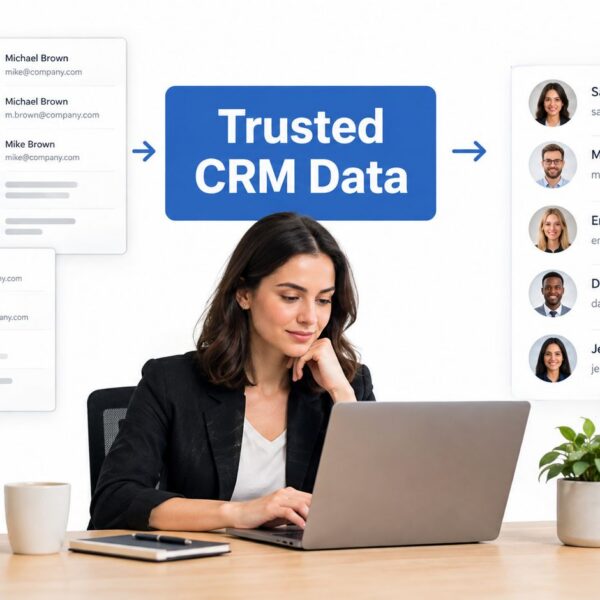
Your sales team is closing business, but the rest of the go-to-market motion feels noisy. Marketing says sales ignores good leads. Sales says lead quality is poor. Customer success inherits accounts that never should have been sold in the first place. Meanwhile, Salesforce reports one version of reality, HubSpot shows another, and nobody trusts the dashboard in the board deck.
That’s usually where the conversation around revenue operations vs sales operations starts. Not in theory. In friction.
For B2B teams running Salesforce Sales Cloud, Account Engagement, Service Cloud, Revenue Cloud, or HubSpot Sales and Marketing Hubs, the question isn’t which label sounds more modern. It’s which operating model matches the complexity of your revenue engine, your handoffs, and your systems. Sales Ops can be exactly right for some organisations. RevOps becomes necessary when the problem is no longer just seller productivity, but coordination across the full customer lifecycle.
The Great Debate Sales Ops vs RevOps
Most companies don’t wake up one morning and decide to debate org design. They react to symptoms. Pipeline reviews take too long because nobody agrees on stage definitions. Marketing automation keeps producing names, but sales wants buying intent. Service teams ask why renewal risk was invisible during the deal cycle. These aren’t isolated issues. They’re signs that one department may be optimised while the broader revenue system is not.
Sales Operations exists to help the sales team perform better. It improves process, reporting, forecasting, territory logic, CRM discipline, and rep productivity. It’s focused, practical, and often highly effective when the core challenge is inside the sales function.
Revenue Operations, by contrast, treats revenue as a shared system. It aligns marketing, sales, and customer-facing post-sale teams around common data, connected processes, and clearer accountability from first touch to expansion. If you want a foundational overview, this guide to what Revenue Operations is is a useful companion.
Here’s the underlying philosophical split:
Sales Ops asks, “How do we help sellers hit their number?”
RevOps asks, “How do we make the entire revenue engine work as one system?”
That difference matters more as your business scales. A company with a straightforward outbound motion and a small seller base can do very well with strong Sales Ops. A company juggling inbound, outbound, partner channels, lifecycle nurture, support handoffs, renewals, and expansion usually can’t solve those problems from inside sales alone.
The debate isn’t really Sales Ops versus RevOps. It’s functional optimisation versus system optimisation.
The Role of a Traditional Sales Operations Team
Sales Operations has a clear job when it’s set up properly. It removes friction from the sales team’s day-to-day work and gives leadership cleaner control over pipeline, performance, and planning. If you want a formal primer, this overview of what Sales Operations is covers the discipline well.
What Sales Ops usually owns
A traditional Sales Ops team tends to sit close to sales leadership and finance. Its remit is practical rather than broad. In most B2B environments, that includes:
- CRM structure for sellers. In Salesforce Sales Cloud or HubSpot Sales Hub, Sales Ops defines required fields, opportunity stages, activity expectations, and reporting logic for the sales organisation.
- Forecasting discipline. The team creates a forecast process reps and managers can follow, rather than relying on late-stage judgement calls.
- Territory and book management. Account assignment rules, regional splits, named account logic, and routing often sit here.
- Quota and compensation administration. Sales Ops usually supports the mechanics that connect plan design to rep behaviour.
- Pipeline inspection. It monitors stage progression, stuck deals, and deal hygiene so leaders can coach with something better than anecdote.
This function works best when sales has enough scale to need operational rigour, but the biggest problems still sit inside the sales motion itself.
Where Sales Ops creates value
A strong Sales Ops team doesn’t just build dashboards. It standardises decisions. If one manager treats Stage 2 as “intro call booked” and another treats it as “mutual action plan agreed”, your forecast is already compromised. Sales Ops creates shared definitions so reporting means something.
Data quality is part of that. In practice, many Sales Ops teams spend too much time cleaning up after inconsistent field usage, duplicate accounts, and poor ownership hygiene. That’s why resources on optimizing CRM data quality are worth attention, especially when your CRM has become a patchwork of legacy rules and workaround habits.
Practical rule: If your sales leaders can’t trust pipeline data without manual correction, Sales Ops still has foundational work to do.
What Sales Ops does not usually fix
Sales Ops often gets asked to solve issues that sit outside its charter. That’s where frustration starts.
It can improve lead routing into sales, but it usually doesn’t own campaign operations in Account Engagement or HubSpot Marketing Hub. It can highlight poor-fit deals, but it usually doesn’t control customer onboarding design in Service Cloud. It can report on conversion, but it often doesn’t own the definitions upstream and downstream that shape the full customer journey.
That limitation isn’t a failure of Sales Ops. It’s a boundary.
The Rise of the Unified Revenue Operations Engine
RevOps emerged because modern B2B growth rarely breaks at one department boundary. It breaks at the handoff points. Marketing creates demand with one set of definitions. Sales qualifies using another. Customer success inherits the result and has to make the economics work. RevOps exists to unify those motions rather than optimise each in isolation.
RevOps changes the operating model
A Revenue Operations function centralises operational ownership across marketing, sales, and post-sale teams. That usually includes systems, process design, lifecycle definitions, routing logic, reporting models, and governance. In Salesforce environments, it often means one connected architecture spanning Sales Cloud, Account Engagement, Service Cloud, and sometimes Revenue Cloud. In HubSpot, it means treating Marketing Hub and Sales Hub as part of one customer data and automation model, not separate workspaces.
The benefit isn’t just tidier org charts. It’s better alignment around revenue outcomes. According to a 2025 Boston Consulting Group analysis, companies that implement a formal Revenue Operations function see 34% higher revenue growth and are 15% more profitable than those that don’t, as reported in this BCG RevOps impact analysis.
What a unified engine actually owns
RevOps usually takes responsibility for issues that no single function can solve alone:
- Lifecycle architecture. Definitions for inquiry, MQL, accepted lead, opportunity, customer, renewal, and expansion must connect across teams.
- Cross-platform process design. The handoff between Account Engagement and Salesforce, or between HubSpot forms and sales routing, becomes a managed system.
- Shared reporting. Instead of one dashboard for marketing and another for sales, RevOps builds reporting that follows the buyer and customer journey.
- Operational accountability. Teams can still have department-level goals, but the operating logic becomes shared.
A lot of companies start here by trying to buy their way into alignment. They add another enrichment tool, another automation layer, another dashboard product. That rarely works on its own. Good RevOps starts with process and data design, then uses technology to reinforce it. For teams looking at adjacent enablement practices, this roundup of best practices for revenue growth is useful because it frames support functions as part of the broader commercial system.
RevOps is not Sales Ops with a broader meeting invite list. It’s a different way of designing accountability.
Why RevOps feels harder
Because it is harder.
It forces uncomfortable decisions about ownership, attribution, funnel definitions, and platform governance. Somebody has to decide which lifecycle stage is authoritative. Somebody has to rationalise duplicate automation between HubSpot and Salesforce. Somebody has to settle the argument about whether a contact, an account, or an opportunity is the primary reporting object for a given motion.
RevOps takes those issues out of hallway debate and turns them into operating design.
A Side by Side Breakdown of Key Differences
The quickest way to understand revenue operations vs sales operations is to compare them where the differences show up in daily work, not abstract job descriptions.
| Dimension | Sales Operations | Revenue Operations |
|---|---|---|
| Primary scope | Sales team performance and efficiency | Full revenue lifecycle across marketing, sales, and post-sale |
| Core systems focus | CRM setup and reporting for sellers | Shared system design across CRM, marketing automation, service, and billing-related workflows |
| Main goal | Help sales hit target with cleaner process and visibility | Align teams around connected growth, retention, and expansion outcomes |
| Typical ownership | Forecasting, pipeline management, territory logic, comp support | Lifecycle management, handoffs, funnel governance, shared reporting, systems integration |
| Common friction point | Reps not following process | Departments operating on different definitions and disconnected data |
| Best fit | Simpler go-to-market model with sales-led needs | Multi-team revenue motion with system and handoff complexity |
Scope and accountability
Sales Ops usually improves a function. RevOps improves a system.
That distinction shows up immediately in ownership. A Sales Ops leader can standardise opportunity stages in Salesforce Sales Cloud and improve forecast hygiene. A RevOps leader asks whether lead scoring in Account Engagement aligns with sales acceptance, whether account assignment logic supports expansion, and whether Service Cloud data should feed back into commercial reporting.
Mindset shift: Sales Ops optimises within the sales lane. RevOps redesigns the lanes and the intersections.
Metrics and management behaviour
Sales Ops typically lives close to metrics like quota attainment, pipeline movement, forecast confidence, rep activity quality, and sales cycle discipline. Those are valuable because they support front-line execution.
RevOps still cares about those inputs, but it tends to manage through broader commercial outcomes. The exact metric set varies by business model, and it should. The point is not to create more metrics. The point is to create fewer conflicting ones.
That’s where goal design becomes important. Many teams struggle because each department has sensible targets that don’t add up to a sensible revenue system. If you’re refining operating goals, the guidance on OKR metrics from The OKR Hub is useful for separating activity measures from outcome measures.
Organisational design
Sales Ops often reports into a sales leader. That structure keeps decision-making close to field execution, which is helpful when the work is tightly sales-centric.
RevOps usually needs a more neutral position, because it has to adjudicate across departments. If the same function owns lifecycle definitions for marketing, sales, and service, it can’t be perceived as serving only one team’s priorities.
A common failure pattern looks like this:
- Sales-led RevOps in name only. Marketing still owns its own lifecycle logic, so “shared reporting” becomes a reporting overlay rather than a shared operating model.
- Tool-first centralisation. Leadership merges systems administration, but not process ownership. The result is one admin team supporting several disconnected workflows.
- Committee governance. Nobody owns trade-offs, so routing rules, attribution debates, and handoff disputes stay unresolved.
What each model does well
Sales Ops is excellent when your biggest gains come from improving seller execution. It’s narrower by design, and that focus is often a strength.
RevOps is better when the commercial system itself is fragmented. If marketing, sales, and customer teams all work hard but revenue still feels uneven, the issue usually isn’t effort. It’s orchestration.
Teams don’t move to RevOps because Sales Ops stopped mattering. They move because Sales Ops alone can’t govern the whole revenue journey.
How Your Tech Stack Changes with RevOps
The biggest practical difference between Sales Ops and RevOps often shows up in the systems architecture. You can tell a lot about a company’s operating model by looking at how it uses Salesforce or HubSpot.

In a Sales Ops model, the CRM serves sales first
In a traditional Sales Ops setup, Salesforce Sales Cloud or HubSpot Sales Hub is configured primarily for sellers and sales leaders. Objects, fields, reports, and automations are shaped around opportunity management, pipeline inspection, and forecast visibility. Marketing may connect into that environment, but often through a narrower lead handoff and campaign reporting layer.
That design can work well. It keeps the CRM simpler. It also limits cross-functional complexity. The drawback is that customer context often ends where the opportunity closes.
You see this in practical ways:
- Marketing automation runs beside the CRM, rather than being fully integrated within it.
- Customer service data sits elsewhere, so revenue reporting stops at closed won.
- Data models reflect sales stages, but not the full lifecycle.
In a RevOps model, the stack becomes a revenue system
RevOps changes the architecture. Salesforce stops being just a seller workspace and becomes the operational centre for revenue data. The same goes for HubSpot when it’s used as the core system of record for marketing and sales.
In Salesforce ecosystems, that usually means tighter alignment between Sales Cloud, Account Engagement, Service Cloud, and, where relevant, Revenue Cloud. Lead scoring, campaign engagement, opportunity progression, onboarding signals, and account health need shared definitions. That requires thoughtful platform integration strategy, not just a collection of connectors.
A healthy RevOps stack usually includes:
- A unified lifecycle model. Contact, lead, account, opportunity, case, subscription, and renewal-related objects should support one commercial story.
- Controlled automation ownership. Account Engagement, Salesforce Flow, HubSpot workflows, and service automations need clear governance so logic doesn’t conflict.
- Connected reporting. Dashboards should let leaders trace movement across demand creation, conversion, handoff, onboarding, and retention-related signals.
GTM engineering becomes more important
Once RevOps matures, the stack often expands beyond core CRM and marketing automation, and GTM engineering enters the picture.
Teams start using tools such as Clay for enrichment, list building, data orchestration, and workflow support. ZoomInfo often feeds account and contact intelligence into segmentation, routing, or outbound programmes. These tools can be powerful, but only if they feed a governed system. If field mapping is loose and ownership is unclear, enrichment just creates cleaner chaos.
Don’t evaluate RevOps technology by feature count. Evaluate it by whether it improves lifecycle control, data trust, and handoff quality.
The common implementation mistake
The most common mistake I see is trying to layer RevOps on top of a sales-centric system without redesigning the data model. Teams keep their old stage logic, old handoff rules, and old reporting assumptions, then add Service Cloud, enrichment tools, and more automation. The stack grows. Alignment doesn’t.
A RevOps transition usually requires rethinking object relationships, field ownership, lifecycle statuses, and integration logic. If you skip that work, the platform may look modern while operating exactly like an old Sales Ops environment.
Deciding Between Adopting RevOps or Keeping Sales Ops
This decision is less ideological than people make it sound. Some businesses should keep a strong Sales Ops function and not complicate things. Others are already paying the price of not moving to RevOps, whether they call it that or not.

When Sales Ops is still the right model
If your company has a relatively simple sales-led motion, Sales Ops may be sufficient. That’s often true when one team owns most of the commercial process, handoffs are limited, and the main operational need is cleaner forecasting, rep productivity, and better CRM management.
Sales Ops usually remains a good fit when:
- Your sales cycle is straightforward and most operational issues sit inside the seller workflow.
- Marketing and post-sale motions are light or not yet systemically complex.
- The CRM mainly supports pipeline management, not an intricately orchestrated lifecycle.
- Leadership needs execution discipline, not a full operating redesign.
In that environment, moving too early to RevOps can add layers of governance you don’t need.
When RevOps becomes necessary
The signal isn’t company size on its own. It’s cross-functional complexity.
You’re likely ready for RevOps if several of these are true:
- Lead quality arguments never end. Marketing and sales use different definitions, and nobody owns the shared conversion model.
- Handoffs break after the deal closes. Onboarding teams discover commitments that weren’t captured operationally.
- Systems tell conflicting stories. Salesforce, HubSpot, and service tools don’t reconcile cleanly.
- You can’t get a single customer view. Account history is fragmented across platforms and teams.
- Departmental optimisation isn’t improving overall performance. Each function reports progress, but the full revenue motion still feels inconsistent.
If every team can explain its own numbers, but nobody can explain the customer journey end to end, you don’t have a Sales Ops problem. You have a RevOps problem.
A practical decision filter
Ask three blunt questions.
- Where does friction occur. Inside sales execution, or between teams?
- What does leadership need to govern. One function, or the whole revenue lifecycle?
- Can your current systems support shared accountability. Not theoretically, but in daily reporting and process ownership.
If the answers point inward to sales, keep building Sales Ops. If they point across the revenue engine, start the move to RevOps.
A Practical Checklist for Migrating to RevOps
A move to RevOps shouldn’t start with a title change. It should start with an audit, then a redesign.

The migration path that works
- Audit the current system. Review lifecycle stages, routing logic, field ownership, automation rules, dashboards, integrations, and handoffs across Salesforce, HubSpot, Account Engagement, Service Cloud, and any enrichment layer.
- Align leaders before changing tools. Revenue leaders need shared definitions, shared priorities, and agreement on who owns trade-offs. Without that, the platform team becomes a referee.
- Redesign the customer journey operationally. Define what must happen from inquiry through expansion. Make entry and exit criteria explicit at each handoff.
- Unify reporting logic. Decide which system is authoritative for which process, then rebuild reporting around one lifecycle model rather than department-specific views.
- Restructure roles carefully. Some companies centralise all ops functions. Others keep specialists in marketing or sales but introduce shared governance through RevOps leadership.
What not to do
Don’t start by buying more software. Don’t announce RevOps while keeping separate definitions in each department. Don’t preserve legacy automation just because “it still works”.
A useful migration is usually phased. Fix data and process foundations first. Then rebuild governance and reporting. Then layer in more advanced automation, enrichment, and GTM engineering once the operating model is stable.
The cleanest RevOps implementations are rarely the fastest. They’re the ones that remove ambiguity before they add automation.
If your team is weighing revenue operations vs sales operations and needs a practical plan for Salesforce, HubSpot, integrations, or a full systems audit, MarTech Do can help you map the right operating model and implement it cleanly.