
In B2B marketing, the distinction between demand generation and lead generation is a common point of confusion. The difference is critical for an effective RevOps strategy. Demand generation creates awareness and genuine interest in your market. Lead generation focuses on capturing contact details from individuals who are already interested.
Think of it this way: demand generation is the strategic effort of educating your entire potential market. You are teaching them about a problem they have (or might not know they have) and establishing your brand as the expert authority. Lead generation is the tactical process of converting that established interest into qualified contacts for your sales team.
Defining Demand Generation and Lead Generation

For marketing operations and RevOps leaders, understanding this distinction is non-negotiable for building a predictable revenue engine. These are not interchangeable terms; they are distinct, sequential components of a sophisticated go-to-market strategy. One lays the strategic groundwork, and the other harvests the results.
The Core Functions of Each Strategy
Demand generation is a long-term strategic approach designed to build a market for your product or service. The goal is to make your ideal customers aware of their problems and potential solutions, often well before they enter an active buying cycle. This means delivering value upfront through ungated content—such as insightful blog posts, podcasts, and meaningful community engagement. The objective is to become the go-to authority, so when a need arises, your brand is top-of-mind.
Lead generation is a more direct, conversion-focused discipline. It activates once interest has been established, using gated content and clear calls-to-action to identify and qualify potential buyers. As the experts at UserGems note, demand generation attracts a broad audience that might convert later, while lead generation captures prospects who are ready for a sales conversation. Clarifying this distinction is crucial for budget allocation and performance measurement.
The most effective RevOps leaders obsess over attention and engagement. Demand generation is how you earn that attention. Lead generation is how you convert it into qualified pipeline opportunities for your sales team.
A Quick Comparison
To solidify the differences, it is useful to see how each strategy operates within a RevOps framework. The table below breaks down their distinct roles, which will help align tactics and metrics within your CRM and marketing automation platforms like HubSpot or Pardot (Marketing Cloud Account Engagement).
Key Differences Between Demand Generation And Lead Generation
| Aspect | Demand Generation | Lead Generation |
|---|---|---|
| Primary Focus | Creating awareness, educating the market, and building brand authority. | Capturing contact information and converting interest into qualified leads. |
| Key Metrics | Website Traffic, Social Engagement, Content Downloads, Brand Mentions. | MQLs, SQLs, Conversion Rates, Cost Per Lead (CPL). |
| Typical Tactics | SEO, Ungated Blog Content, Podcasts, Community Building, Social Media. | Gated eBooks, Webinar Registrations, Demo Requests, Contact Forms. |
Ultimately, a healthy go-to-market strategy requires both. Demand generation fills the top of your funnel with an engaged, educated audience. Lead generation provides the mechanisms to identify which members of that audience are ready for a sales conversation. They work in tandem, not in opposition.
Aligning Each Strategy with the Buyer Journey

The difference between demand generation and lead generation becomes clear when mapped to the B2B buyer journey. They are not interchangeable tactics but sequential phases designed to guide a prospect from initial awareness to sales-readiness.
One strategy creates the audience; the other qualifies it.
Demand generation owns the top of the funnel (TOFU). At this early stage, potential customers are not actively searching for your product. They may not even realize they have a problem you can solve. The goal here is education, not a direct sales pitch.
Your efforts should focus on building trust and establishing authority with valuable, ungated content. This includes insightful blog posts, original research, and engaging podcasts. It is a long-term investment that ensures when a prospect’s need crystallizes, your brand is the first one they consider.
From Broad Awareness to Focused Action
As a prospect moves down the funnel, their requirements change—and so must your strategy. Lead generation takes over in the middle and bottom of the funnel (MOFU/BOFU), where buyer intent is significantly higher.
This is where you shift from educating the market to capturing specific interest. Instead of broadcasting to a wide audience, you are targeting individuals who have signaled they are ready to learn more. Lead generation is about converting prospects who are actively seeking a solution, as noted in key differentiation research on on24.com.
The transition from demand generation to lead generation is the most critical handoff in your RevOps process. A breakdown at this stage means you are generating awareness that never converts into pipeline.
At this point, you introduce gated assets and conversion-focused calls-to-action, such as demo requests, webinar sign-ups, or in-depth whitepapers that require an email address. These actions should trigger workflows in your marketing automation platform, like Pardot or HubSpot, to initiate the qualification process.
To execute this transition effectively, it is essential to implement lead scoring best practices for B2B revenue growth to pinpoint precisely when a prospect is sales-ready. This creates a seamless handoff from marketing’s broad outreach to a focused sales engagement.
Comparing Core Tactics and Channels
Operationally, the real difference between demand and lead generation is evident in the day-to-day tactics and the channels used for execution. They are two sides of the same revenue coin but require distinct playbooks.
Demand Generation Tactics
Demand generation is a long-term strategic play. The goal is to create authentic interest and build a brand that buyers trust, often long before they are ready to purchase. Think of it as casting a wide, valuable net.
You’re focusing on broad-reach efforts like:
- SEO: This is your foundation. Creating genuinely helpful blog content around high-intent keywords not only attracts visitors but also builds your organic authority and establishes you as a go-to resource.
- Brand-building content: This includes ungated resources like insightful whitepapers, shareable infographics, or original research reports. The objective is not to capture an email but to spark conversation and position your company as a thought leader.
- Podcasts: Hosting interviews with industry experts is an excellent method for educating a broad audience, reinforcing your brand’s authority, and building a subscriber base.
- Community engagement: This means actively participating where your audience convenes, whether in niche forums or professional LinkedIn groups. The focus is on nurturing conversations and building trust, not on pitching.
These tactics must integrate with your core systems. Connecting them to a tech stack like HubSpot or Salesforce is critical. For example, a new podcast download could trigger a HubSpot workflow that invites the listener to subscribe to your newsletter. You can also feed content engagement metrics into Salesforce dashboards to correlate traffic spikes with actual pipeline growth.
| Demand Generation Tactic | Common Platform Integration | Key Metric to Watch |
|---|---|---|
| SEO-driven Content | HubSpot Blog Module | Organic Sessions |
| Brand Assets | Salesforce CMS | Time on Page |
| Podcasts | HubSpot Sequences | Subscriber Growth |
| Community Posts | Salesforce Chatter | Engagement Rate |
Lead Generation Channels
Now, let’s shift to lead generation. If demand generation is the broad awareness play, lead generation is the focused, direct-response action. Here, you transition from educating to converting. The entire goal is to capture contact information from individuals who have signaled purchase intent.
Lead generation tactics are direct and conversion-focused:
- Gated Whitepapers: A classic for a reason. You offer a high-value asset in exchange for prospect data captured via a landing page form.
- Demo Requests: This is a direct pipeline to sales. Submissions are often routed straight into Salesforce via Web-to-Lead for immediate follow-up by the sales team.
- Webinars: Requiring registration for a live event not only captures leads but also enables automated nurture sequences in platforms like Pardot (MCAE) or HubSpot.
- Targeted Paid Ads: This is where you retarget visitors who have shown interest, which helps sharpen your Cost Per Lead (CPL) and increase conversion rates.
Conversion-focused channels are essential for moving prospects from initial interest to actionable, sales-ready leads.
The technical integration here is equally important but serves a different purpose. A gated whitepaper download might trigger a lead scoring model in Pardot to automatically qualify the prospect. Demo request forms can populate custom objects in Salesforce, providing sales reps with the necessary context for a productive conversation.
To optimize these channels, precise execution is key:
- Map form fields directly to CRM records to prevent data silos.
- Use descriptive UTM parameters in ad URLs to meticulously track channel performance.
- Leverage dynamic content blocks in follow-up emails to improve open rates and personalize messaging.
To explore the optimization of these workflows further, check out our guide on marketing automation best practices.
When you integrate these two approaches, you create a powerful engine for revenue growth. The awareness and trust built through demand generation naturally flow into the high-intent capture points of your lead generation efforts. This alignment improves marketing ROI and reduces friction between marketing and sales, paving the way for scalable growth.
Integrating Workflows for a Cohesive RevOps Engine
A successful strategy is not about running separate tactics; it is about making them work together seamlessly. The real value in the demand generation vs. lead generation framework is realized when you stop viewing them as distinct functions and start building operational workflows that connect them into a single, efficient RevOps engine.
This is how you ensure the brand awareness and interest you build translates into a measurable sales pipeline.
The integration process begins within your marketing automation platform, whether it’s HubSpot or Pardot (now Marketing Cloud Account Engagement). The goal is to create a frictionless journey that nurtures the interest sparked by demand generation campaigns and smoothly guides prospects into lead capture funnels.
Consider this workflow: someone who repeatedly engages with your ungated content—such as blog posts or podcasts—is demonstrating clear interest. You can use your marketing automation platform to automatically add them to a targeted list for a future, conversion-focused webinar. This is simple, yet highly effective.
Building the Handoff Mechanism
The bridge connecting demand and lead generation is constructed with data and automation. A robust lead scoring model is non-negotiable, acting as the trigger that signals when to hand off a contact from marketing to sales.
- Behavioral Scoring: Assign points for high-intent activities. Did a contact watch a full product video? Visit your pricing page multiple times in one week? These actions are strong buying signals.
- Demographic Scoring: Use firmographic data from your CRM—like industry, company size, or job title—to prioritize contacts that match your Ideal Customer Profile (ICP).
Once a contact reaches a predefined score threshold, an automated workflow in a platform like Salesforce or HubSpot should activate, changing their lifecycle stage from Marketing Qualified Lead (MQL) to Sales Qualified Lead (SQL). This can then automatically create a task for a sales representative, providing them with the full context and engagement history needed for a meaningful conversation.
High-performing RevOps teams do not see a line between demand and lead generation. They see a continuous flow, where data from one stage intelligently informs the actions of the next. Your CRM must serve as the single source of truth that visualizes this entire journey.
From Data Flows to Actionable Dashboards
This integration is only as effective as your ability to measure its performance. This entire approach reflects how modern buyers operate; they spend more time researching independently, often in channels where sales has no influence. By warming up an audience with demand generation and then capturing their intent with focused lead generation, you dramatically improve both the quality and conversion rate of your pipeline.
As highlighted in insights on combining these strategies from cognism.com, focusing on the quality of leads (‘who’ versus ‘how many’) is what truly boosts marketing ROI.
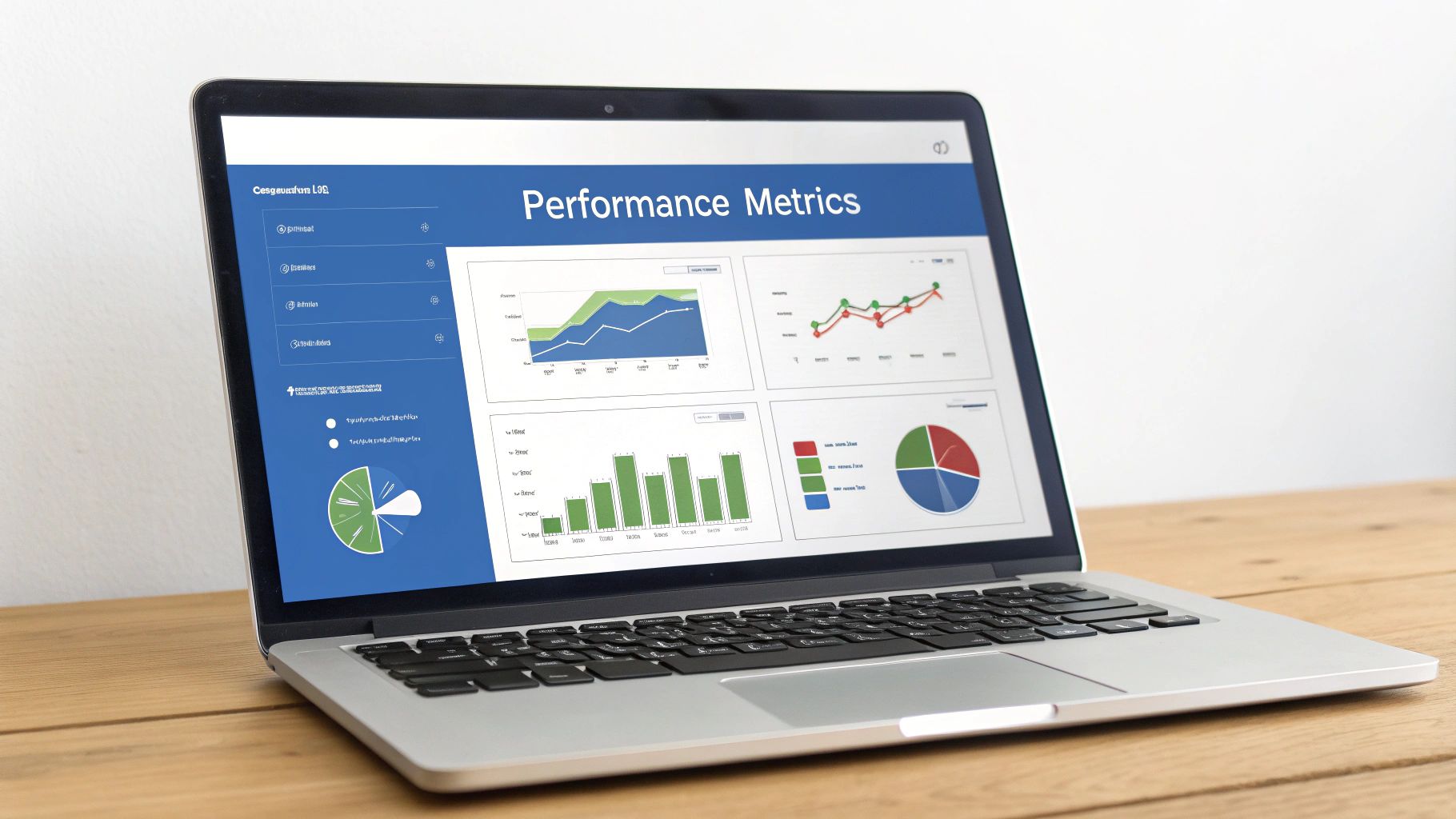
To gain a clear picture, build dashboards in your CRM that report on both strategies cohesively. Track metrics like the conversion rate from content engagement to MQL, the sales cycle velocity of leads sourced from demand generation campaigns, and the influence of your ungated assets on closed-won deals. This provides a holistic view that proves the value of both efforts working in harmony.
Choosing The Right Strategy For Your Scenario
Understanding the difference between demand generation and lead generation is the starting point. The real challenge is deciding which strategy to deploy—and when—to maximize marketing ROI. This decision impacts budget allocation, team focus, and the key metrics on your CRM dashboard.
A strategic misstep—like pushing lead generation too early in a market unfamiliar with your brand—can stall growth. Conversely, running purely awareness campaigns without clear conversion paths leaves revenue on the table. The key is to align your tactics with your audience’s position on the awareness-to-purchase continuum.
Your decision should be based on several factors: your go-to-market objectives, the maturity of your market, and the complexity of your sales cycle. By carefully considering these elements, you can strike the right balance and configure your RevOps engine for success.
Launching A New Product In An Emerging Category
When introducing a new solution, you are often challenging existing assumptions rather than fitting into established budgets. Prospects may not yet recognize the problem you solve, and competitor comparisons are non-existent. In this scenario, your primary focus must be demand generation.
- Primary Goal: Educate the market from zero awareness to problem-aware.
- Strategic Mix: Allocate 80% of your budget to demand generation and 20% to lead generation.
- Key Tactics: Create foundational, ungated content—such as in-depth blog series, market analysis reports, or expert panel discussions. Use lead generation sparingly, for example, with a newsletter subscription that offers exclusive insights to early adopters.
In practice, you might host an open webinar outlining the emerging problem space, then offer a private Q&A session for attendees who opt-in, thus balancing broad reach with initial lead qualification.
Penetrating A Competitive Enterprise Market
In a mature market, your category is well-understood. Decision-makers have bookmarked comparison sites and established their evaluation criteria. Your role shifts from education to demonstrating why your solution deserves to be on their shortlist.
For established markets, the objective shifts from education to differentiation. Your lead generation tactics must be sharp, compelling, and directly tied to solving a known business pain better than your competitors.
- Primary Goal: Capture high-intent inquiries and outmaneuver competitors.
- Strategic Mix: A 50/50 budget split between demand and lead generation is often optimal.
- Key Tactics:
- Publish customer success stories and detailed comparison guides.
- Offer gated assets like an interactive ROI calculator, technical whitepapers, or tailored demo requests.
- Ensure tight integration with Salesforce or HubSpot so that every lead flows seamlessly into your follow-up workflows.
- Develop a shared playbook for marketing and sales to ensure consistent messaging and prevent lead leakage.
Mastering the handoff—and understanding how to align sales and marketing—is frequently the difference between an average campaign and a high-performing revenue engine.
Answering Your Key Strategy Questions
Let’s address practical application. When implementing these strategies, marketing and sales operations teams often encounter the same challenges in balancing demand and lead generation. Success depends on knowing what to measure, where to allocate budget, and how both functions fit into the larger RevOps framework.
Here are direct answers to the questions we hear most often from B2B operations professionals.
How Do I Measure The ROI Of Demand Generation?
You cannot measure demand generation ROI with traditional, direct-response metrics like Cost Per Lead (CPL). Instead, you must focus on pipeline influence and creation velocity.
Inside your CRM, whether it’s Salesforce or HubSpot, you can connect these activities to revenue. Track how many contacts engaged with ungated content—such as blog posts or podcasts—before they filled out a form. This allows you to attribute pipeline to specific demand generation campaigns.
Look for these key performance indicators:
- Pipeline Sourced or Influenced: How many opportunities in your pipeline can be traced back to a touchpoint with your demand generation content?
- Sales Cycle Velocity: Are leads who consumed your educational content closing faster than those who came in through other channels?
- Customer Acquisition Cost (CAC) by Channel: Compare the total cost of acquiring customers who originated at the top of your funnel versus those from other sources.
When Should A B2B Company Focus More On Lead Generation?
You should increase your focus on lead generation when you have established a clear market need and are seeing high buying intent. This is especially true for mature markets where prospects are already actively comparing vendors and seeking solutions.
If you are observing high website traffic but flat MQL numbers, that is a clear signal. It indicates you have successfully created demand but need more conversion points to capture it effectively.
A lead generation focus is most effective when your audience already understands their problem and is actively searching for a solution. Your objective is no longer to educate; it is to secure a sales conversation.
Can One Piece Of Content Serve Both Purposes?
Absolutely, provided you repurpose it strategically. An in-depth, ungated research report published for demand generation can be condensed into a gated, executive-summary checklist to capture leads.
The same principle applies to a webinar. After the live event, make the recording available on-demand behind a registration form. The key is to offer the same core value in different formats, each tailored to a specific stage of the buyer’s journey.
Ready to build a cohesive RevOps engine that aligns your demand and lead generation efforts for maximum impact? At MarTech Do, we specialize in auditing and optimizing marketing and sales operations on platforms like Salesforce, HubSpot, and Pardot. Learn more about our services and let’s start turning your strategy into revenue.