A successful sale marks the beginning of the customer relationship, not the end. The crucial next step, customer onboarding, determines whether a new client becomes a loyal advocate or a churn statistic. For B2B companies leveraging sophisticated platforms like Salesforce, HubSpot, or Pardot (Marketing Cloud Account Engagement), a generic welcome email and a link to a knowledge base are insufficient. Effective onboarding is a strategic Revenue Operations function that directly impacts user activation, long-term retention, and ultimately, customer lifetime value. A poorly executed process leads directly to disengagement, undermining your go-to-market strategy and acquisition efforts.
This article moves beyond surface-level tips to provide nine essential customer onboarding best practices. We will explore actionable strategies tailored for marketing operations, sales operations, and RevOps leaders, designed to transform your process from a simple product tour into a powerful engine for sustainable growth. You will learn how to architect an onboarding journey that demonstrates value quickly, educates users contextually, and builds a strong foundation for a profitable, long-term partnership. Let’s dive into the frameworks that ensure your customers not only stay, but thrive.
1. Architect a Personalized Welcome Journey in Your CRM
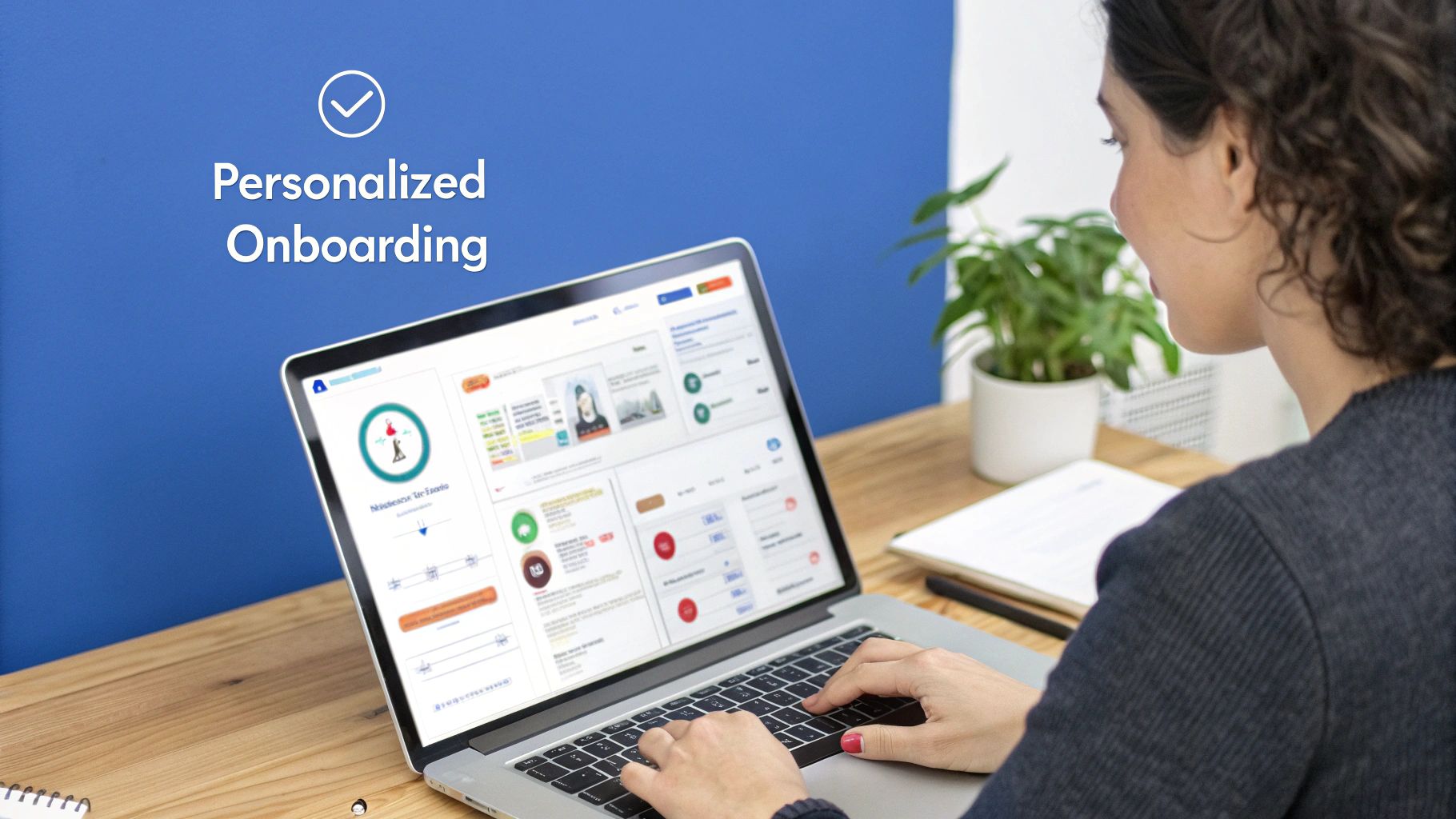
One of the most impactful customer onboarding best practices is to move beyond generic, one-size-fits-all welcome sequences. Instead, architect a personalized journey within your marketing automation platform that dynamically adapts to each customer’s unique profile, goals, and intended use case. This approach leverages data directly from your CRM—such as Salesforce or HubSpot—to deliver a tailored experience from the very first interaction.
By segmenting users based on criteria like industry, role, or company size, you can trigger relevant content, highlight specific features, and provide guidance that resonates with their immediate business needs. This ensures customers feel understood and realize value faster, significantly reducing churn and accelerating their time-to-value.
How to Implement a Personalized Journey
A successful personalized onboarding journey connects CRM data with your marketing automation platform. For instance, a deal closed in Salesforce can trigger a specific onboarding workflow in Pardot (Marketing Cloud Account Engagement) or HubSpot based on the new customer’s recorded industry. This ensures the initial communication and resources are immediately relevant to their operational context.
For example, a B2B SaaS platform might provide different setup guides and feature highlights for a developer versus a marketing manager, ensuring each role discovers the most relevant functionality first. This level of personalization is crucial for complex B2B platforms where different user types have vastly different objectives.
Actionable Tips for Implementation:
- Start with Core Segments: Begin with simple firmographic segments like industry or job function before building more complex logic.
- Leverage Progressive Profiling: Use in-app prompts or short email surveys to gradually gather more data and enrich customer profiles over time.
- Create a Default Path: Ensure a well-designed default onboarding track exists for users with incomplete data to prevent a broken experience.
- Monitor Segment-Specific Metrics: Track KPIs like feature adoption, engagement, and support tickets for each segment to identify which journeys are most effective and where your RevOps strategy needs refinement.
2. Progressive Disclosure and Gradual Revelation
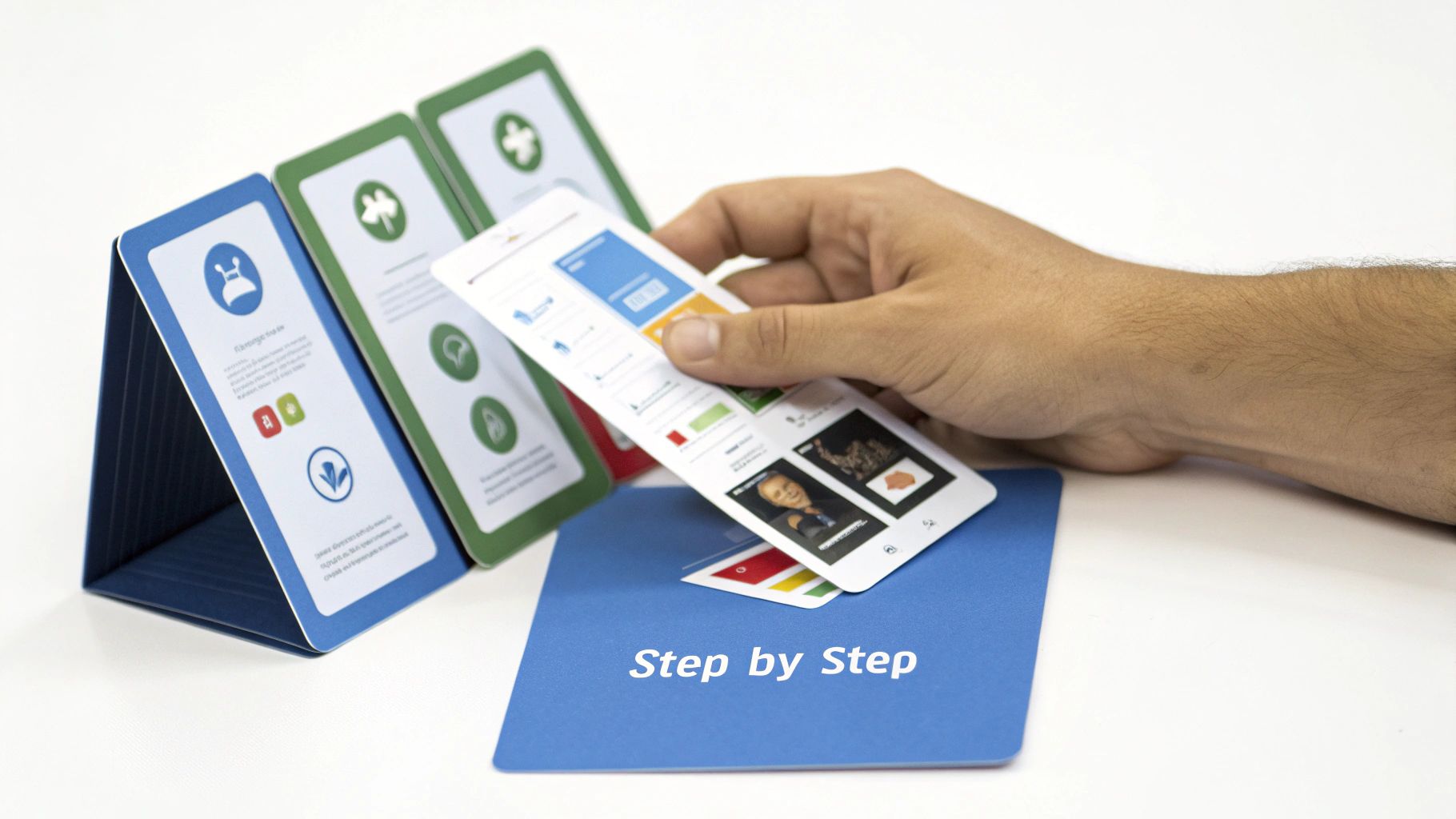
One of the most effective customer onboarding best practices involves managing cognitive load through progressive disclosure. This design philosophy introduces information and features incrementally, revealing complexity only when users are ready. It prevents new users from feeling overwhelmed by a feature-heavy interface, instead building their confidence through manageable, skill-building steps.
This strategic approach guides users from basic actions to advanced functionality at a natural pace, ensuring they master core concepts before moving on. By strategically layering advanced options, you create a cleaner, more focused initial experience that significantly improves user satisfaction and long-term adoption rates.
How to Implement Progressive Disclosure
A successful progressive disclosure strategy requires a deep understanding of the user’s journey from novice to expert. This involves mapping out which features are critical for initial success versus those that serve more advanced use cases. The goal is not to permanently hide features, but to reveal them contextually as a user’s proficiency grows.
A prime example is a marketing automation platform that initially presents a simple email campaign builder. As users master that workflow, the system introduces more advanced features like A/B testing, dynamic content, and lead scoring. This gradual revelation makes a powerful and complex tool feel accessible from the start.
Actionable Tips for Implementation:
- Map User Skill Progression: Define the typical journey from a new user to a power user. Identify the key features and skills required at each stage.
- Use Visual Cues: Indicate that more functionality exists without cluttering the interface. Use icons, “Advanced Settings” links, or tooltips to hint at deeper features.
- Offer “Skip Ahead” Options: Provide a path for experienced users to bypass introductory steps and access advanced functionality immediately.
- Test Disclosure Timing: Use user testing and product analytics to determine the optimal moments to introduce new features or complexity within the user workflow.
3. Interactive Product Tours and Guided Walkthroughs
A cornerstone of modern customer onboarding best practices is the implementation of interactive product tours. Instead of relying on static documentation or videos, these guided walkthroughs provide a hands-on learning experience, guiding users through key features and workflows directly within the application. This “learn-by-doing” approach uses tooltips, highlights, and step-by-step instructions to drive engagement and retention.
This method accelerates the user’s journey to their first “aha!” moment, where they experience the core value of your product firsthand. By actively participating in setup and initial tasks, customers build confidence and are more likely to integrate the platform into their daily operations—a critical step for long-term success.
How to Implement Interactive Tours
Platforms like WalkMe, Appcues, and Pendo enable marketing and RevOps teams to build and deploy these tours without extensive engineering resources. An effective tour focuses on a single, high-value outcome. For example, a CRM onboarding tour should not just show users the interface; it should guide them through importing their first contact list and creating a saved view.
This immediate, tangible result solidifies the product’s value proposition in the user’s mind far more effectively than a passive tutorial ever could. It demonstrates direct application to their business challenges.
Actionable Tips for Implementation:
- Focus on Core Value: Keep tours brief and centered on the one or two key actions that deliver the most immediate business value.
- Allow User Control: Ensure users can easily pause, resume, or exit the tour at any time without penalty or losing their work.
- Use Realistic Data: Whenever possible, populate tours with relevant sample data to make the experience feel authentic and contextually rich for a B2B audience.
- Test Across Environments: Validate that your tour functions flawlessly on different devices, browsers, and screen resolutions to prevent user frustration.
4. Clearly Communicate Your Value Proposition
One of the most critical customer onboarding best practices is to constantly reinforce why the customer chose your product. Instead of immediately diving into feature-level tutorials, effective onboarding strategically communicates the core value proposition, connecting every action to a tangible business outcome. This ensures users understand precisely how your solution solves their problems and moves them closer to their goals.
By leading with the benefits and framing features as the tools to achieve those outcomes, you keep customers motivated and engaged. This approach bridges the gap between your product’s capabilities and the real-world value it delivers, which is essential for long-term adoption and preventing early-stage churn when initial setup can feel overwhelming.

How to Implement Clear Value Communication
Integrating your value proposition into the onboarding flow means using outcome-oriented language at every step. This can be implemented in welcome emails, in-app tooltips, and guided product tours. The key is to shift the focus from “Click here to create a report” to “Click here to track your Q3 pipeline generation.”
A powerful B2B example is a sales engagement platform. Its onboarding doesn’t just show you how to build an email sequence; it consistently messages the benefit of “booking more meetings with qualified leads.” This keeps the user’s primary business motivation at the forefront of the experience.
Actionable Tips for Implementation:
- Lead with Outcomes: Frame every onboarding step around the business benefit it provides, not just the action required. For example, “Connect your CRM to automate data sync and ensure lead hygiene.”
- Use Customer Language: Adopt the terminology and metrics your customers use to describe success. If they talk about “MQLs” or “pipeline velocity,” use those terms.
- Reinforce Value at Milestones: Celebrate small wins by reminding users of the value they’ve unlocked, such as after they’ve successfully integrated their marketing automation platform.
- Align Messaging with Stated Goals: If you collected a user’s primary goal during sign-up, tailor onboarding messaging to directly address how each step helps achieve that specific objective.
5. Offer Multi-Channel Onboarding Support
A superior onboarding experience acknowledges that users have different learning styles and communication preferences. Implementing a multi-channel support strategy is one of the most effective customer onboarding best practices because it provides assistance across numerous touchpoints. This ensures no customer gets stuck or feels abandoned, regardless of how they prefer to seek help.
This comprehensive approach combines in-app guidance, proactive email sequences, live chat, video tutorials, and detailed documentation. By offering multiple avenues for support, you empower customers to find answers quickly and in the format that suits them best, which directly accelerates their journey to value and builds long-term confidence in your product and team.
How to Implement Multi-Channel Support
A successful multi-channel strategy requires careful orchestration and consistent messaging. The key is to make each channel work together seamlessly. For instance, a user struggling with an in-app tour should be able to click a button to immediately open a live chat or access relevant documentation without losing their context. This integration is vital for a smooth, frustration-free experience.
Consider how major B2B platforms like HubSpot combine in-app tours for new features with a comprehensive knowledge base, community forums, and immediate live chat access. This ensures that whether a user is a self-starter or needs direct guidance, the right resource is always within reach. A well-designed multi-channel approach is a cornerstone of modern marketing operations.
Actionable Tips for Implementation:
- Map Channels to User Personas: Identify which support channels (e.g., live chat, documentation, video) your key user segments are most likely to use and prioritize them.
- Ensure Consistent Core Messaging: The advice and information provided in your knowledge base should align perfectly with what a support agent would say in a live chat.
- Provide Clear Escalation Paths: Create a clear process for users to move from self-service (docs) to assisted support (chat) and then to high-touch support (a call) if needed.
- Track Channel Effectiveness: Use analytics to monitor which channels resolve issues fastest and have the highest user satisfaction scores, then optimize your strategy accordingly.
6. Engineer Quick Wins and Early Success Moments
One of the most critical customer onboarding best practices involves engineering “quick wins” to deliver tangible value within the first few user interactions. This strategy focuses on identifying the fastest path to a meaningful outcome—the “aha moment”—where the user clearly understands your product’s core benefit. By prioritizing this initial success, you build immediate user confidence and create powerful momentum for deeper engagement.
This approach is essential for preventing early-stage churn, as users who experience value quickly are far more likely to invest time in learning advanced features. It transforms the initial product experience from a daunting learning curve into an empowering series of small, gratifying achievements, solidifying the user’s decision to choose your solution.
How to Engineer Quick Wins
Successfully implementing this strategy requires a deep understanding of what constitutes a valuable outcome for your users. The goal is to remove friction and accelerate their journey to this first key milestone. For example, a data visualization tool shouldn’t force new users to build a dashboard from scratch; instead, it should offer a one-click integration with Salesforce or HubSpot to instantly populate a pre-built sales pipeline dashboard.
This guided, low-effort interaction demonstrates the product’s value proposition instantly and effectively. This practice is key to a successful customer onboarding framework that retains users long-term.
Actionable Tips for Implementation:
- Identify the ‘Aha Moment’: Pinpoint the single action or outcome that makes your product’s value “click” for a new user.
- Use Templates and Pre-populated Data: Reduce setup friction by providing ready-to-use templates, sample data, or guided project examples relevant to B2B use cases.
- Celebrate Small Achievements: Use in-app visual cues like progress bars, checkmarks, or congratulatory messages to acknowledge user accomplishments.
- Measure Time-to-First-Value (TTFV): Track how long it takes for new users to achieve their first quick win and continuously work to shorten this duration.
7. Implement Data Collection and Onboarding Analytics
One of the most crucial customer onboarding best practices is to move from assumption-based improvements to data-driven optimization. By systematically gathering and analyzing user behavior data during the onboarding phase, you can pinpoint friction points, identify drop-off stages, and understand what truly leads to activation. This involves tracking key metrics, user flows, and engagement patterns to make informed decisions.
This analytical approach transforms your onboarding from a static checklist into a dynamic, evolving process. Using tools like Mixpanel, Amplitude, or your CRM’s reporting capabilities, you can visualize the user journey, see where customers get stuck, and A/B test changes to improve completion rates. This ensures your onboarding is not just a one-time setup but a powerful engine for long-term retention and success.
How to Implement Onboarding Analytics
A robust analytics strategy begins with defining what success looks like. This means establishing clear Key Performance Indicators (KPIs) for onboarding, such as time-to-first-value, feature adoption rates, or completion of a critical workflow. Integrating this data with your CRM, like Salesforce, can provide an even richer view of the customer journey from lead to renewal.
For example, a marketing operations team could analyze their onboarding funnel and discover a significant user drop-off when asked to configure a complex integration. By redesigning that part of the flow based on data—perhaps by offering a simpler, guided setup—they can dramatically improve user activation. This highlights how analytics turn onboarding from guesswork into a science, directly impacting business outcomes.
Actionable Tips for Implementation:
- Define Clear Success Metrics: Before tracking anything, define what a “successfully onboarded” customer looks like in measurable terms (e.g., “user launches first email campaign within 72 hours”).
- Focus on Actionable Insights: Avoid vanity metrics. Concentrate on data that reveals user behavior and points directly to specific areas for improvement in your RevOps strategy.
- Use Cohort Analysis: Analyze users in groups based on their sign-up date to understand how changes to your onboarding process impact long-term engagement and retention.
- Review and Act Regularly: Data collection is useless without action. Schedule regular reviews of your onboarding analytics to identify trends, formulate hypotheses, and implement tests.
8. Continuous Onboarding and Lifecycle Engagement
A critical customer onboarding best practice is to treat it not as a one-time event, but as an ongoing process. Continuous onboarding extends education and value realization throughout the entire customer lifecycle, ensuring users continue to grow with your product long after the initial setup. This approach helps users discover advanced features and adopt new capabilities as their needs evolve.
By shifting from a front-loaded, time-based sequence to a continuous engagement model, you deepen product adoption and reinforce long-term value. This strategy is essential for complex platforms where mastery is a journey, not a destination, directly impacting customer retention and expansion revenue by turning users into power users.
How to Implement Continuous Onboarding
Lifecycle engagement relies on behavioral triggers and ongoing educational content. Instead of just welcoming a new user, you’re guiding a maturing one. For example, when a user in your CRM reaches a certain usage milestone, you can trigger a workflow that introduces a related, more advanced feature they haven’t yet explored.
A powerful example is Salesforce’s Trailhead, a continuous learning platform that offers gamified modules to help users at all skill levels master the ecosystem. Similarly, HubSpot Academy provides ongoing certifications and training that keep users engaged and proficient as the platform evolves. These programs ensure customers consistently unlock new value over time.
Actionable Tips for Implementation:
- Segment by Maturity: Group users based on their engagement level and product tenure, not just their initial profile, to deliver relevant “next-step” content.
- Use Behavioral Triggers: Trigger educational content based on specific in-app actions (or inactions) rather than generic, time-based email sequences.
- Provide Holistic Value: Mix product education with industry insights, best practices, and thought leadership to become a trusted advisor, not just a software vendor.
- Measure Engagement Quality: Track metrics like the adoption rate of newly introduced features and progression through learning paths, not just email open rates or clicks.
9. Blend Automation with a Human Touch for High-Value Accounts
While automation scales, one of the most powerful customer onboarding best practices involves strategically blending it with high-touch, human support. This approach reserves personalized, one-on-one interaction for high-value or complex accounts, ensuring they receive the dedicated guidance needed to succeed. By assigning a customer success manager or an onboarding specialist, you combine automated efficiency with human empathy and expertise.
This hybrid model addresses complex user needs, builds stronger customer relationships, and significantly de-risks churn for your most important clients. It demonstrates a deep investment in their success, transforming a transactional setup into a long-term strategic partnership and laying the groundwork for future expansion and advocacy.
How to Implement a High-Touch Support Model
The key to a successful high-touch model is integrating human-led milestones into your automated onboarding workflow. For instance, an enterprise deal closed in your CRM can automatically trigger a task for a Customer Success Manager (CSM) to schedule a personal kickoff call, while the customer simultaneously receives an automated welcome email sequence.
Salesforce exemplifies this with its dedicated CSM program, where large accounts are paired with an expert to guide them through implementation and strategy. This white-glove approach provides hands-on support to ensure the technology is configured perfectly to meet complex business objectives. This shows how human oversight can drive adoption where automation alone might fall short.
Actionable Tips for Implementation:
- Segment for High-Touch: Reserve dedicated human support for your highest-value customer tiers or those with particularly complex use cases to ensure ROI.
- Combine with Self-Service: Supplement human interaction with a robust knowledge base and self-service resources to empower customers and manage CSM workload effectively.
- Train for Product and People Skills: Equip your onboarding specialists with deep product knowledge and strong soft skills, like active listening and problem-solving.
- Track Interactions in Your CRM: Use your CRM to log all human touchpoints, track progress, and measure the impact of high-touch activities on customer health scores and retention. This data is invaluable, and you can see how other companies have succeeded by exploring a variety of B2B case studies on Martech Do.
From Onboarding to Advocacy: Your Next Steps
We have navigated the critical components of a world-class onboarding experience, from architecting a personalized journey in your CRM to blending automation with high-touch human support. The common thread connecting these strategies is a fundamental shift in perspective. Effective onboarding is not a checklist; it is the foundational phase of a long-term, value-driven partnership. By moving beyond simple feature explanations and focusing on delivering immediate, tangible value, you lay the groundwork for retention and growth.
The power of these customer onboarding best practices lies in their synergy. A well-timed quick win is amplified by multi-channel support. Progressive disclosure makes interactive walkthroughs more effective. Each practice builds upon the others, creating a cohesive experience that guides users from initial uncertainty to confident adoption.
Synthesizing Strategy into Action
To master customer onboarding, your organization must internalize a few core principles. These are not just steps in a process but cultural pillars that should inform your entire customer success and RevOps strategy.
- Focus on Outcomes, Not Features: Customers invest in a solution to solve a business problem. Your onboarding must be relentlessly focused on guiding them to that solution as efficiently as possible. The goal is not to teach them every button but to help them achieve their first meaningful business outcome.
- Embrace Data-Driven Iteration: Your first onboarding flow will not be your last. The key to long-term success is to implement robust tracking within your CRM and marketing automation platforms. Analyze where users drop off, which features they adopt first, and what support channels they prefer. This data is the roadmap for continuous improvement.
- Onboarding is a Company-Wide Responsibility: While a customer success team may lead the charge, a successful onboarding program involves coordination across sales, marketing, and product development. The promises made during the sales process must align with the reality of the initial user experience, creating a seamless transition from prospect to power user.
Ultimately, a world-class onboarding process is your most powerful defense against churn and your greatest catalyst for advocacy. It transforms the crucial first 90 days from a period of risk into an opportunity to prove your value, build trust, and create a customer relationship that deepens over time. By implementing these customer onboarding best practices, you are not just activating accounts; you are building a loyal customer base that will become the cornerstone of your company’s growth.
Ready to transform your onboarding from a simple checklist into a strategic revenue driver? The experts at MarTech Do specialize in auditing, designing, and implementing sophisticated customer onboarding frameworks within Salesforce, HubSpot, and Pardot (MCAE). We connect your MarTech stack to your business goals, ensuring your onboarding process actively reduces churn and cultivates lifelong advocates.