
In today’s competitive B2B landscape, efficiency isn’t just an advantage—it’s essential for survival and growth. But ‘automation’ often feels like an abstract goal, leaving many RevOps and marketing operations leaders wondering how to move from concept to concrete results. To genuinely unlock its potential, you must first streamline business processes for better ROI. Once a process is optimized, automation can deliver transformative value.
This article cuts through the noise. We are exploring specific, replicable business process automation examples tailored for B2B companies using platforms like Salesforce, HubSpot, and Marketing Cloud Account Engagement (MCAE). You will see how targeted automation solves critical challenges in marketing, sales, and revenue operations, turning manual bottlenecks into engines for scalable growth.
Forget generic success stories. We will break down the precise problem, the automated solution, and the strategic value for each example, focusing on the tactical details that drive real-world outcomes. This guide provides actionable insights you can apply directly to your RevOps strategy, helping you move beyond the buzzword and start achieving measurable returns.
1. Lead Qualification and CRM Data Management
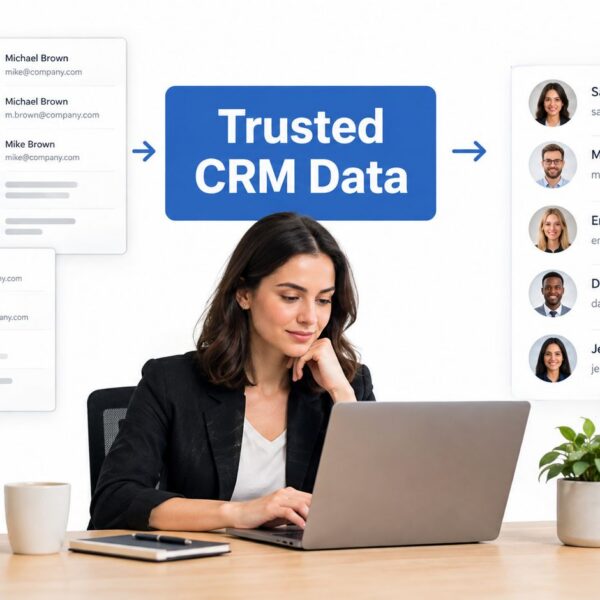
One of the most impactful business process automation examples is optimizing the top of the sales funnel through automated lead qualification and CRM data enrichment. This process eliminates manual, error-prone tasks that consume valuable sales and marketing time. Instead of reps manually researching and scoring leads, automation handles it instantly within your CRM and marketing automation platform.
This works by creating workflows within platforms like HubSpot or Salesforce integrated with MCAE (Pardot) that enrich incoming lead data with firmographic information, score leads based on predefined criteria (e.g., job title, company size, website activity), and route only the most qualified prospects to the sales team. For instance, a B2B SaaS company can set up a workflow in HubSpot to automatically assign a higher score to a lead from a target industry with over 500 employees who visited their pricing page. This ensures sales focuses exclusively on high-potential opportunities, dramatically improving efficiency and lead-to-opportunity conversion rates.
Strategic Analysis
Automating lead qualification transforms your sales process from reactive to proactive. It creates a standardized, data-driven system that prevents high-quality leads from slipping through the cracks. This systematic approach is crucial for scaling revenue operations, as it guarantees that sales resources are allocated to accounts with the highest probability of closing, directly impacting your go-to-market strategy.
Key Takeaway: The primary goal is not just speed, but precision. Automation ensures your best leads are identified and engaged immediately, maximizing their conversion potential while maintaining consistent CRM data hygiene.
Actionable Insights
- Define Your Ideal Customer Profile (ICP): Before automating, clearly document the demographic, firmographic, and behavioral traits of your best customers to inform your lead scoring rules in Salesforce or HubSpot.
- Implement a Scoring Model: Use a points-based system in your marketing automation platform (e.g., MCAE, HubSpot) to rank leads. Assign points for key attributes like job seniority and engagement signals. For an in-depth guide, explore how to build an effective lead qualification framework.
- Establish a Sales-Marketing Feedback Loop: Create a process for sales to report back on lead quality within the CRM, allowing marketing operations to continuously refine scoring criteria.
2. HR Onboarding and Employee Data Management
Another powerful business process automation example involves streamlining the entire employee journey, from offer acceptance to full productivity. Automating HR onboarding eliminates repetitive, manual data entry and disjointed communication that often creates a poor first impression for new hires. Instead of HR staff chasing down paperwork and IT manually provisioning accounts, automation orchestrates the entire workflow.

This works by using platforms like Workday or SAP SuccessFactors to trigger a sequence of events once an offer is signed. The system automatically sends digital documents for signature, initiates background checks, provisions access to necessary software (including Salesforce or HubSpot for sales and marketing roles), and enrolls the new employee in training modules. For example, once a candidate signs their offer via DocuSign, an automation can instantly create their profile in the HRIS, send an IT ticket to prepare their hardware, and schedule their first-week orientation meetings in their new calendar, ensuring they are set up for success from day one.
Strategic Analysis
Automating onboarding transforms a fragmented, administrative burden into a strategic advantage that enhances employee experience and accelerates their time-to-contribution. It ensures consistency and compliance across the organisation, reducing the risk of human error in handling sensitive data and completing mandatory paperwork. This systematic process is crucial for scaling a company, as it creates a predictable and positive experience that improves employee retention from the very beginning.
Key Takeaway: The primary objective is to create a seamless, welcoming experience. Automation removes administrative friction, allowing HR and managers to focus on human connection and integration, which are critical for long-term employee engagement.
Actionable Insights
- Map the Entire Onboarding Journey: Before automating, document every single step, from offer letter to the 90-day review. Identify all stakeholders (HR, IT, hiring manager) and system touchpoints.
- Integrate Key HR Systems: Connect your applicant tracking system (ATS), HR information system (HRIS), and IT service management (ITSM) platform to ensure data flows seamlessly without manual re-entry.
- Create Self-Service Portals: Empower new hires to complete their own paperwork and benefits enrolment through a central, user-friendly portal. This reduces the administrative load on HR and improves data accuracy.
3. Customer Onboarding and Account Setup
Automating the customer onboarding and account setup process is a critical business process automation example for B2B organizations focused on rapid, scalable growth. It streamlines everything from initial data collection when a deal closes in Salesforce to system access provisioning and welcome communications. This eliminates manual handoffs between sales operations, finance, and support, drastically reducing the time it takes for a customer to start realizing value from your product or service.

This works by connecting your CRM, like Salesforce or HubSpot, to other business systems using workflow automation. For instance, when an Opportunity is marked “Closed-Won” in Salesforce, a workflow can automatically trigger the creation of a new account in your billing system, provision user credentials in your product platform, and enroll the new customer in an automated welcome email sequence via HubSpot or MCAE. This ensures new users get value immediately and the revenue operations process is seamless.
Strategic Analysis
Automating customer onboarding directly impacts customer time-to-value and reduces early-stage churn. A slow, manual setup process creates friction and doubt at the most critical point in the customer journey. By automating it, you deliver a professional, efficient first impression that builds confidence and accelerates product adoption. This process is essential for maintaining a clean and accurate CRM, as it creates standardized, auditable workflows that ensure data integrity from the start.
Key Takeaway: The primary objective is to make the transition from prospect to active customer as seamless and fast as possible. Automation ensures a consistent, secure, and positive initial experience that sets the foundation for a long-term relationship.
Actionable Insights
- Map the Entire Onboarding Journey: Document every step, from the moment a contract is signed in Salesforce to when the customer is fully active. Identify every manual touchpoint and departmental handoff that can be automated.
- Implement Risk-Based Workflows: Not all customers require the same level of scrutiny. Use automation rules in your CRM to trigger enhanced verification steps or manual reviews only for higher-risk accounts, keeping the process fast for the majority.
- Integrate Your Tech Stack: Connect your CRM (Salesforce) with billing platforms (Stripe, Chargebee) and your product backend using integration tools like Zapier or native APIs to ensure data flows automatically. For more ideas, explore these customer onboarding best practices.
4. Order Processing and Fulfillment Automation
Among the most critical business process automation examples for companies with physical or digital products is the end-to-end automation of order processing. This system transforms the journey of an order from the moment it’s logged in your CRM to its final fulfillment, removing manual bottlenecks like data entry and inventory verification. It ensures a seamless, fast, and accurate fulfillment cycle that supports your go-to-market strategy.

This works by integrating a CRM like Salesforce with an Enterprise Resource Planning (ERP) or warehouse management system (WMS). When a sales rep finalizes an order, a workflow is triggered to validate the order details, check real-time inventory levels, and send picking instructions. The system can then automatically generate shipping labels, select the best carrier, and update the customer with tracking information, all without human intervention. This ensures sales operations and logistics are perfectly synchronized.
Strategic Analysis
Automating order fulfillment fundamentally changes a business’s operational capacity and customer experience. It moves operations from a reactive, labor-intensive model to a scalable, efficient, and predictable one. This systematic approach is essential for handling high order volumes, reducing costly fulfillment errors, and meeting modern customer expectations for rapid delivery, ultimately strengthening revenue optimization.
Key Takeaway: The core objective is to create a frictionless fulfillment engine that scales with growth. Automation minimizes the order-to-ship time, reduces operational costs, and delivers a consistent and reliable post-purchase experience.
Actionable Insights
- Integrate with Real-Time Inventory Systems: Connect your CRM or e-commerce storefront with your WMS to ensure inventory data is always accurate, preventing overselling and backorders.
- Automate Carrier Selection: Use platforms like ShipStation to implement rules that automatically choose the most cost-effective or fastest shipping carrier based on package weight, destination, and delivery requirements.
- Establish Automated Customer Communications: Create triggered email and SMS templates within your marketing automation system to notify customers at key stages: order confirmation, shipment, and delivery.
5. Claims Processing in Insurance
Automating insurance claims processing is one of the most transformative business process automation examples, shifting a traditionally paper-heavy and time-consuming function into a streamlined, digital operation. This process uses technologies like Robotic Process Automation (RPA) and AI to manage the entire claims lifecycle, from initial intake and documentation verification to fraud detection and final settlement.
Leading insurers like Lemonade use AI to settle simple claims in seconds, while giants like Allianz deploy RPA bots from platforms like UiPath and Automation Anywhere to handle routine, high-volume claims. These systems automatically validate policyholder information, cross-reference documents, and flag complex or potentially fraudulent cases for human adjusters. This frees up skilled staff to focus on nuanced claims that require critical thinking and empathy, dramatically reducing processing times and operational costs.
Strategic Analysis
Automating claims processing directly improves customer satisfaction by delivering faster, more transparent resolutions during stressful times. It also introduces a layer of data-driven consistency and fraud detection that is difficult to achieve with manual oversight alone. This systematic approach not only reduces claims leakage but also provides valuable data for refining underwriting models and risk assessment.
Key Takeaway: The strategic goal is to blend speed with accuracy. Automation should handle the high-volume, rule-based tasks flawlessly, allowing human experts to manage exceptions and deliver superior customer service where it matters most.
Actionable Insights
- Implement Layered Fraud Detection: Integrate AI-powered analytics tools to scan claims data for anomalies, inconsistencies, and known fraud patterns in real-time.
- Establish Clear Escalation Paths: Design workflows that automatically route claims to specialised human adjusters based on predefined triggers, such as claim value, complexity, or suspected fraud.
- Automate Payment Authorisation: Connect your claims system to your financial platforms to automate payment processing once a claim is approved. To further understand the positive impact of automating this function, consider the various Accounts Receivable automation benefits for your organisation.
6. Accounts Receivable and Collections Automation
One of the most critical business process automation examples for financial health is automating accounts receivable (AR) and collections. This process digitizes and streamlines the entire invoice-to-cash cycle, eliminating the manual, time-intensive labor of sending invoices, tracking payments, and chasing overdue accounts. It transforms AR from a cost center into a strategic cash flow engine, which is a cornerstone of effective revenue optimization.
This is achieved using specialized platforms like HighRadius or Billtrust that integrate directly with your ERP or accounting system, often triggered by “Closed-Won” opportunities in Salesforce. Workflows are configured to automatically generate and deliver invoices, send customized payment reminders based on aging reports, and apply cash receipts to open invoices. For instance, a system can be programmed to send a polite reminder email three days before an invoice is due, a firmer notice one day after it becomes delinquent, and automatically escalate the account to a collections specialist after 30 days, ensuring consistent follow-up without manual intervention.
Strategic Analysis
Automating AR and collections directly impacts cash flow and reduces Days Sales Outstanding (DSO). It establishes a predictable, policy-driven collections process that minimizes human error and ensures timely communication with every customer. This systematic approach is essential for maintaining healthy working capital, improving financial forecasting accuracy, and allowing the finance and RevOps teams to focus on strategic analysis rather than administrative tasks.
Key Takeaway: The goal is to accelerate the cash conversion cycle. Automation provides the discipline and consistency needed to collect payments faster while maintaining positive customer relationships through professional, timely communication.
Actionable Insights
- Segment Customers by Payment Behaviour: Create different communication cadences and tones for customers who pay on time versus those who are frequently late.
- Establish Dynamic Dunning Workflows: Design an escalation path that automatically adjusts the frequency and tone of communications as an invoice ages.
- Integrate with ERP and Payment Systems: Ensure a seamless flow of data between your accounting system (e.g., SAP, NetSuite) and your AR automation platform to enable accurate cash application and reporting.
7. Tax Compliance and Reporting Automation
One of the most complex yet essential business process automation examples is managing tax compliance and reporting. This automation addresses the high-stakes, labor-intensive process of collecting transaction data from your CRM, calculating obligations across multiple jurisdictions, and preparing accurate filings. Instead of finance teams manually compiling spreadsheets and navigating ever-changing tax codes, automation handles it with precision and speed.
This is achieved using specialized platforms like Avalara or Vertex that integrate directly with your ERP or CRM system, such as Salesforce. These tools automatically apply the correct sales tax, VAT, or other duties to each transaction in real-time based on location, product type, and current regulations. For instance, a B2B company using Salesforce can integrate Avalara to instantly calculate the correct sales tax for an opportunity in any state or country, automatically generate compliance reports, and prepare the necessary forms for remittance. This minimizes audit risk and frees up financial resources for strategic analysis.
Strategic Analysis
Automating tax compliance shifts your finance function from a state of reactive crisis management to proactive risk mitigation. It establishes a verifiable, single source of truth for all tax-related activities, which is critical for scaling operations across new regions or product lines. This systemized approach ensures that compliance is not an afterthought but an integrated part of every transaction managed by your sales operations team.
Key Takeaway: The primary objective is to achieve accuracy and maintain compliance at scale. Automation removes the risk of human error in calculations and filings, safeguarding the business against costly penalties and audits.
Actionable Insights
- Integrate with Core Systems: Ensure your chosen tax automation platform (e.g., Vertex, Avalara) has a robust, native integration with your primary systems like Salesforce or your ERP for seamless data flow.
- Implement Multi-Jurisdictional Rate Management: Configure the system to automatically manage and update tax rates for every jurisdiction you operate in. This is crucial for businesses selling across state or international borders.
- Establish Exception Queues: Create automated workflows that flag unusual transactions or those requiring manual validation. This allows your team to focus only on complex edge cases rather than every single transaction.
8. Purchase Requisition and Procurement Automation
Among the most powerful business process automation examples is streamlining procurement, from initial requisition to final purchase order. This automation layer tackles the slow, manual steps that often cause delays and compliance issues in purchasing. Instead of employees manually filling out forms and chasing approvals, an automated system guides the entire process, providing crucial data for revenue optimization and cost control.
This is achieved using procurement platforms like SAP Ariba or Coupa, which digitize the workflow. An employee submits a requisition through a central portal, which is then automatically routed for approval based on predefined rules like spend level or department. Once approved, the system can identify qualified vendors from a master list, issue requests for quotes (RFQs), and even generate the final purchase order. For instance, a tech firm can automate requisitions under $1,000 for direct approval, while larger capital expenditures are automatically routed to senior management, ensuring both speed and governance.
Strategic Analysis
Automating the requisition-to-purchase order cycle transforms procurement from a bottleneck into a strategic business function. It enforces spending policies, eliminates rogue purchases, and provides real-time visibility into company-wide expenditures. This standardized, traceable process is essential for managing cash flow, optimizing supplier relationships, and ensuring audit compliance.
Key Takeaway: The core benefit is control and efficiency. Automation enforces procurement policies consistently, preventing budget overruns and reducing the cycle time from need identification to order fulfillment.
Actionable Insights
- Establish Tiered Approval Workflows: Configure your system (e.g., Coupa, Jaggaer) to route requisitions based on spending thresholds. Low-value requests can be auto-approved, while high-value ones require multi-level sign-off.
- Maintain Clean Supplier Data: A successful automation strategy depends on accurate and up-to-date vendor information. Regularly audit your supplier master data to ensure contact details, pricing agreements, and performance ratings are correct.
- Integrate with Financial Systems: Connect your procurement platform directly to your ERP or accounting software. This ensures that when a purchase order is created, the budget is encumbered in real-time, providing accurate financial visibility.
9. Lead Qualification and CRM Data Management
One of the most impactful business process automation examples is optimizing the top of the sales funnel through automated lead qualification and CRM data management. This process eliminates manual, error-prone tasks that consume valuable sales and marketing time. Instead of reps manually researching and scoring leads, automation handles it instantly.
This works by using tools within platforms like HubSpot, Salesforce, or MCAE to create workflows that enrich incoming lead data with firmographic information, score leads based on predefined criteria (e.g., job title, company size, website activity), and route only the most qualified prospects to the sales team. For instance, a B2B SaaS company can set up a workflow in HubSpot to automatically assign a higher score to a lead from a target industry with over 500 employees who visited their pricing page. This ensures sales focuses exclusively on high-potential opportunities, dramatically improving efficiency and lead-to-opportunity conversion rates.
Strategic Analysis
Automating lead qualification transforms your sales process from reactive to proactive. It creates a standardized, data-driven system that prevents high-quality leads from slipping through the cracks. This systematic approach is crucial for scaling revenue operations, as it guarantees that sales resources are allocated to accounts with the highest probability of closing.
Key Takeaway: The primary goal is not just speed, but precision. Automation ensures your best leads are identified and engaged immediately, maximising their conversion potential while maintaining consistent CRM data hygiene.
Actionable Insights
- Define Your Ideal Customer Profile (ICP): Before automating, clearly document the demographic, firmographic, and behavioural traits of your best customers.
- Implement a Scoring Model: Use a points-based system in your marketing automation platform (e.g., MCAE, HubSpot) to rank leads. Assign points for key attributes like job seniority and engagement signals. For an in-depth guide, explore how to build an effective lead qualification framework.
- Establish a Sales-Marketing Feedback Loop: Create a process for sales to report back on lead quality within the CRM, allowing marketing to continuously refine scoring criteria.
10. Compliance Monitoring and Regulatory Reporting
One of the most critical business process automation examples, particularly for financial services and healthcare, involves automating compliance monitoring and regulatory reporting. This process replaces manual, high-stakes data collection and validation with a systematic, continuous monitoring system. Instead of teams manually pulling data from disparate sources like Salesforce to build reports, automation ensures accuracy and timeliness, forming a key part of any robust RevOps implementation.
This works by deploying specialized software or bots that constantly scan transactions, communications, and activities across multiple systems. These tools validate actions against a predefined library of regulatory rules (like AML or GDPR), flag potential exceptions for human review, and automatically compile audit-ready reports. For example, a bank can use a system like FICO Falcon to monitor millions of transactions in real-time for fraudulent or suspicious activity, automatically generating Suspicious Activity Reports (SARs) as required, drastically reducing risk and manual effort.
Strategic Analysis
Automating compliance transforms it from a periodic, labor-intensive audit into a continuous, real-time function embedded within your operations. This proactive stance is essential for mitigating the significant financial and reputational risks associated with non-compliance. It creates a robust, auditable trail that proves due diligence to regulators and standardizes how potential violations are identified and managed across the organization.
Key Takeaway: The primary objective is to embed compliance into daily operations, not treat it as an afterthought. Automation provides the infrastructure to make governance proactive, consistent, and scalable as regulatory landscapes evolve.
Actionable Insights
- Map All Regulatory Rules: Begin by thoroughly documenting every applicable regulation and translating them into specific, machine-readable business rules within your automation platform.
- Implement Tiered Escalation Workflows: Create automated workflows that escalate flagged exceptions based on severity. Low-risk issues can be routed to a junior analyst, while high-risk alerts go directly to a compliance officer.
- Maintain Immutable Audit Logs: Ensure your automation tools generate detailed, tamper-proof logs of every action taken, from data collection to report generation, to provide a clear audit trail for regulators.
Comparison of 10 Business Process Automation Use Cases
| Process | Implementation Complexity | Resource Requirements | Expected Outcomes | Ideal Use Cases | Key Advantages |
|---|---|---|---|---|---|
| Invoice Processing and Accounts Payable Automation | Medium–High — ERP and OCR integrations, workflow configuration | OCR, RPA bots, ERP/payment integration, AP staff for exceptions | 50–80% faster processing, 30–40% cost reduction, ROI 200–300% | High-volume invoicing, centralized AP teams | Faster payments, fewer errors, improved cash flow, audit trails |
| HR Onboarding and Employee Data Management | Medium — HRIS and legal compliance integration | HRIS, background-check APIs, secure document storage, workflow tools | Onboarding reduced to 5–7 days, improved new-hire satisfaction | Organizations with frequent hires, distributed teams | Standardized onboarding, compliance, frees HR for strategic work |
| Customer Onboarding and Account Setup | High — KYC/AML and identity verification complexity | KYC providers, credit checks, secure data stores, compliance tooling | 60–80% faster activation, scalable 24/7 onboarding | Banks, fintech, telecoms, high-volume account openings | Faster customer activation, regulatory audit trails, consistent experience |
| Order Processing and Fulfillment Automation | High — WMS, robotics and carrier integrations | Warehouse systems, inventory, carrier APIs, automation hardware/software | 40–60% faster fulfillment, fewer errors, scalable peak capacity | E‑commerce, retail, 3PLs, high-SKU operations | Faster delivery, better inventory accuracy, lower labor costs |
| Claims Processing in Insurance | High — fraud detection and specialized validations | OCR, AI fraud models, legacy system integration, compliance controls | 70–90% faster claims handling, 15–30% fraud reduction, cost savings | Insurance carriers and large TPAs with high claim volumes | Faster settlements, reduced fraud, consistent claim handling |
| Accounts Receivable and Collections Automation | Medium — payment integrations and dunning workflows | Payment gateways, ERP/AR integration, communication channels | DSO reduced 10–20 days, 15–25% higher collection rates | B2B billing, subscription services, companies with aging receivables | Improved cash flow, scalable collections, fewer manual calls |
| Tax Compliance and Reporting Automation | High — multi‑jurisdiction rule complexity | Tax rule engine, accounting integration, tax experts, update processes | 90%+ fewer errors, timely filings, 30–50% lower compliance costs | Multinational firms, complex tax environments | Audit readiness, reduced fines, consistent multi‑jurisdiction reporting |
| Purchase Requisition and Procurement Automation | Medium — supplier data and approval hierarchies | Supplier master data, ERP/contract systems, workflow engine | 50–70% faster procurement cycles, better spend visibility | Large organizations with frequent POs, centralized procurement | Policy compliance, spend control, improved supplier management |
| Lead Qualification and CRM Data Management | Medium — multi‑source integration and scoring models | CRM, enrichment services, ML scoring, privacy controls | 20–40% higher conversion, 30–50% shorter sales cycles | B2B sales teams, marketing-driven demand gen | Higher lead quality, increased sales productivity, scalable processing |
| Compliance Monitoring and Regulatory Reporting | High — rule engines, data volume, frequent updates | Data pipelines, regulatory rule engine, alerting, compliance experts | Fewer violations, faster audits, real‑time monitoring | Financial institutions, regulated industries | Continuous monitoring, audit-ready reports, reduced regulatory risk |
From Examples to Execution: Your Next Steps in Automation
The diverse business process automation examples explored in this article, from HR onboarding to accounts payable, share a powerful common denominator: a strategic shift from manual, error-prone tasks to streamlined, intelligent workflows. We’ve seen how B2B companies leverage platforms like Salesforce and HubSpot not just as databases, but as dynamic engines for operational excellence. The key insight is that effective automation isn’t about replacing people; it’s about empowering them to focus on high-value activities that drive revenue and customer satisfaction.
These real-world applications demonstrate that successful automation is rooted in a deep understanding of your current processes. It begins with a system audit to identify the bottlenecks, the repetitive manual entries, and the data silos that hinder your growth. Whether it’s automating lead qualification in your CRM or standardizing customer onboarding, the goal is always to create a more consistent, efficient, and scalable operational framework for your revenue optimization.
Your Path Forward: Key Takeaways
To translate these examples into action within your own organization, focus on these core principles:
- Start with a Strategic Audit: Before implementing any new workflow, conduct a thorough system audit of your existing processes. Pinpoint the highest-impact areas where automation can solve a tangible problem, such as reducing invoice processing time or accelerating sales cycle velocity. Don’t automate for the sake of automation.
- Prioritize Data Hygiene: Every example, from compliance reporting to lead management, relies on clean, accurate data within your CRM. Your automation efforts are only as reliable as the information flowing through your systems. Establish data governance and cleansing protocols as a foundational step.
- Emphasize Integration: The true power of automation is unlocked when systems like Salesforce, HubSpot, and your financial software communicate seamlessly. Focus on creating an integrated tech stack where data flows freely, eliminating manual transfers and providing a single source of truth for your RevOps team.
Making Automation a Reality
Moving from inspiration to implementation requires a clear plan. Begin by selecting one or two processes from the examples above that resonate most with your current business challenges. Document the existing workflow, identify the key stakeholders, and define what a successful automated outcome looks like. Use quantifiable metrics, such as “reduce customer onboarding time by 40%” or “decrease accounts payable errors by 90%”, to measure your return on investment.
Ultimately, mastering business process automation is about building a more resilient, agile, and competitive organization. By systematically removing friction from your marketing and sales operations, you free up critical resources to innovate, enhance the customer experience, and accelerate your go-to-market strategy. The journey starts with a single process, but the destination is a fully optimized revenue engine.
Ready to uncover the hidden automation opportunities within your tech stack? The experts at MarTech Do specialize in conducting comprehensive system audits and implementing scalable automation strategies for B2B companies using Salesforce, HubSpot, and MCAE. Contact us today to build a more efficient, data-driven RevOps framework that delivers measurable results.