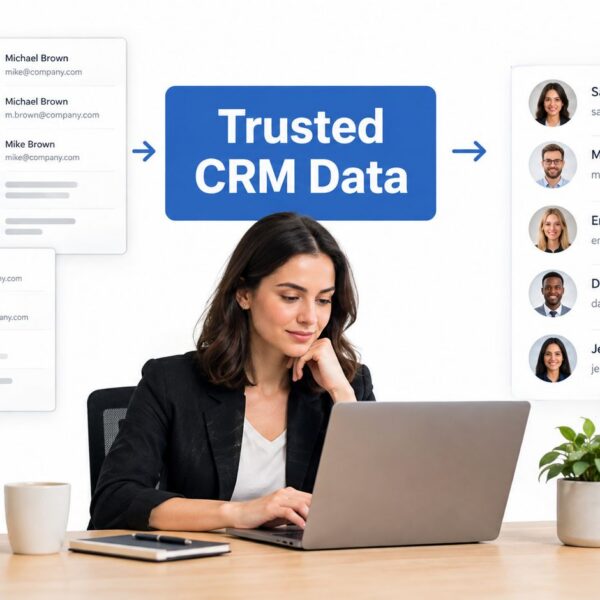

When your tech stack is a tangled mess, you’re not just dealing with inconvenience—you’re actively losing leads, frustrating your sales reps, and flying blind on ROI. This is where the native connection between Pardot (now officially called Marketing Cloud Account Engagement) and Salesforce becomes the heart of any modern B2B revenue operations engine. Don’t think of them as two separate platforms; see them as one unified system creating a single source of truth for your entire go-to-market team.
Aligning Sales and Marketing with Pardot for Salesforce

In most B2B companies, the divide between marketing and sales isn’t just about different team goals—it’s a fundamental system failure. Marketing generates leads but has limited visibility into what happens next. Meanwhile, the sales team works from CRM records that are missing the rich history of a prospect’s actual engagement. This disconnect directly impacts your revenue potential.
Pardot for Salesforce was built specifically to bridge this gap. It creates a seamless, bidirectional data flow, ensuring every marketing touchpoint and sales action are perfectly in sync.
The Power of a Single Customer View
When both marketing and sales operations work from the same playbook, every interaction—from a website visit to a signed contract—builds a more complete picture. This unified approach is a game-changer for revenue operations teams, delivering significant wins:
- Eliminate Lead Leakage: With automated lead assignment and smart nurturing, no qualified prospect falls through the cracks.
- Improve Lead Quality: Data-backed scoring and grading enable you to deliver sales-ready leads, not just a list of names.
- Empower Sales Conversations: Your reps can see a prospect’s entire digital journey—every email opened, every PDF downloaded—right inside the Salesforce record they use daily.
- Achieve Clear ROI: Connected campaigns let you draw a straight line from a closed deal back to the specific marketing campaign that initiated the engagement.
This operational harmony is essential to compete. With the Canadian CRM market valued at USD 3.47 billion in 2022 and projected to grow by nearly 15% annually, integrated platforms are the standard for driving growth. Salesforce commands over a third of that market, underscoring the importance of a well-integrated system.
From Silos to a Cohesive Revenue Team
Achieving this alignment requires more than just technology; it hinges on having the right expertise, like skilled Salesforce Marketing Cloud specialists, who understand the nuances of the integration. Ultimately, this connection transforms two siloed departments into a single, high-performance revenue engine.
The core problem Pardot for Salesforce solves is misalignment. It stops marketing from throwing leads over the wall and gives sales the context they need to close deals faster. It’s the foundation for any serious B2B RevOps strategy.
By breaking down data walls, you create a powerful feedback loop. Marketing can optimize campaigns based on what actually leads to sales, while the sales team can leverage marketing intelligence for smarter, more effective conversations. To explore this topic further, review our guide on B2B sales and marketing alignment.
How the Pardot and Salesforce Integration Works

The connection between Pardot and Salesforce functions as a dedicated, two-way data highway. This isn’t a simple link—it’s an architecture built to keep your marketing automation engine and CRM in perfect harmony. The Salesforce Connector manages the continuous flow of information between the two platforms.
For any RevOps professional, understanding this data flow is essential. It’s the engine that converts marketing activities into actionable intelligence for your sales team. When a prospect engages with a campaign, that data doesn’t just sit in Pardot; it travels across this highway to update the corresponding Lead or Contact record in Salesforce, almost instantly.
This provides your sales reps with a live feed of prospect engagement without ever leaving their CRM. They see every email opened, webpage visited, and change in lead score, giving them the context needed for a much smarter conversation.
The Salesforce Connector: Your Data’s Passport
At the core of this integration is the Connector User, a specific Salesforce user license that authenticates the connection and ensures data passes securely and correctly between systems. A proper setup is one of the most critical steps. For a detailed walkthrough, see our guide on the full Pardot to Salesforce integration.
A foundational rule for data integrity is to designate Salesforce as the system of record. This strategic decision is your best defense against data conflicts, establishing one definitive source of truth for all customer information.
Consider this scenario: a sales rep manually updates a contact’s phone number in Salesforce at the same moment the contact submits a new number through a Pardot form. The system needs to know which update to prioritize. By setting Salesforce as the system of record, you instruct it to prioritize the change made in the CRM, preventing data overwrites.
Without this clear hierarchy, you invite data chaos. Your database becomes fragmented and unreliable, defeating the purpose of the integration.
Mapping Fields for a Perfect Data Handshake
The real power of the Pardot for Salesforce integration is realized through field mapping. While standard fields like name, email, and company sync automatically, the genuine advantage for any B2B operation comes from mapping the custom fields that reflect your unique business processes.
For example, if your sales team needs to know a prospect’s industry or specific product interest, you can create and map these custom fields in both systems. When a prospect completes a Pardot form, this critical insight flows directly into their Salesforce record.
This bidirectional sync is what makes the system so effective. The table below illustrates how data moves between the two platforms.
Pardot and Salesforce Data Synchronization Flow
This table outlines the primary data objects that sync between Pardot and Salesforce, clarifying the direction of data flow and its purpose for RevOps.
| Data Object | Syncs From Pardot to Salesforce | Syncs From Salesforce to Pardot | Primary RevOps Use Case |
|---|---|---|---|
| Prospect | Yes | Yes (as Lead/Contact) | Syncs marketing engagement data (scores, activities) to sales and pulls CRM data (status, owner) back to marketing. |
| Campaign | No | Yes | Allows Pardot to associate marketing efforts with Salesforce campaigns for comprehensive ROI tracking and attribution. |
| User | No | Yes | Syncs Salesforce users into Pardot, enabling lead assignment, email notifications, and user-specific tasks. |
| Account | No | Yes | Provides Pardot with company-level data from Salesforce, crucial for account-based marketing (ABM) strategies. |
| Opportunity | No | Yes | Syncs sales pipeline data to Pardot, enabling marketing to report on campaign influence on revenue and closed deals. |
| Custom Object | No | Yes | Syncs data from unique Salesforce objects (e.g., event attendance, product usage) to Pardot for advanced segmentation. |
This constant, automated exchange of information transforms two powerful platforms into one cohesive revenue engine. It eliminates manual data entry, reduces human error, and ensures both marketing and sales teams operate with the most current, accurate, and complete customer data available.
Using Core Pardot Features to Empower Sales

Once data flows smoothly between systems, you can shift from technical setup to practical, revenue-driving applications. The true value of Pardot for Salesforce lies in how its features equip your sales team with the intelligence and timing needed to close more deals. It’s about converting marketing activities into a clear, prioritized action plan for sales.
This is where marketing automation moves beyond simple email campaigns to become a vital partner in the sales process. The objective is to deliver better-qualified leads, offer deeper insights into prospect intent, and ensure every sales call is perfectly timed—all from within the Salesforce interface.
Lead Scoring and Grading: The Foundation of Prioritization
Not all leads are created equal. A common mistake is treating every inquiry with the same urgency. Pardot addresses this with a two-part system for qualifying prospects automatically: Scoring and Grading.
This separates a prospect’s interest from their fit.
- Lead Scoring: This tracks engagement and measures a prospect’s interest level by assigning points to their actions. A high score indicates active interest. For example, visiting your pricing page might add +15 points, while opening an email adds +3 points.
- Lead Grading: This measures how well a prospect matches your Ideal Customer Profile (ICP). A high grade (like A+ or B) indicates their company size, industry, and job title are a strong match for your solution.
This dual-metric system is a game-changer. It prevents sales reps from wasting cycles on enthusiastic prospects who will never buy (high score, low grade) or chasing perfect-fit companies that show no interest (high grade, low score).
Engagement Studio: Automating the Customer Journey
Engagement Studio is Pardot’s visual journey builder for designing smart, automated nurture campaigns that feel personal. Instead of sending one-off emails, you create dynamic paths that adapt to a prospect’s behavior in real time.
Imagine a new prospect downloads a whitepaper. Engagement Studio can instantly initiate a journey:
- Three days later, it sends a follow-up email with a related case study.
- It then listens: If they click the case study link, it adds them to a Salesforce Campaign and notifies their assigned rep.
- If they don’t engage, a week later it sends a different email highlighting a relevant webinar.
This systematic nurturing warms up prospects long before a sales rep gets involved. It educates them, builds trust, and ensures that by the time sales makes the call, the prospect is already familiar with your brand and value proposition.
This process ensures no lead goes cold and helps sales engage at the moment of peak interest, dramatically increasing the odds of a productive conversation.
Marketing Assets: The Windows into Buying Intent
Every piece of content—forms, landing pages, and PDFs—is an opportunity to gather intelligence. Pardot’s assets act as listening posts, capturing critical buying signals and transmitting them directly into Salesforce.
- Pardot Forms and Landing Pages: When a prospect completes a form, that action is logged. With progressive profiling, you can request new information with each engagement, gradually building a rich profile without overwhelming them with a long form.
- Connected Campaigns: This is crucial for attribution. When a prospect interacts with an asset tied to a specific Salesforce Campaign, sales can see that context directly on the lead or contact record.
This layer of insight is invaluable. A sales rep can see that a prospect not only fits their ICP (Grade: A) and is highly engaged (Score: 120) but also just downloaded a comparison sheet between your product and a top competitor. That’s not just a lead; it’s a clear signal to “Call me now!”
These features work in concert to create a seamless flow of information that makes your sales team smarter and more effective. To enhance this, consider how chatbots for marketing can provide instant, 24/7 engagement on your site. By combining these tools, you can transform your go-to-market strategy from reactive to proactive, driving efficiency and revenue.
Driving Measurable ROI with Your Pardot Strategy
Features are important, but the ultimate measure of success is the impact on your bottom line. For any RevOps leader, the conversation always returns to ROI. A well-executed Pardot strategy isn’t just about sending emails; it’s about turning marketing activities into revenue. The goal is to build a revenue engine that’s predictable, measurable, and scalable.
To achieve this, you must connect the dots between marketing initiatives and sales outcomes. When you can clearly show how a campaign led to a signed contract, you’re not just proving marketing’s worth—you’re justifying your budget and enabling smarter business decisions.
Boosting Marketing Efficiency
One of the first benefits you’ll notice after implementing Pardot is the time it saves your team. Automation handles the manual, repetitive tasks, freeing up your marketers for strategic thinking.
- Automated Nurturing: Instead of sending one-off emails, build complex nurture paths in Engagement Studio that work 24/7 to keep leads warm.
- Dynamic Lists: Create smart lists that automatically update based on prospect criteria or behavior, ensuring sharp targeting and relevant messaging.
- Reusable Assets: Clone and modify templates for landing pages, forms, and emails in minutes, accelerating campaign launches.
This is a game-changer for scaling. Your team can manage a much larger volume of work without increasing headcount.
Improving Sales Productivity
The impact extends directly to sales operations. A well-configured Pardot instance is a sales team’s best asset, delivering better-qualified leads with rich context so they can focus on selling.
The core value proposition for sales is simple: focus. Pardot’s scoring and grading models act as a powerful filter, ensuring reps spend their time on prospects who are both a good fit and actively interested, rather than chasing every single inquiry.
This enables smarter conversations. Reps enter calls knowing what a prospect has viewed on your website or which topics they’re interested in, shifting the dynamic from a cold pitch to a consultative discussion. They stop wasting time on dead-end leads and focus on opportunities with a higher probability of closing.
Shortening Sales Cycles and Attributing Revenue
When you combine a more efficient marketing team with a more productive sales team, you naturally shorten sales cycles. Prospects nurtured by marketing enter the sales pipeline educated and engaged, allowing sales conversations to get straight to the point.
The ultimate goal for any RevOps leader is true revenue attribution. The seamless integration between Pardot and Salesforce allows you to draw a direct line from a marketing campaign to a closed-won deal. You can finally answer critical questions:
- Which channels are generating our best customers?
- How much revenue did marketing influence last quarter?
- Are our webinars and whitepapers delivering a positive ROI?
This insight moves marketing from a “cost center” to a primary driver of revenue. It’s why there is a growing demand for marketing automation expertise, with forecasts for Pardot consulting predicting a ~15% CAGR as more companies optimize their lead-to-revenue process. You can discover more insights on the Salesforce consulting market to understand market trends.
Future-Proofing Your RevOps with Data Cloud and AI

A tightly integrated Pardot and Salesforce instance is an excellent foundation, but the landscape is evolving rapidly. Strategic RevOps leaders are looking beyond standard automation to what’s next: unifying data and leveraging artificial intelligence for predictive insights and hyper-personalized marketing.
This represents a shift from reactive to proactive operations. Instead of just analyzing past customer behavior, you can start predicting their future needs, guiding their journey with a deeper understanding of their objectives.
Unifying Customer Data with Salesforce Data Cloud
The “360-degree customer view” has long been an industry goal. Salesforce Data Cloud is the platform designed to make it a reality. It acts as a central nervous system for all customer information, consolidating data from your CRM, ERP, web analytics, and other tools into a single, unified profile for every contact and account.
When you connect this unified profile to your Pardot for Salesforce instance, your marketing automation capabilities are significantly enhanced. Your segments and nurture campaigns are no longer based solely on marketing interactions but are informed by the entire customer relationship.
By demolishing data silos, Data Cloud transforms Pardot from a marketing tool into a genuine customer experience engine. You can now trigger campaigns based on product usage, recent support tickets, or purchase history—creating a journey that feels incredibly relevant and seamless.
This shift is happening now. Salesforce recently reported that Data Cloud adoption is up 140% in FY2025, indicating a clear trend toward smarter, data-driven B2B marketing. You can learn more about the data unification surge from recent analyses to see how quickly the market is moving.
Activating Intelligence with Einstein AI
With your data unified, you can put AI to work meaningfully. Tools like Salesforce Einstein analyze this data to identify patterns and predict future outcomes. Einstein complements Pardot by adding a layer of predictive intelligence, analyzing historical engagement data and CRM outcomes to answer your revenue team’s most pressing questions.
Here’s how this combination elevates a modern Pardot setup.
Traditional vs AI-Enhanced Pardot Capabilities
| Capability | Standard Pardot Approach | AI & Data Cloud Enhanced Approach | Impact on RevOps |
|---|---|---|---|
| Lead Scoring | Relies on manual rules based on behaviour (e.g., +10 for a demo request). It’s a good start, but often one-dimensional. | Einstein AI analyzes thousands of data points from converted leads to predict who is most likely to buy, creating a dynamic, predictive score. | The sales team spends their time on leads with the highest statistical probability of closing, leading to a much higher conversion rate and shorter sales cycles. |
| Segmentation | Creates static or dynamic lists based on explicit data like industry, title, or marketing engagement. Effective, but limited. | Builds segments using unified data from across the business—like product usage, contract renewal dates, or recent support interactions. | Campaigns become hyper-relevant. You can target customers showing signs of churn or upsell opportunities based on their actual behaviour, not just marketing clicks. |
| Personalisation | Uses dynamic content and variable tags to insert known data (like first name or company) into emails and landing pages. | Recommends the “next best action” or content piece for each individual based on their entire journey, ensuring every touchpoint is perfectly timed and contextually aware. | Engagement skyrockets because you’re not just personalizing a name; you’re personalizing the entire experience. RevOps can finally orchestrate true one-to-one journeys at scale. |
This table illustrates that integrating Data Cloud and AI is about more than adding new features; it fundamentally changes how your revenue team operates. You move from broad segmentation to individual personalization, ensuring every interaction is timely, relevant, and drives the relationship forward. This is the framework of a modern, intelligent RevOps strategy.
Stepping Around Common Pardot Implementation Traps
A successful Pardot implementation is built on solid fundamentals, not flashy features. The biggest challenges we encounter are not technical glitches but strategic oversights that create major headaches for RevOps teams. Addressing these issues from day one is what separates a successful Pardot for Salesforce investment from a frustrating one.
Avoiding these common mistakes can prevent the derailment of your marketing automation efforts before they even begin.
Pitfall 1: Syncing a Messy Salesforce Org
Activating the Salesforce Connector without first cleaning up your CRM is like building a house on a weak foundation. Syncing Pardot to a database riddled with duplicate records, incomplete fields, and inconsistent formatting doesn’t just import these problems—it amplifies them. Your automation will run on bad data, leading to personalization errors, inaccurate segmentation, and a loss of trust from your sales team.
The Fix: Conduct a thorough data audit in Salesforce before connecting anything.
- Deduplicate Everything: Use Salesforce’s native tools or a third-party app to merge all duplicate Leads, Contacts, and Accounts.
- Standardize Your Fields: Ensure critical fields like “Country,” “Industry,” and “Job Title” use consistent picklist values. This is essential for accurate grading and segmentation.
- Enrich Your Data: Identify and fill information gaps. GTM engineering tools like ZoomInfo or Clay.com can enrich your records with the data you need for effective go-to-market execution.
Pitfall 2: Not Defining Your Lead Lifecycle
Many companies implement Pardot without a clearly documented lead lifecycle. What defines a Marketing Qualified Lead (MQL)? When does it become a Sales Qualified Lead (SQL)? Without universal answers, marketing passes leads that sales immediately rejects, creating friction and wasting time.
A well-defined lead lifecycle isn’t just a marketing document; it’s a service-level agreement (SLA) between your sales and marketing teams. It removes ambiguity so everyone is focused on advancing qualified buyers through the funnel.
The Fix: Convene key stakeholders from sales and marketing to map out every stage of the buyer’s journey. Agree on precise criteria—a combination of demographic/firmographic fit and engagement signals—that graduate a prospect from one stage to the next. Document this agreement and build these definitions directly into your Pardot and Salesforce automation.
Pitfall 3: Setting Up Salesforce Campaigns Incorrectly
A frequent error is treating Salesforce Campaigns as simple lists for prospects. When campaigns lack a clear parent-child hierarchy or a consistent naming convention, meaningful attribution reporting becomes impossible. You cannot connect marketing spend to closed-won revenue if your campaign data is disorganized.
The Fix: Before launching any Pardot campaigns, establish and enforce a strict campaign hierarchy and naming convention. For example, a parent campaign “2024 Annual Conference” could have child campaigns like “Pre-Show Email Nurture,” “Booth Scans,” and “Post-Show Follow-Up.” This organized structure enables you to use Campaign Influence models in Salesforce to see exactly which marketing touchpoints generated pipeline and revenue, proving your team’s impact.
Your Pardot & Salesforce Questions, Answered
Let’s conclude by addressing some of the most common questions from marketing and revenue operations leaders who are evaluating Pardot or seeking to optimize their current setup.
Pardot vs. Marketing Cloud: What’s the Real Difference?
The simplest distinction is B2B versus B2C.
Pardot, now officially Marketing Cloud Account Engagement, is Salesforce’s B2B marketing automation platform. It is designed for longer, more complex sales cycles involving buying committees. Its core strength lies in lead nurturing, scoring, and creating a seamless handoff to a sales team using Sales Cloud.
Marketing Cloud Engagement, conversely, is built for B2C. It is designed for high-volume, one-to-many communication across channels like email, SMS, social media, and mobile push notifications, focusing on the individual consumer’s journey and driving transactions.
How Does Pardot Actually Get Leads to the Right Sales Rep?
Pardot uses a combination of Automation Rules and Completion Actions to manage lead assignment. The best practice is to first define what constitutes a “Marketing Qualified Lead” (MQL) for your business, typically based on a prospect’s score (interest) and grade (fit).
Once a prospect reaches the MQL threshold, an automation rule can instantly assign them to the correct sales rep or a specific queue within Salesforce. This automated handoff is critical—it ensures hot leads receive prompt follow-up before their interest wanes.
Can We Use Pardot If Our Sales Team Isn’t on Salesforce?
Technically, you can connect Pardot to another CRM like HubSpot, but it is a complex and risky endeavor. This is not a plug-and-play scenario; it requires custom integration, meticulous data mapping, and constant monitoring to prevent sync errors and data corruption.
If you are considering this path, a full RevOps system audit is non-negotiable. You must definitively establish the system of record, create iron-clad data management rules, and map the entire data lifecycle. Skipping this step is a recipe for data chaos.
Ready to ensure your Pardot and Salesforce setup is driving revenue? The experts at MarTech Do conduct deep-dive system audits and implement RevOps frameworks that align your technology with your business goals. Let’s discuss how we can optimize your entire go-to-market engine. Learn more about our services.