
Sales marks an opportunity as closed-won in Salesforce. Customer success starts planning onboarding. Marketing wants to tie the deal back to campaign influence. Finance still hasn’t seen a clean order, approved pricing, or billing terms. Two weeks later, someone exports a CSV, someone else rekeys line items, and the first invoice goes out with the wrong start date.
That’s a familiar operating model in B2B companies that grew fast on CRM and marketing automation, then left the commercial back office behind.
An enterprise resource planning application is supposed to fix that. But for RevOps leaders, the issue isn’t whether ERP matters. It’s whether the ERP becomes part of the revenue engine or turns into one more platform that sales, marketing, and finance work around. The difference comes down to architecture, ownership, and process discipline.
Your ERP Is More Than a Finance Tool
A lot of teams inherit the wrong framing from day one. Finance buys the ERP because billing, revenue recognition, procurement, or inventory control is under strain. GTM hears about the project late, usually when someone asks for a Salesforce integration and a list of required fields by Friday.
That approach almost guarantees friction.
The moment a deal moves from pipeline to order, the business stops operating in CRM terms alone. Sales may care about account hierarchy, contacts, and opportunity stages. Finance cares about legal entities, payment terms, tax handling, product structures, contract start dates, and invoice rules. Marketing cares about attribution and customer value. If those handoffs aren’t designed properly, every downstream report becomes suspect.
ERP shouldn’t begin where sales visibility ends. It should start where commercial commitments become operational and financial obligations.
A strong ERP setup gives RevOps something many organizations lack. It creates a dependable transaction backbone. That matters when you’re trying to answer questions like:
- Which deals are billable
- Which customers are active versus merely closed-won
- Which products were sold, fulfilled, renewed, credited, or expanded
- Which revenue should be tied back to campaign and channel performance
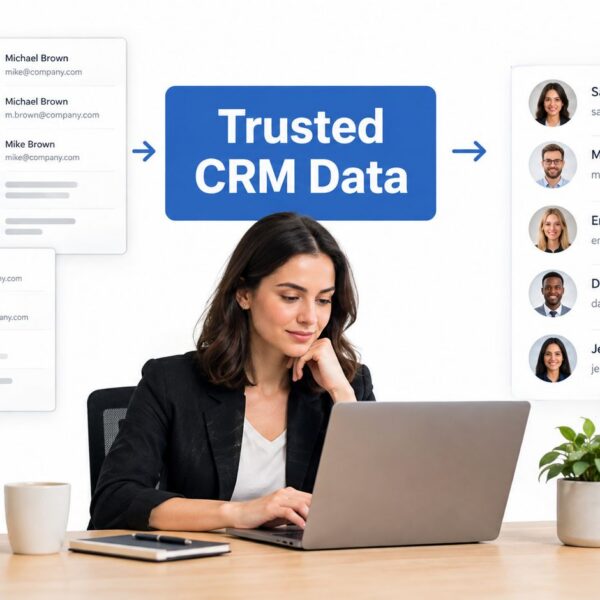
Without that backbone, teams invent workarounds. Sales operations builds compensating fields in Salesforce. Marketing operations filters bad records in HubSpot. Finance exports ledger and invoice data into spreadsheets so leadership can reconcile bookings to billings. Everyone gets a number. No one fully trusts it.
If your organisation is still asking whether Salesforce can do the ERP job, this breakdown of whether Salesforce is an ERP system is a useful reality check. CRM can support commercial workflow. It doesn’t replace the core transaction model an ERP is built to govern.
What an ERP Application Is for Revenue Operations
For RevOps, an enterprise resource planning application is best understood as the system that governs business transactions after a customer promise becomes operational reality. CRM tracks intent and engagement. ERP tracks the commercial commitments the business must fulfil, invoice, recognise, and report.
Think of it this way. Your CRM is the relationship brain. It knows who the buyer is, what they asked for, where the deal sits, and which rep owns the opportunity. Your ERP is the transaction nervous system. It handles the records that determine whether the business can deliver what was sold, collect cash, and report revenue accurately.

When teams talk about driving business growth with ERP, the useful point for RevOps isn’t just process efficiency. It’s the ability to connect quote, order, fulfilment, billing, and finance without constant manual repair work.
The ERP modules RevOps should care about
You don’t need to care about every module equally. Focus on the parts that shape lead-to-cash.
| ERP area | Why RevOps should care |
|---|---|
| Finance and accounting | This determines invoice timing, revenue visibility, collections signals, and the definitions leadership uses in board reporting. |
| Order management | This is where sold products and services become executable orders, subscriptions, or projects. |
| Inventory management | If you sell physical goods, inventory rules affect promise dates, fulfilment timing, and margin conversations. |
| Procurement | For bundled services, implementation work, or supply-dependent offers, procurement affects cost and delivery capability. |
Why clean ERP data changes GTM decisions
Bad ERP data doesn’t stay in finance. It leaks into commission logic, renewal reporting, customer health models, and attribution analysis.
A few examples:
- Commission disputes happen when booked product lines in CRM don’t match invoiced lines in ERP.
- Forecast misses happen when pipeline assumes every closed-won deal converts neatly into billable orders.
- Attribution confusion happens when marketing can prove influence on opportunities but not on realised revenue.
- Customer value models fail when expansion, credit, and renewal activity lives only in finance tables no GTM team uses.
Practical rule: If a metric depends on invoicing, fulfilment, order status, product cost, or contract activation, CRM alone isn’t enough.
That’s why RevOps leaders need working knowledge of ERP, even if finance owns the platform. You don’t need to become a controller. You do need to understand which records define revenue truth and where your GTM systems should consume that truth.
The Business Case for ERP in Your GTM Stack
ERP isn’t just an operations upgrade. It’s now a mainstream enterprise technology category. In North America, the ERP market is valued at over $10 billion, and one industry report projects the global ERP market will exceed $49.5 billion by 2025 and reach $78.4 billion by 2026 (ERP market data and projections). That growth reflects a shift in how organisations use ERP. It’s no longer treated as isolated accounting software.
For RevOps, the business case becomes compelling when you stop pitching ERP as a finance necessity and start positioning it as commercial infrastructure.
What a connected ERP changes
A connected ERP improves revenue operations in ways leadership cares about.
First, it tightens the gap between what sales sells and what the business can invoice. That reduces the lag between closed-won and cash collection. It also exposes pricing, packaging, and fulfilment problems that stay hidden when CRM and finance operate separately.
Second, it creates a more credible forecasting model. Forecasts become less dependent on optimistic opportunity stages and more grounded in order acceptance, fulfilment readiness, billing status, and contract activation.
Third, it gives marketing a cleaner revenue chain. Attribution always gets messy when opportunity data is the last point of visibility. ERP closes the loop by showing whether a commercial event became a real financial transaction.
Talking points that resonate with the CFO and CEO
If you need internal support, frame the conversation around decision quality.
- For the CFO: ERP helps enforce transaction consistency. That matters for billing accuracy, revenue visibility, and audit confidence.
- For the CEO: ERP reduces the distance between demand generation and operational delivery.
- For sales leadership: ERP integration lowers rep frustration around order corrections, credit holds, and commission ambiguity.
- For marketing leadership: ERP-backed data improves understanding of realised revenue, not just pipeline influence.
A useful internal test is simple. Can your executive team answer these questions without assembling three exports and a Slack thread?
- Which closed-won deals are not yet billable?
- Which accounts are active customers versus signed customers awaiting delivery?
- Which product lines generate expansion revenue versus one-time implementation revenue?
- Which campaigns sourced customers that invoiced?
If the answer is no, the issue isn’t reporting polish. It’s system design.
The strongest ERP business case for RevOps is trust. When finance, sales, and marketing work from the same transaction reality, planning gets sharper and argument time drops.
Integrating Your ERP with Salesforce and HubSpot
Most ERP projects don’t fail because the software can’t handle finance. They fail RevOps because the integration model is weak. Teams wire systems together quickly, push data both ways without clear ownership, and then spend months cleaning up duplicate accounts, mismatched products, and broken reporting.

If you’re evaluating commercial platform fit at the same time, this Hubspot vs Salesforce comparison can help clarify where each tool is strongest before you design the ERP handoff model.
Start with architecture, not field mapping
A technically sound ERP architecture is usually three-tier, with presentation, application, and database layers. That separation reduces tight coupling between user access, business logic, and persistent data. For GTM teams, the practical implication is direct. Integration work should target the application layer through APIs or service-oriented interfaces rather than writing directly to the database, because that’s what preserves the ERP’s single source of truth (three-tier ERP architecture and API guidance).
In practice, that means:
- Don’t bypass business rules: Direct database writes may look faster, but they often skip validation, workflow logic, and audit controls.
- Don’t let every tool invent its own payload: Use a canonical structure for records that move across systems.
- Don’t confuse sync with governance: Bi-directional sync without ownership rules creates noise, not alignment.
Define system-of-record ownership early
Many RevOps teams get trapped. They assume account and product alignment can be sorted out later. Later usually means after dashboards break.
A workable ownership model often looks like this:
| Data object | Common primary owner | What GTM systems usually need |
|---|---|---|
| Account or company | Depends on legal and commercial model | CRM needs selling account context. ERP needs bill-to and legal entity accuracy. |
| Contact | CRM | ERP may consume billing or operational contacts, but CRM should usually own relationship records. |
| Product and price structures | ERP or a governed pricing layer | CRM needs sellable catalogues that mirror finance-approved structures. |
| Order | ERP | CRM can display status, but shouldn’t invent post-sale transaction records independently. |
| Invoice and payment status | ERP | CRM and MAP should consume status for lifecycle and customer communication logic. |
If two systems can create or overwrite the same master record without a rule set, reporting debt starts immediately.
Use integration patterns that can survive growth
Point-to-point integrations often work for a short time. Then a new business unit, new billing model, or new product family arrives and everything becomes brittle.
A better pattern is:
- Canonical object design for accounts, products, orders, and revenue events
- Middleware or orchestration logic to manage transforms and exceptions
- Explicit event handling for order creation, invoicing, renewals, credits, and cancellations
- Shared monitoring so RevOps and finance can see failed syncs before quarter-end reporting exposes them
For Salesforce and HubSpot users, the integration strategy should also account for lifecycle nuance. Marketing automation doesn’t need every ERP field. It needs the right triggers, statuses, and suppression logic. Sales ops doesn’t need raw ledger entries. It needs commercial status it can operationalise.
If your team is already trying to align these platforms, this guide to Salesforce HubSpot integration is relevant because the same discipline applies when ERP enters the stack. Field sync is the easy part. Record ownership and process sequencing are the hard part.
Selecting and Implementing an ERP without Derailing RevOps
ERP selection goes sideways when buyers choose based on finance feature depth alone, then discover the platform is awkward to integrate, difficult to govern, or too rigid for the actual GTM model. RevOps teams feel that pain later, usually in the form of broken lead-to-cash workflows and reporting that has to be “interpreted” every month.
The selection criteria should reflect operating reality, not vendor demos.

What to evaluate before you buy
Don’t start with a giant feature checklist. Start with the moments where revenue operations and finance intersect.
- Integration maturity: Can the ERP expose stable APIs and event patterns that fit Salesforce, HubSpot, and your downstream reporting stack?
- Commercial model fit: Does it handle subscriptions, projects, services, physical products, or multi-entity billing the way your business sells?
- Product and pricing governance: Can approved finance structures map cleanly to what reps quote and what marketing promotes?
- Workflow flexibility: Can the platform support approval, order conversion, billing triggers, and exception handling without a maze of custom code?
- Operational visibility: Can non-finance teams consume useful status signals without needing accounting expertise?
The migration question matters too. If master data is messy before implementation, the ERP won’t clean it for you. It will formalise the mess. A disciplined data preparation effort is part of the project, not a side task. This checklist on data migration best practices is the kind of groundwork that prevents go-live surprises.
Implement in waves, not in one heroic launch
Enterprise architecture practices can materially shorten ERP delivery because they force decision reuse and standardisation before configuration begins. A practical approach is to run rollout in stabilize → standardize → optimize waves, with each wave tied to process metrics and integration contracts so finance, sales operations, and fulfilment share the same transaction model (enterprise architecture guidance for ERP rollout).
That sequence works because it mirrors how organisations absorb change.
Stabilize
Lock down core financial and transactional flows first. Orders need to convert cleanly. Billing rules need to work. Basic CRM handoffs need to be dependable.
This is not the stage for every automation idea stakeholders can imagine.
Standardize
Once the basics are steady, define canonical objects, ownership rules, field mappings, and integration contracts. Standardise product structures, customer identifiers, and order statuses across systems.
RevOps earns its keep. You’re translating business motion into durable operating rules.
Optimize
Only after the transaction model is reliable should you expand into advanced forecasting, lifecycle automation, attribution enrichment, or AI-assisted workflows. Optimisation on top of unstable data just scales confusion.
ERP implementation goes better when every request is tested against one question. Does this strengthen the shared transaction model, or does it create a local convenience that someone else will have to reconcile later?
Keep governance active after go-live
A lot of teams treat governance like a project phase. It isn’t. It’s an operating discipline.
Set up a standing review for:
- New product introductions
- Pricing and discount logic
- Field additions across CRM and ERP
- Order exception patterns
- Failed or delayed sync events
- Reporting definition changes
Without that discipline, the implementation that looked clean at launch slowly drifts into custom exceptions, duplicate logic, and reporting patches.
Common ERP Pitfalls That Wreck Revenue Operations
The most common ERP mistake isn’t choosing the wrong vendor. It’s assuming the hard part ends at go-live.
Most mainstream ERP guidance talks about consolidation, standardisation, and forecasting benefits. It rarely deals with the operational reality RevOps teams inherit after launch. Data quality, workflow design, and integration governance directly affect CRM usefulness and forecast credibility over time. A key question is this: how do you keep ERP from becoming another silo when the revenue stack depends on clean handoffs between finance, sales, and marketing? (IBM discussion of ERP operational trade-offs)
The post-launch problems that show up fast
The first trap is customisation sprawl. Teams add special cases for one market, one billing model, or one executive request. Each exception may look harmless. Together they create upgrade friction, inconsistent logic, and brittle integrations.
The second trap is unclear ownership. Finance assumes RevOps owns CRM alignment. RevOps assumes finance owns product and customer master rules. No one owns the grey zones, which are exactly where most reporting issues live.
The third trap is change management theatre. Users get trained on screens, but not on process consequences. Reps still sell packages that don’t translate cleanly into ERP. Finance still fixes records manually. Marketing still can’t tell whether a customer event should trigger nurture, upsell, or suppression.
Warning signs leaders should treat seriously
If these patterns show up, don’t dismiss them as normal project noise:
- Sales asks for manual invoice status updates in CRM
- Finance exports customer data because CRM records can’t be trusted
- Marketing suppresses accounts by spreadsheet instead of system logic
- Ops teams debate which product list is current
- Forecast reviews spend more time reconciling systems than discussing performance
A connected stack can still behave like disconnected software if nobody governs the handoffs.
No-code tooling and modular ERP options can help in the right context, but they don’t remove the need for data governance. Easier modification is only helpful when someone controls standards. Without that, “flexibility” becomes long-term maintenance debt.
The practical fix isn’t more dashboards. It’s tighter operating rules, fewer exceptions, and shared accountability across finance, sales operations, and marketing operations.
How a RevOps Agency Ensures Your ERP Is a Growth Engine
An ERP becomes a growth asset when someone translates between commercial workflow and financial control. That translation is where many internal teams struggle. Finance knows what must be governed. GTM knows how the customer journey works. RevOps sits in the middle, but not every internal team has the time or depth to architect that bridge well.
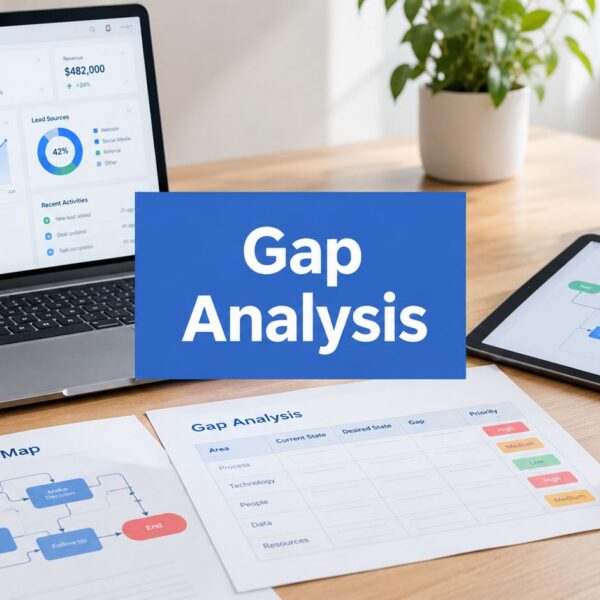
A strong RevOps partner helps before the build starts. That means auditing current-state systems, identifying where Salesforce or HubSpot data diverges from finance reality, and mapping which records should move, when, and under whose authority.

The value isn’t only technical. It’s operational. A good agency will:
- Audit the stack end to end: CRM, MAP, ERP handoffs, reporting layers, and failure points
- Design GTM-safe integrations: especially where Salesforce, HubSpot, order management, and finance records intersect
- Define governance rules: system of record, canonical objects, and exception handling
- Support GTM engineering work: including enrichment and workflow design across tools such as Clay
- Train internal teams: so finance, sales ops, and marketing ops can run the model without constant outside intervention
The outcome is alignment. Revenue data stops fragmenting across teams. Forecast reviews become more credible. Attribution gets closer to realised revenue. Sales can move faster without forcing finance to clean up every order.
That’s when the ERP stops acting like a back-office island and starts functioning as part of the growth system.
If your team is trying to connect Salesforce, HubSpot, marketing automation, and finance without creating more reporting debt, MarTech Do can help you audit the gaps, design the right integration model, and turn ERP from a disconnected accounting system into a reliable revenue operations foundation.