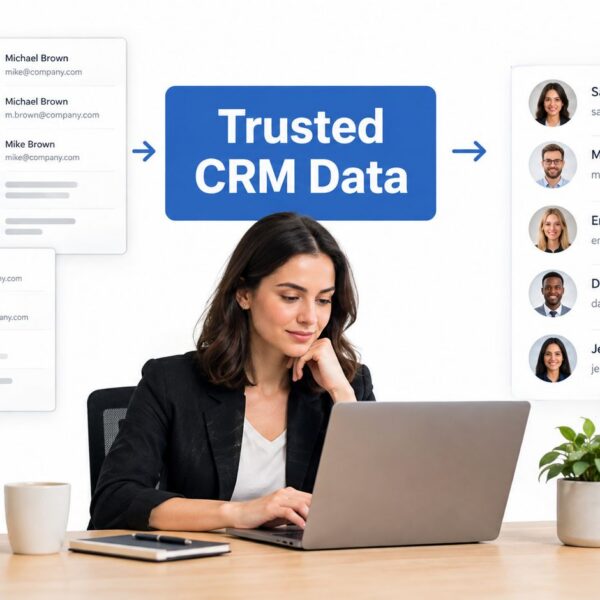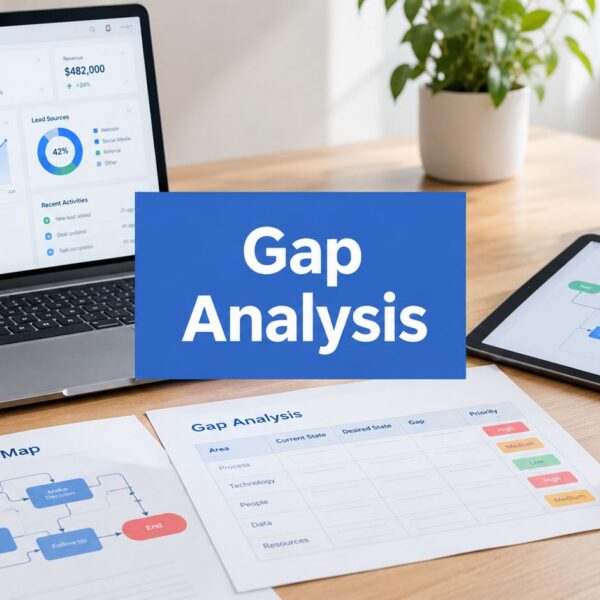

At its core, Salesforce Data Cloud resolves the primary challenge facing modern RevOps teams: a fragmented, incomplete view of the customer. It functions as a high-performance data engine designed not just to store information, but to unify it across your technology stack, making it immediately actionable for your entire go-to-market (GTM) team.
What Salesforce Data Cloud Does for RevOps
Imagine your customer data is a thousand-piece jigsaw puzzle. Currently, those pieces are likely scattered across different systems. Sales Cloud holds opportunity data, Account Engagement (formerly Pardot) tracks email engagement, HubSpot manages inbound leads, and your service platform contains every support interaction. Each system offers a piece of the story—an isolated snapshot.
Salesforce Data Cloud is the platform where you assemble all those pieces. It harmonizes every data point to build a complete, real-time picture of your customer. It’s not about replacing your CRM or marketing automation tools; it’s about unifying their data to create a single source of truth that drives a more efficient revenue engine.
This unified customer profile is the foundation for building intelligent, coordinated GTM strategies.
Moving Beyond Data Silos
The primary function of Data Cloud is to dismantle the operational barriers that separate your sales, marketing, and service teams. Instead of each function working from its own partial data set, everyone gains access to a comprehensive, shared customer view.
This has a significant impact on both internal operations and the customer experience. For instance, before a sales representative calls a key account, a unified profile allows them to see if that contact has an open, high-priority support ticket. This insight prevents awkward conversations and transforms a sales call into a valuable, context-aware interaction.
A unified customer profile is no longer a luxury—it is the foundational requirement for building a predictable revenue engine. It enables a strategic shift from reactive decision-making to a proactive, data-driven GTM motion.
Here’s how the platform achieves this:
- Connects Data Sources: It offers native integrations with Salesforce products and provides robust connectors for external systems, including HubSpot, data warehouses, and enrichment tools.
- Harmonizes Information: It maps disparate data points to a standardized model, ensuring that an “email address” in Account Engagement is recognized as the same field as an “email” in Sales Cloud.
- Activates Insights: The unified data is surfaced directly within the Salesforce applications your teams already use, eliminating the need to switch between multiple tabs and tools.
Fuelling Smarter Decisions
With a complete customer picture, your RevOps team can orchestrate highly intelligent campaigns and sales plays. Salesforce Data Cloud enhances your decision-making capabilities by leveraging decision intelligence for business growth, converting vast amounts of raw data into clear, actionable insights.
The platform’s rapid adoption highlights its critical role. In Canada, Salesforce Data Cloud adoption is accelerating as businesses prioritize data unification to power AI and maintain compliance. The platform saw a 130% year-over-year increase in paid customers and now processes over 2.3 quadrillion records each quarter. This trend reflects a market-wide shift toward leveraging unified data to drive intelligent automation and navigate privacy regulations. Discover more about this growth in Canada.
How the Data Cloud Architecture Works
To fully leverage Data Cloud Salesforce, it’s beneficial to understand its architecture without getting lost in technical jargon. Consider it the central nervous system for your customer data. It’s a sophisticated platform that connects, processes, and activates information from across your business to make real-time, unified customer profiles a reality.
The architecture is built on a Data Lakehouse, a modern design combining the massive storage capacity of a data lake with the structured, high-speed query capabilities of a data warehouse. This hybrid approach allows Data Cloud to ingest high volumes of data—from structured CRM records to semi-structured engagement data from Account Engagement—and prepare it for analysis almost instantly.
For RevOps and marketing operations, this translates to both scale and speed. You can store every customer touchpoint without worrying about capacity while running complex segmentation queries that deliver results in seconds, not hours.
The Power of Zero-ETL and Metadata
Traditionally, moving data between systems involved slow and costly ETL (Extract, Transform, Load) processes. Data Cloud changes this with its zero-ETL approach, particularly for data already within the Salesforce ecosystem.
This means your Sales Cloud and Service Cloud data is accessible in Data Cloud without being physically copied. It’s a live, seamless connection that eliminates data latency and complex integration projects. Your RevOps team can finally work with information that’s always up-to-date. For external sources like HubSpot or a proprietary data warehouse, robust connectors ensure a smooth ingestion process.
This seamless data sharing is orchestrated by an intelligent metadata-driven model.
Metadata is simply data about your data. In Data Cloud, it functions as a universal translator, understanding that a “contact” in Sales Cloud and a “prospect” in Account Engagement refer to the same individual. This intelligent mapping is the core mechanism for building a reliable, unified customer profile.
Unifying Data with the Customer 360 Data Model
Once ingested, data must be organized into a coherent structure. Data Cloud utilizes the Customer 360 Data Model, a standardized framework that maps scattered data points into a single, unified view of the customer.
This model establishes a common language for all your customer information. It standardizes objects and fields, ensuring data consistency whether it originates from your CRM, marketing automation platform, or e-commerce system. Think of it as the architectural blueprint for your unified customer profile. For RevOps, this is critical—it ensures that when you build a segment based on “annual revenue,” that field means the same thing across every connected system.
To understand how this differs from legacy systems, explore the differences between a CDP like Data Cloud and a standard CRM in our guide: https://martechdo.com/customer-data-platform-vs-crm/.
This harmonized data model allows you to:
- Resolve Identities: Accurately merge duplicate records from different sources to create a single identity for each customer.
- Build Rich Profiles: Combine attributes, engagement history, and transactional data into one comprehensive picture.
- Ensure Data Consistency: Maintain a single source of truth that powers all your go-to-market activities with reliable, clean data.
Ultimately, understanding this architecture empowers RevOps, sales ops, and marketing ops leaders to have more strategic conversations with IT. You can confidently articulate how data will be connected, mapped, and activated, ensuring your Data Cloud Salesforce implementation is built on a solid foundation that directly supports business goals.
How Data Cloud Reshapes Your Marketing and Sales Operations
Connecting your data is the first step; turning that unified data into revenue is where the value is realized. A unified customer profile in Salesforce Data Cloud provides a competitive advantage that directly improves marketing and sales outcomes. It provides the foundation to move from disconnected tactics to an orchestrated go-to-market strategy.
The shift from siloed data to a single source of truth is driving significant market investment. The cloud computing market in Canada is projected to reach $39.69 million in 2025 and is expected to grow at a compound annual rate of 16.64% through 2033. This growth is fueled by the demand for AI and machine learning, as businesses use platforms like Data Cloud to activate insights and achieve immediate impact.
Empowering Marketing Operations with True Personalization
For marketing operations teams, a unified profile in Salesforce Data Cloud makes hyper-personalization at scale achievable. You can move beyond the generic, one-size-fits-all campaigns common in Account Engagement or HubSpot. Now, you can build messaging and journeys based on a customer’s entire history across all touchpoints.
Consider this: a prospect downloads a whitepaper, attended your webinar last month, and their company was just mentioned in a major trade publication. Without a unified view, these are disparate events. With Data Cloud, you can automatically enroll this individual in a highly specific nurture sequence that references their interests and their company’s recent news.
A unified profile allows marketers to shift from assumption-based targeting to data-driven engagement. It transforms customer interactions from a series of disjointed messages into a continuous, intelligent conversation that builds trust and accelerates the buying cycle.
Equipping Sales Operations with Actionable Intelligence
For sales operations, Data Cloud provides the complete context sales reps need to close deals more efficiently. It enriches account and contact records directly within Sales Cloud, offering a 360-degree view of every interaction. Reps no longer waste time hunting for information across different systems; they can focus on selling.
This directly contributes to accelerated sales readiness and performance. When reps have the full story, they can engage in more strategic and meaningful conversations. It also empowers sales ops to design more effective processes based on real-time customer behavior.
To clarify, here’s how Data Cloud delivers tangible value across different RevOps functions.
Data Cloud Impact Across RevOps Functions
| RevOps Function | Challenge Without Data Cloud | Solution with Data Cloud | Business Outcome |
|---|---|---|---|
| Marketing Ops | Generic campaigns, low engagement, fragmented journey analytics. | Unified profiles activate real-time behavioral data for hyper-personalized campaigns. | Higher conversion rates, improved MQL quality, and a clear view of campaign ROI. |
| Sales Ops | Reps lack context, wasted time on research, inaccurate lead scoring. | Enriched CRM records with a 360-degree view of all customer interactions. | Shorter sales cycles, increased rep productivity, and more accurate forecasting. |
| Customer Success | Reactive support, unaware of upsell opportunities, high churn risk. | Proactive alerts based on product usage and service history. | Increased customer retention, identification of expansion revenue, and higher LTV. |
As demonstrated, the benefits are not theoretical—they translate into concrete improvements that drive the entire revenue engine forward.
A Real-World B2B Scenario in Action
Let’s walk through a practical example of how Salesforce Data Cloud connects the dots. A high-value target account exhibits several buying signals over a single week:
- Marketing Engagement: A senior decision-maker from the account downloads a technical whitepaper from a campaign run in Account Engagement.
- Service Interaction: A user from the same company opens a support ticket about a feature limitation in their current product tier.
- Sales Intent: The same decision-maker returns to your website and spends several minutes on the pricing page, focusing on enterprise-level features.
Without Data Cloud, these three critical events remain in their respective silos. Marketing sees a download, support handles a ticket, and sales might notice a web visit. The overarching opportunity is lost.
With Data Cloud, these events are instantly unified and identified as a significant buying signal. This unified profile can trigger an automated workflow:
- An immediate, high-priority alert is sent to the account executive in Slack or Teams.
- A new task is created in Sales Cloud for the rep, summarizing all recent activities.
- The account’s lead score is automatically increased to reflect the heightened interest.
This automated intelligence enables the account executive to deliver a perfectly timed, relevant, and context-aware message, dramatically increasing the probability of advancing the deal.
Integrating Salesforce Data Cloud with Your Tech Stack
Salesforce Data Cloud is designed as a central hub for customer data, not a replacement for your existing tools. The objective is to unify information, not force you to rip and replace the systems your teams rely on. By connecting your critical applications, Data Cloud becomes the single source of truth that powers your entire go-to-market strategy.
The most seamless integration is with core Salesforce products. Data Cloud features zero-ETL integration with Sales Cloud, Service Cloud, and Marketing Cloud Account Engagement (MCAE). This native connection allows data to flow between these systems in real-time without requiring complex, custom-built data pipelines.
For RevOps, this is a significant advantage. It means sales activities, support tickets, and marketing campaign data are instantly available for segmentation and activation. Data latency and sync errors are eliminated, providing a solid, unified customer profile from day one.
Integrating External Platforms like HubSpot
Many B2B companies use HubSpot for marketing and Salesforce for sales, creating a common data silo. Data Cloud is engineered to bridge precisely this type of gap.
While a native, zero-ETL connector for HubSpot is not yet available, integration is straightforward using established methods:
- Middleware Platforms: Tools like MuleSoft, Workato, or Zapier act as data translators. They pull data from HubSpot’s API and push it into Data Cloud on a set schedule, effectively handling large volumes of contact, company, and engagement data.
- Third-Party Connectors: The Salesforce AppExchange offers pre-built connectors designed to sync HubSpot with Salesforce, simplifying setup and managing most of the data mapping for you.
The goal is not to choose between HubSpot and Salesforce but to make their data work together. By piping HubSpot’s rich marketing engagement data into Data Cloud, you can layer it with sales and service history from Salesforce. This creates a customer view far more comprehensive than either platform could provide alone. This is a core tenet of effective platform integration, which we explore further in our guide.
Connecting Your GTM Engineering and Data Tools
The true power of Data Cloud for B2B RevOps is realized when you connect it to your GTM engineering and data enrichment stack. This includes powerful tools like ZoomInfo, Clearbit, and Clay.com that are essential for sourcing and maintaining high-quality B2B data.
Integrating these tools transforms Data Cloud into your central command center for clean, enriched, and validated account and contact information. A typical workflow would be:
- Ingest: Raw lead data flows into Data Cloud from various sources.
- Enrich: Using a connector, the data is sent to a GTM engineering tool like Clay.com to run enrichment “waterfalls,” finding missing company details, verifying emails, and identifying key decision-makers.
- Harmonize: The newly cleaned and enriched data is returned to Data Cloud and mapped to the unified customer profile.
- Activate: This “golden record” data is pushed to Sales Cloud, Marketing Cloud Account Engagement, and other systems. Now, your entire GTM team is operating from the same accurate information.
By making Salesforce Data Cloud the central clearinghouse for data enrichment, you eliminate data discrepancies across your GTM stack. Your sales team in Sales Cloud sees the exact same validated phone number that your marketing team uses for a campaign in Account Engagement.
This unified approach ensures consistency across your entire GTM motion. It provides a reliable data foundation that leads to more effective outreach, smarter segmentation, and a more predictable revenue engine.
Establishing Data Governance and Modeling
Implementing a powerful platform like Salesforce Data Cloud without a clear plan can lead to a “data swamp”—a disorganized and untrustworthy pool of information. Effective data governance and thoughtful data modeling are the essential guardrails that ensure your data remains clean, reliable, and actionable from the start.
This foundational work is more strategic than technical. It begins with establishing a clear governance framework to manage data quality and compliance. This involves assigning data ownership, defining rules to prevent errors, and managing customer consent to maintain trust.
Building Your Data Governance Framework
Effective data governance is an ongoing process, not a one-time setup. It ensures the information powering your AI and analytics is consistent and compliant. For RevOps leaders, this builds unwavering confidence in the data that shapes your GTM strategy.
Focus on these key pillars:
- Data Stewardship: Assign clear owners for specific data domains, such as marketing engagement or sales pipeline data. These stewards become advocates for their data’s quality and usability.
- Quality Rules: Proactively define and implement rules within Data Cloud to validate and cleanse data upon ingestion. This can range from standardizing country codes to flagging accounts with conflicting firmographic data.
- Consent and Privacy Management: Utilize Data Cloud’s built-in tools to honor customer communication preferences and privacy requests. This is non-negotiable for complying with regulations like PIPEDA and building lasting customer relationships.
For a deeper dive, our guide on data governance best practices provides a comprehensive roadmap. Salesforce reinforces this commitment to security. In 2024, Salesforce achieved its Canada Protected B Moderate (ProB Moderate) status for several services, including Data Cloud. This accreditation allows it to support government bodies handling sensitive citizen data and underscores the platform’s top-tier security for all users. You can learn more about this important security milestone.
A Strategic Approach to Data Modeling for B2B
With a governance framework in place, the next step is data modeling. This is the process of mapping your various source data points into a single, unified structure within Data Cloud Salesforce. The objective is to create a coherent customer view that accurately reflects your business operations.
Think of data modeling as creating the blueprint for your unified customer profile. You’re deciding which pieces of information matter most and how they should all connect to tell a clear story about every account and contact.
Salesforce provides a significant head start with its standard Customer 360 Data Model, which includes pre-built objects for common entities like individuals, accounts, and engagement events. For most B2B companies, mapping your existing Sales Cloud and Account Engagement data to this standard model will achieve 80% of your initial goal.
The remaining 20% is where customization comes in. Every business has unique data that doesn’t fit a standard model. This is where you create custom Data Model Objects (DMOs) to track things like:
- Product usage data from your proprietary software.
- Specific contract details critical to your renewal process.
- Complex account hierarchies or unique subsidiary relationships.
The key is to strike a balance. Start by mapping as much as possible to the standard model to achieve value quickly. Then, strategically create custom objects only for the high-impact, business-specific data that drives your unique GTM strategy. This ensures your unified profiles are both accurate and aligned with your revenue goals.
Your Phased Implementation Roadmap
Implementing Salesforce Data Cloud can feel like a significant undertaking, but it doesn’t have to be an overwhelming, all-or-nothing effort. A structured, phased approach is key to success. It allows your RevOps team to build momentum, secure stakeholder buy-in, and demonstrate tangible value at each stage. By breaking the project into manageable phases, you can progress from concept to full-scale activation methodically.
This roadmap should serve as a strategic guide, not a rigid set of instructions. It is designed to help you plan your rollout, avoid common pitfalls, and deliver measurable ROI from the outset.
Phase 1: Discovery and Strategy
Before connecting a single data source, you need a plan. This initial phase is about stakeholder alignment. Bring your marketing, sales, and service leaders together to define what success looks like. The goal is to identify your most pressing business challenge and select one primary use case that Data Cloud can solve.
Avoid the temptation to connect everything at once. Instead, focus on a single, high-impact goal. A great starting point for many B2B organizations is building a unified Account 360 view by integrating data from Sales Cloud and Account Engagement (Pardot) or HubSpot.
The success of your Data Cloud implementation is determined in the strategy phase. A well-defined initial use case becomes your North Star, guiding every technical decision and making it easy to demonstrate value to executives.
Phase 2: Foundational Setup
With a clear strategy, it’s time to begin the technical implementation. This phase focuses on laying the groundwork for your first use case. You will connect your first one or two critical data sources—such as your Salesforce CRM and primary marketing automation platform—and start the data mapping process.
Key activities in this stage include:
- Connecting Core Systems: Use native connectors to link Sales Cloud and Service Cloud. Finalize the integration plan for external platforms like HubSpot.
- Initial Data Mapping: Begin mapping essential fields from your source systems into the standard Customer 360 Data Model.
- Identity Resolution Rules: Configure the initial rules to merge duplicate records and create unified profiles.
This phase is about building a clean, reliable foundation. A successful setup here simplifies all subsequent stages.
Phase 3: Pilot Program
Now it’s time to activate your unified data. The pilot program is your opportunity to prove the value of Salesforce Data Cloud with a limited, controlled test. Launch a single, high-impact campaign or sales play based on the unified data you have assembled.
For example, you could create a dynamic segment of contacts who have engaged with marketing assets and are associated with an open, high-value opportunity. Use this segment to launch a highly targeted nurture campaign. Meticulously track the results—engagement rates, pipeline velocity, and conversion rates—to build a compelling business case for a broader rollout.
Phase 4: Scale and Optimize
With a successful pilot completed, you have the proof points and momentum to expand. This final phase involves scaling your Data Cloud implementation across more teams, data sources, and use cases. Begin integrating additional data from your service platform, product usage systems, or third-party enrichment tools like ZoomInfo and Clay.com.
As you scale, maintain a close watch on your data governance rules and continuously optimize your data models. This is not a one-time project. An iterative approach ensures your unified customer profiles remain accurate, trustworthy, and continue to deliver increasing value to the entire GTM organization.
Common Salesforce Data Cloud Questions
As you consider how Salesforce Data Cloud could enhance your RevOps strategy, several common questions often arise. Here are direct, practical answers to help you determine how this platform fits into your technology ecosystem.
How Is Salesforce Data Cloud Different from a Regular CDP?
While Data Cloud performs the functions of a Customer Data Platform (CDP), its primary differentiator is its deep, native integration with the Salesforce ecosystem. It is not a standalone tool but an extension of the core platform.
Unlike third-party CDPs that must be bolted on, Data Cloud is built on the Salesforce platform, sharing the same metadata, security model, and automation tools like Flow. For RevOps, this native foundation enables faster, more reliable automation, as you are not managing complex connectors to sync data with Sales, Service, or Marketing Cloud in real time.
Do I Need to Replace HubSpot to Use Data Cloud?
Absolutely not. The purpose of Data Cloud is to unify data, not force a rip-and-replace of tools your teams depend on. It is designed for interoperability.
You can connect HubSpot using standard integration platforms. The goal is not to replace it but to ingest its rich marketing data into Data Cloud and combine it with your Salesforce CRM data. This creates a more complete customer profile without disrupting your marketing team’s workflow or abandoning your investment in the HubSpot platform.
What Is a Realistic First Project for a B2B Company?
An excellent, high-impact first project is building a unified Account 360 view. This is a tangible, quick win. Start by connecting your Sales Cloud instance with your primary marketing automation platform (whether it’s Account Engagement or HubSpot).
The objective is to merge sales activities, marketing engagement history, and firmographic data into a single, actionable dashboard for your account executives.
This project delivers immediate value by providing reps with deeper insights and context for every customer conversation. It is an ideal way to demonstrate the platform’s value early and build support for future initiatives.
Is Data Cloud Just for Enterprise-Level Companies?
While Data Cloud offers enterprise-grade capabilities, Salesforce has structured it to be accessible for companies of various sizes. The key is to start small and scale intelligently. Do not attempt to connect every data source on day one.
Instead, select a specific, high-priority business problem and solve it. By focusing on a high-impact area first, even a mid-sized B2B company can achieve a significant return on investment. This approach allows you to secure early wins and expand your use of the data cloud salesforce platform over time as your needs and budget grow.
Ready to build a unified data foundation that drives revenue growth? The team at MarTech Do are experts in designing and implementing Salesforce Data Cloud solutions that connect your entire GTM stack. Schedule a consultation with us today to see how we can align your marketing and sales operations for measurable success.